
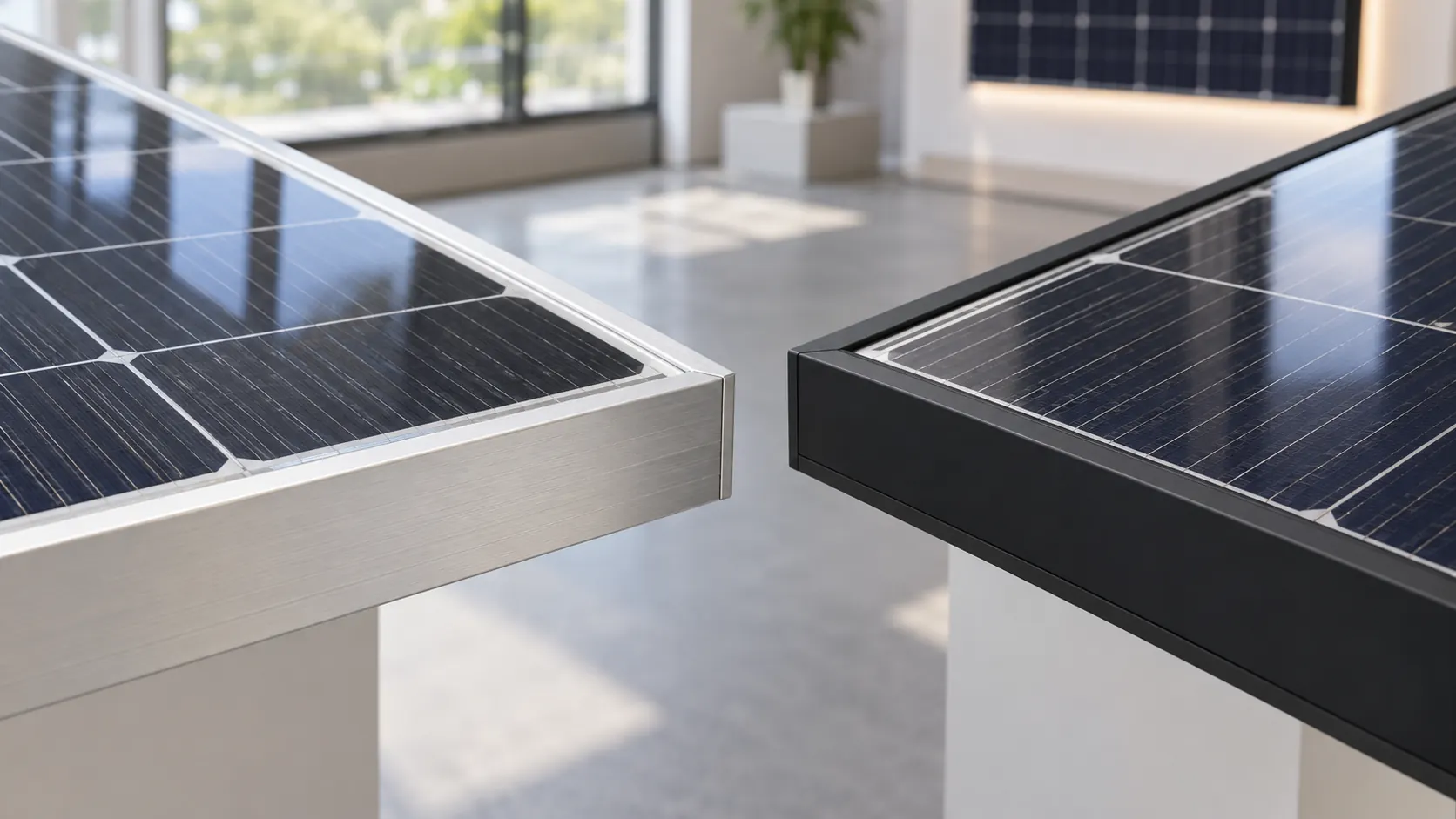
A dated research report, not a new October announcement
The paper discussed here was available online on 19 June 2026, as shown in the original journal text supplied by a co-author. The study by Olivia Bowen, Anna Kuczyńska-Łażewska, Rong Deng and Jacek Kluska appears in Solar Energy Materials and Solar Cells. UNSW’s official researcher page independently lists the same paper and authors. Its October journal volume is not the first-online date. This report does not announce that an experiment, policy or facility began in October. Keeping the original research date visible lets a reader judge the evidence without mistaking a dated report for breaking news.
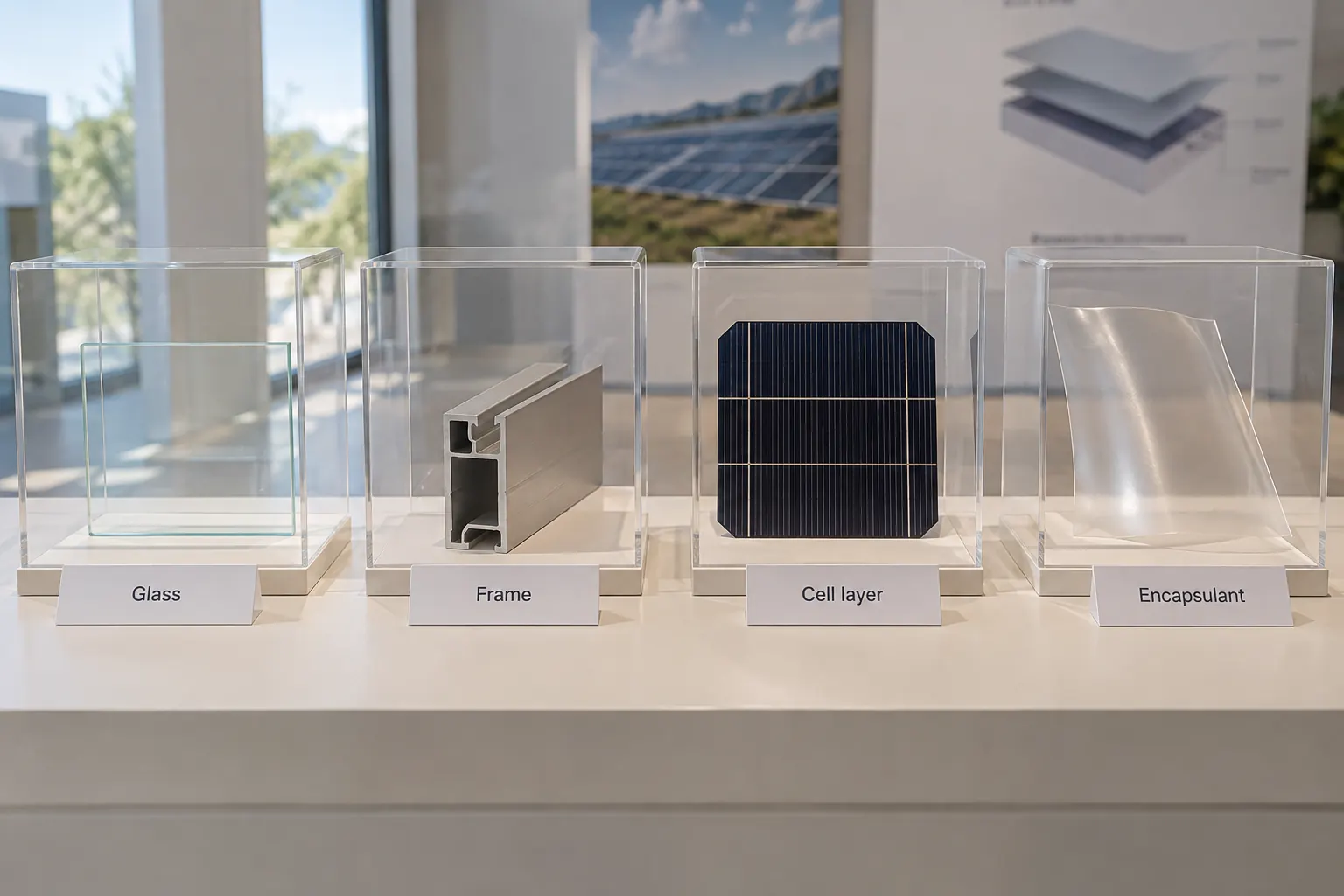
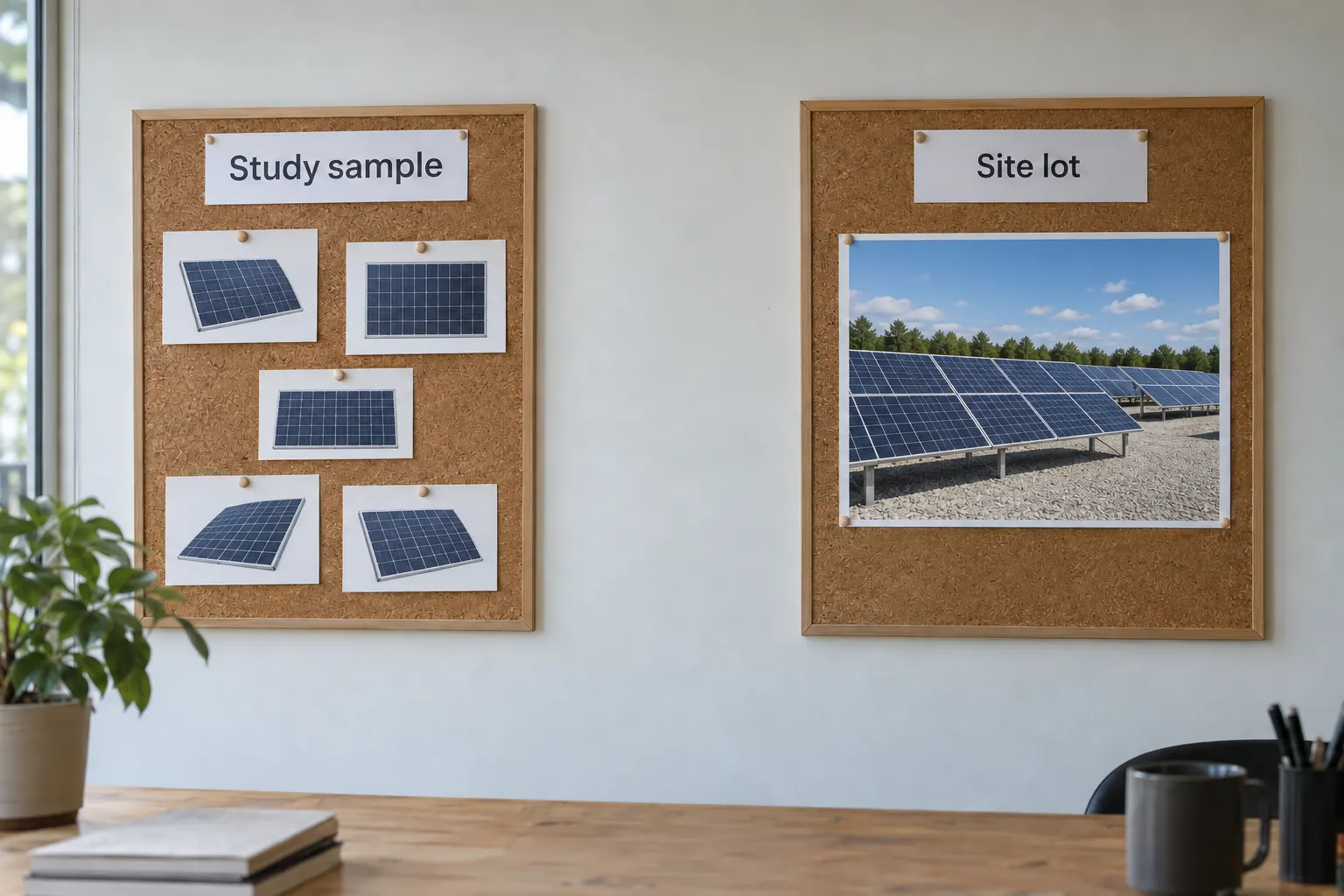
The authors selected twelve modules from different manufacturers and examined frame, glass, encapsulant and cell materials. Their inputs included decommissioned modules and donated new modules. They report composition variation and a pattern of lower silver content in newer samples. Those are observations within the research selection, not an assay of a customer’s equipment or proof that the sample represents all discarded panels in Australia.
For a facilities or procurement team, the information gain is the study’s measured-input approach. It asks a different question from a generic statement that panels contain recoverable materials. A useful reading therefore identifies the evidence basis before discussing an outcome: which material question was examined, which inputs belonged to the study, and which project questions were outside it? The answer should remain attached to the research, rather than being copied into the description of an unrelated warehouse lot.
Read the finding at the level of the question it answers
Composition research and a recycling-process trial are not interchangeable. The first concerns the material inputs examined; a process trial concerns what a defined operation achieved under its stated conditions. Neither automatically supplies a whole-panel recovery percentage, a buyer or an available local service. The Newcastle silver-recovery report concerns a different study and process. The global PV-waste study report concerns long-range modelling. Combining those headlines into one universal conclusion would erase their different questions and boundaries.
The U.S. EPA’s current recycling page separates module materials, processing and reuse subjects. The DOE FEMP lifecycle guide treats refurbishment inspection and testing separately from other lifecycle choices. These are useful global comparisons for organising the questions, not Australian legal or technical instructions. A materials observation should not become a finding that a used item works, is electrically safe, has remaining life or is suitable for reuse. This report adopts none of the sources’ procedures or foreign service routes.
| Evidence layer | Useful question | Conclusion not supplied by that layer |
|---|---|---|
| Dated paper | What was published, and when was it first available? | That an October volume is a new October announcement or changes a local service. |
| Research selection | Which inputs and conditions belonged to the reported work? | That every older, newer or visually similar item at a customer site has the same attributes. |
| Materials finding | What statement is supported within the research scope? | Current performance, reuse suitability, legal classification, a buyer or an individual collection price. |
| Local enquiry | What actual equipment and handover facts can the responsible contact provide? | Acceptance, vehicle, route, timing, booking or a later processing result from the research headline. |
What remains site-specific for a Sydney lot
A research result does not appoint a receiving business, establish its present availability or confirm that particular equipment fits its scope. It also does not settle what a customer will pay or receive. A general material trend cannot be multiplied by a guessed panel count to manufacture a lot valuation. Keep any offer or receiving-pathway question with the actual responsible party and the actual stated equipment. No price, payment, reuse or recycling prediction is provided here.
For a commercial replacement or warehouse request, the site’s current record is a separate evidence layer. The mixed-equipment record explains category quantities and readiness; the condition-group guide explains non-technical visible disclosures. Use those owners for the administrative details rather than treating a study’s sample as the inventory. Equipment still installed or connected remains outside the current ready collection description, even if a site photograph shows a similar panel model.
An installer can identify which existing job records belong to the removed lot without performing another inspection. A facilities coordinator can identify the current fact holder and the unresolved question. A procurement reader can distinguish a request for information from a demand for certification. Where a source does not answer the project’s question, retain that limitation. Do not add opening, dismantling, sampling or testing merely to make the enquiry look more complete. This is a reading and scope distinction, not a materials-handling method.
ReSova’s role remains local collection assessment in Sydney and selected NSW after appropriately qualified people have safely removed equipment and made it available for ground-level handover. It does not provide electrical disconnection, removal, roof work, site-safety or traffic management, technical testing, materials analysis or legal advice. Neither the study nor this report changes that boundary. Collection acceptance, price, vehicle, route, timing, booking, recovery rate, reuse, processor and final destination remain unpromised.
Use the report to frame an enquiry, not prescribe testing
Consider an illustrative office question, not a ReSova case: a coordinator has a photograph of an older mixed-model lot and asks whether a research headline proves a common resale value. The photograph and the headline do not supply that answer. A better question identifies which current facts are known, which claim remains unsupported and who is responsible for any separate assessment. That approach also works for a homeowner with an older installer document; it does not create a new testing or paperwork prerequisite.
A scope-aware research reading flow
- Check the original dateDistinguish first-online publication, journal volume, event date and the date of this report.
- Name the research questionRead the stated evidence basis without combining composition, processing and performance claims.
- Retain the sample boundaryDo not turn a research selection into a customer’s current inventory or a universal result.
- Separate the project’s unanswered questionIdentify missing facts and the responsible party without adding sampling, testing or handling.
- Request the appropriate reviewUse existing scope routes for actual already removed equipment; the research adds context, not confirmation.
For a mixed, larger, staged, multi-site or complex request, use Commercial Services and the equipment-scope hub to frame an availability discussion. ReSova reviews the actual equipment categories and quantities, broad visible facts, postcode, ground-level point, known access context and authorised contact. A materials paper does not replace those facts or make a standard estimate applicable. Online time selection remains paused: these are enquiries and reviews, not direct bookings.
The Australian Government’s consumer guidance directs removal and replacement to licensed electricians. This report begins after that responsibility, does not give removal or testing advice, and does not apply older research-policy commentary as current legal guidance. Research can inform an industry’s questions while the actual local collection decision remains separate. Keep that distinction visible when sharing the report with an installer, warehouse team or procurement colleague.
Sources and dates checked
- Original composition paper — DOI 10.1016/j.solmat.2026.114520, first online 19 June 2026; co-author’s original journal text, checked 13 October 2026. The October volume is not initial publication; the author copy identifies its original research scope.
- UNSW — Rong Deng’s publication record, checked 13 October 2026: confirms the paper identity, co-authorship and Australian research connection; not ReSova expert endorsement.
- U.S. EPA — Solar panel recycling, checked 13 October 2026: global comparator separating material, process and reuse questions. No U.S. rule or receiving option is imported.
- U.S. DOE FEMP — End of a performance period, checked 13 October 2026: global comparator separating inspection/testing and lifecycle choices; no procedure is adopted.
- Australian Government — Replace and recycle your solar system, checked 13 October 2026: professional-removal boundary only.
Key takeaways
- The original research date is June; its October journal volume is not its first publication.
- Measured research inputs are not the customer's current inventory, performance test or valuation.
- Composition, process recovery and present collection scope concern different questions.
- Use existing project facts for a local enquiry without creating extra handling or testing.
Frequently asked questions
Was the composition paper first published in October 2026?
No. The paper was first available online on 19 June 2026. Its October journal volume is not the first-online date. That research date is separate from this news report's publication date.
Did the study examine only discarded panels?
No. The selected research inputs included decommissioned modules and manufacturer-donated new modules. Do not describe that sample as an inventory of retired Sydney panels or as representative of every current lot.
Does a reported silver-content trend determine the value of my panels?
No. A composition observation does not establish a current buyer, offer, collection price or the economic outcome of your equipment. This report gives no valuation and does not promise payment, reuse or recovery.
Should customers take samples or test equipment because of this study?
No. This research report is not a sampling or testing instruction. Use existing project information, retain unknowns and request scope review only for equipment qualified people have already safely removed and made available at ground level.
Request a Collection Scope Review
ReSova considers eligible, already removed equipment in Sydney and selected NSW areas after the ground-level handover and site access can be confirmed. It does not decide removal, technical condition or a final downstream outcome.