
Choose descriptive condition groups without grading the equipment
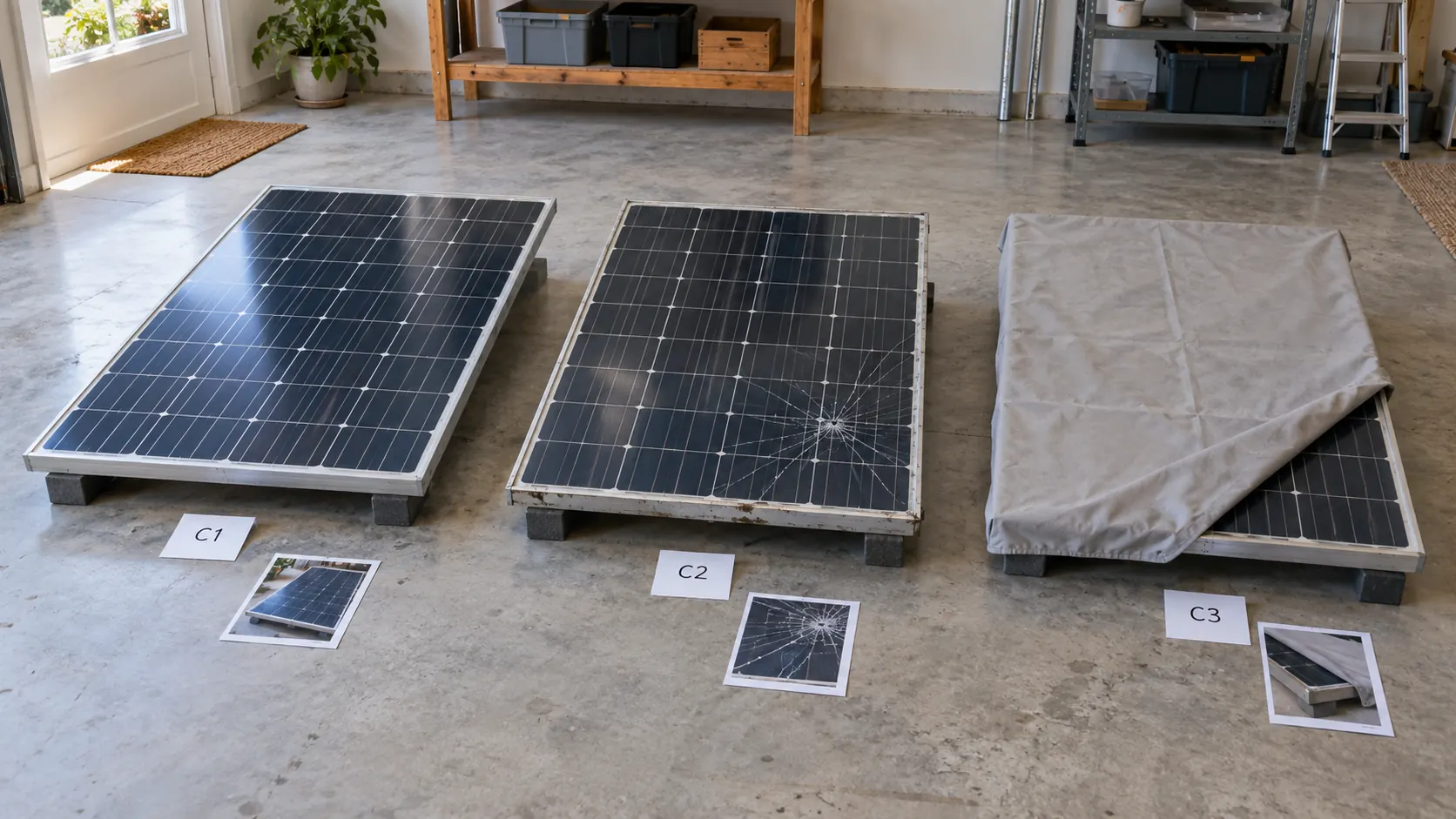
Solar equipment condition groups in Sydney should help a reader understand the evidence supplied with a collection enquiry. They should not tell that reader whether an item works, is electrically safe, has remaining life or will be accepted. Start only with equipment appropriately qualified people have already safely removed and made available at a ground-level handover point. A homeowner, installer or company contact can then describe the current observations without attempting another inspection or handling task.
Use a neutral group reference, such as CG-1, to connect an equipment category and count to a particular note. The identifier is not a quality grade. A group might contain panels with comparable supplied views, or a separate inverter category with its own disclosure. Do not describe the entire solar system as having one condition because one panel face appears clear. The damaged-panel scope page covers the assessment route for disclosed damage. This guide concerns the wording and provenance of the record, not whether a damaged item qualifies.
| Record description | Useful wording when supported | Conclusion to leave unconfirmed |
|---|---|---|
| No obvious damage visible in the supplied view | Front faces shown in the current photographs have no obvious visible damage; other faces are not documented. | Working, electrically safe, fully intact, reusable, eligible or guaranteed to be recycled. |
| Visible damage described | A crack is visible in the glass on the identified panels, or a frame mark is visible in the supplied photograph. | The cause, electrical consequences, repairability, classification or collection acceptance. |
| Mixed observations | Different visible states occur in the batch. Keep each supported description and its own count or count unknown. | One majority observation applying to every item or one downstream outcome for the batch. |
| View or condition unconfirmed | Some faces are covered, absent from the supplied views or not confirmed by the current fact holder. | Hidden condition inferred from another item, an old record or the absence of a reported fault. |
These are suggested plain-language descriptions, not an accredited grading scheme or a ReSova eligibility checklist. Prefer the specific mark and documented view over a broad adjective such as ‘good’. Known fire, storm or other exposure context can be disclosed as something reported by the responsible contact, with its source identified. It is not a diagnosis of consequences. Keep equipment categories separate using the component declaration guide when a home upgrade left more than panels.
Record who supplied the observation and what the view does not show
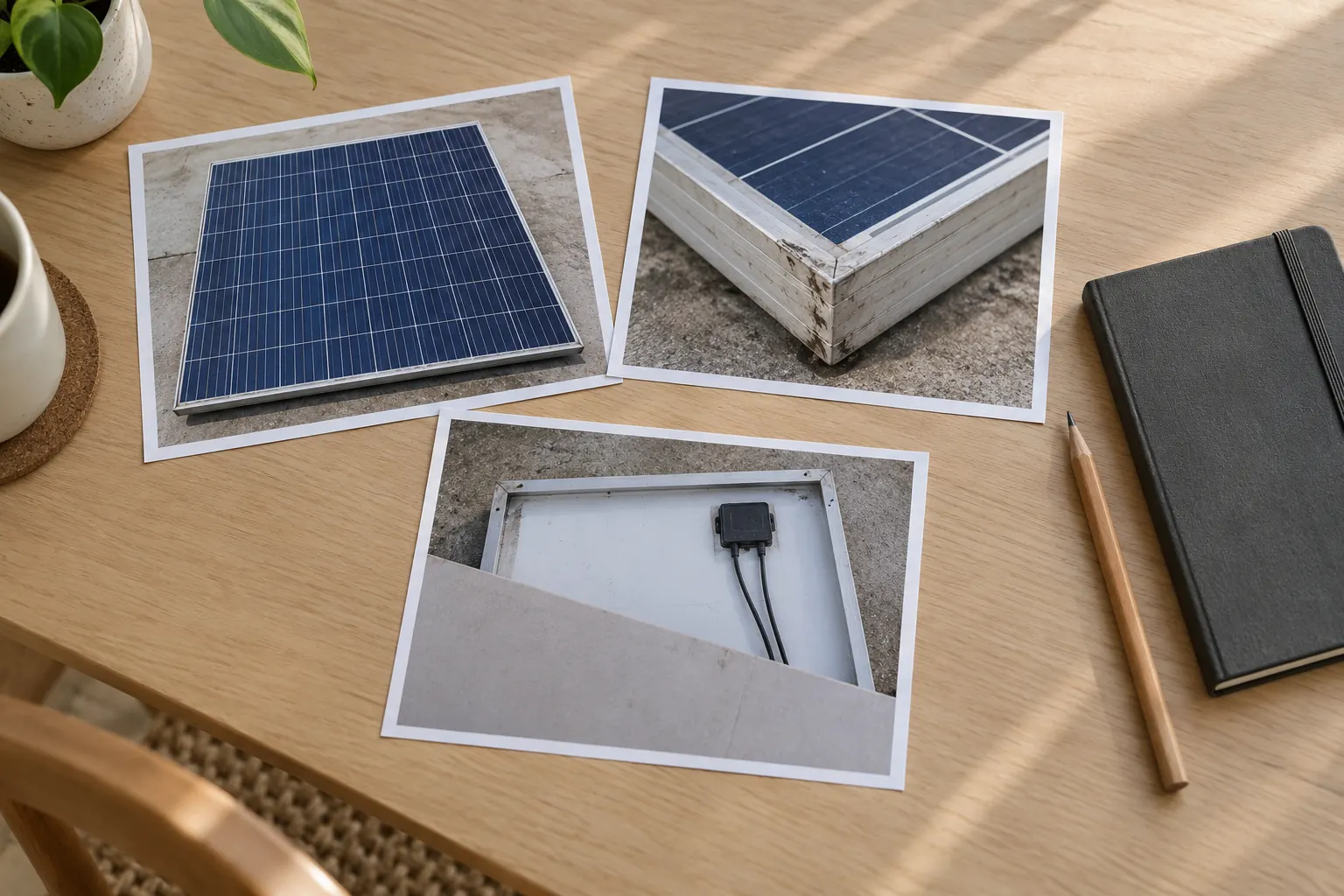
A useful observation line answers four small questions: which equipment group is described, who supplied the fact, when the observation or photograph was made, and what was actually visible. ‘Installer supplied front-view photographs on the record date; rear faces not shown’ is more precise than ‘all checked’. The photo checklist owns the wider question of useful collection images. Here, the important decision is the limit attached to each observation, not how to conduct a photography or inspection job.
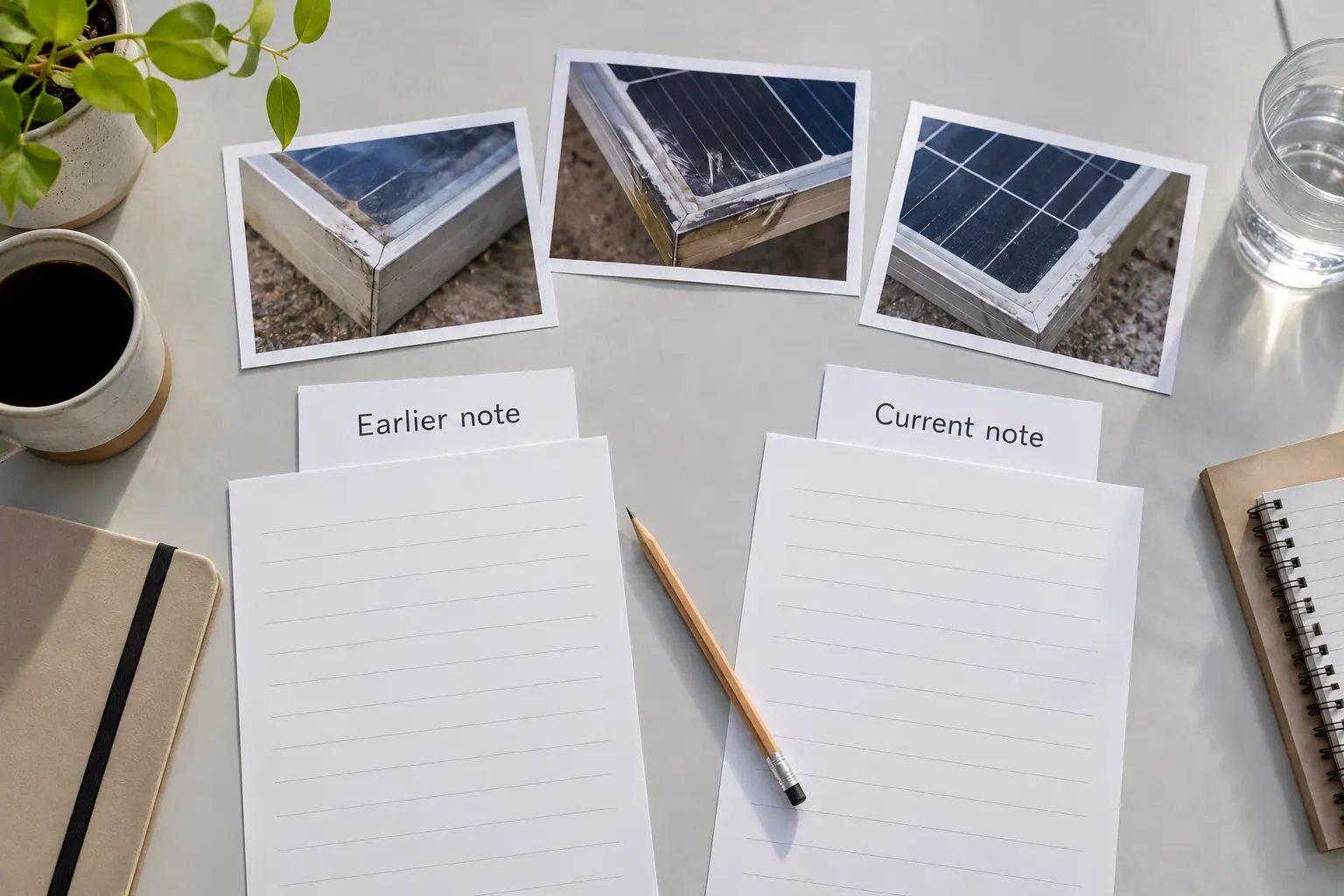
Keep the observation date separate from the date an email was forwarded. If an older photograph is the only one available, say that its current relevance is unconfirmed. Several close-ups can depict the same item, so they are not separate quantities. A photograph can also show only part of a group. Do not apply a visible mark from that sample to every panel unless the current fact holder actually confirms the wider observation. Use information already available through the responsible people and ordinary project records. Do not move, uncover, unpack, open or test equipment merely to complete this administrative note.
The U.S. DOE FEMP guide treats refurbishment and performance decisions as a separate inspection-and-testing subject. That distinction is useful here, but its technical procedures are not instructions for a ReSova customer. Similarly, the U.S. EPA presents recycling and reuse as distinct subjects; neither becomes a promised destination because a supplied image looks clear. A separate contractor report can retain its own issuer, date and item references without turning this enquiry note into a technical opinion.
Reconcile the group counts and keep each role’s facts identifiable
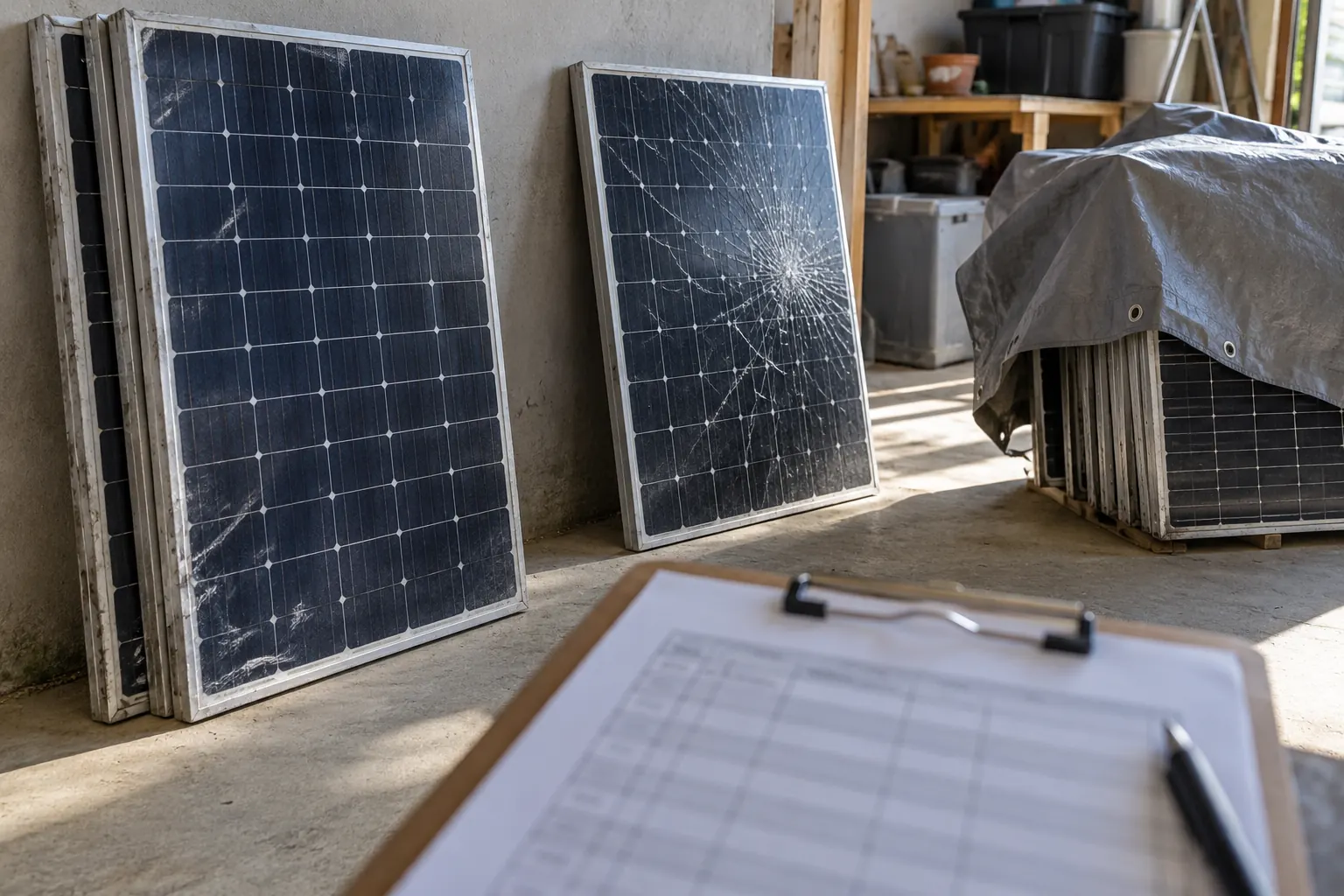
Group totals are only useful when they describe the same equipment category, current batch and record date. For an illustrative record, a contact might confirm 24 removed panels at one ground-level point: 18 with front-view notes, two with disclosed visible cracks and four whose faces are not shown. The arithmetic 18 + 2 + 4 = 24 checks the record’s panel quantities. It does not assess performance, endorse any handling arrangement or approve any item. If the four-panel line instead came only from a stale asset list, keep that count unconfirmed rather than forcing a balanced total.
Homeowner, installer and company records have different sources
A homeowner can state the information received from the responsible electrician or installer and identify the present location. The removal team can provide its existing removed-item tally and the observations it actually recorded. A company or warehouse contact can identify which current lot the note describes and who can correct it. Do not treat one person’s authority to send an enquiry as proof that they performed removal, testing or a complete stocktake. Where people disagree, retain the unresolved fact and its source instead of choosing the more convenient total.
A condition-disclosure record flow
- Define the current category and batchIdentify already safely removed equipment at the named ground-level point. Keep installed, connected and later-stage equipment outside the record.
- Attach the supported observationConnect a neutral group reference to a visible description, source and observation date. State what was not seen.
- Keep the count and its certaintyUse the current confirmed category count where available. Retain a reported, estimated or unconfirmed count as such rather than deriving it from photographs.
- Reconcile without inventing a balanceCompare group totals only within the same category and batch. Explain unresolved differences; do not convert them into technical conclusions.
- Replace the changed noteIf the batch, observation, count, photograph, point or fact holder changes, identify the superseded entry before requesting another review.
Send an enquiry that preserves condition uncertainty
No record label in this guide introduces a technical-test requirement or decides a ReSova eligibility category. Unconfirmed performance is not a request to test equipment. Keep the visible facts and their limits clear, then choose the enquiry route from the actual categories, quantities, condition context and access information. An administrative group must not become an automatic acceptance or rejection rule.
For a condition-aware enquiry, provide the equipment category and actual count or count uncertainty, group references, broad visible notes, available dated photographs, postcode, current ground-level handover point, known access facts and a reachable contact. ReSova assesses local on-site collection requests in Sydney and selected NSW. The value of a clear note is that the review can address the actual stated differences and unknowns. It does not determine technical condition or guarantee acceptance, price, vehicle, route, timing, booking, recycling rate, reuse, processor or final destination.
The Collection Estimator is a starting point only where the current eligible 10–69 panel-only criteria fit the actual request. Do not assume a standard estimate covers disclosed damage, unresolved condition, additional categories or unusual access. Use Commercial Services for a tailored condition or mixed-equipment review, including company batches, 70+ panels, recurring work, multiple sites or phased availability. The mixed-equipment record keeps unlike categories and units separate. Online time selection remains paused. These are request, review and availability-discussion paths, not direct booking.
Australian Government consumer guidance directs solar-component removal and replacement to licensed electricians. This article starts after that work and does not provide electrical disconnection, removal, roof-work, site-safety, traffic-management, testing or legal advice. Current access and contact facts support an enquiry without transferring those responsibilities to ReSova.
Sources and dates checked
- Australian Government — Replace and recycle your solar system, checked 12 October 2026: professional removal/replacement boundary, not a collection eligibility rule.
- U.S. DOE FEMP — Prepare for the end of a performance period, checked 12 October 2026: global comparator distinguishing refurbishment/performance assessment from administrative disclosure. No technical method or U.S. rule is adopted here.
- U.S. EPA — Solar panel recycling, checked 12 October 2026: global comparator separating reuse and recycling subjects. It does not establish an Australian receiving pathway or a ReSova outcome.
Key takeaways
- Describe the documented view, identify its source and date, and keep unseen condition unconfirmed.
- Neutral condition-group references connect records; they are not technical grades or eligibility labels.
- Reconcile quantities only within one current category and batch, without forcing unknown counts to balance.
- Use a tailored enquiry where damage, uncertainty, mixed categories or complex facts require review.
Frequently asked questions
Can an intact-looking panel be described as working?
Not from appearance alone. State what is visible in the supplied view and keep performance unconfirmed. A condition-group note is not electrical testing or a reuse decision.
What if some faces or quantities cannot be confirmed?
Record the limitation and keep the affected view or count unknown. Do not infer hidden condition, count a photograph twice, or move, unpack or test equipment just to complete this record.
Are these condition groups a ReSova eligibility or grading standard?
No. They are plain-language administrative descriptions for an enquiry. ReSova reviews the actual equipment, condition, location, handover and access facts separately; a group label cannot confirm eligibility or a downstream result.
Can every condition group use the standard estimator?
No. The estimator is only a starting point where the current eligible 10–69 panel-only criteria fit the actual request. Disclosed damage, unresolved condition, mixed equipment, larger batches or complex circumstances need a tailored enquiry rather than an assumed standard price or booking.
Request a Condition Review
ReSova considers eligible, already removed equipment in Sydney and selected NSW areas after the ground-level handover and site access can be confirmed. It does not decide removal, technical condition or a final downstream outcome.