
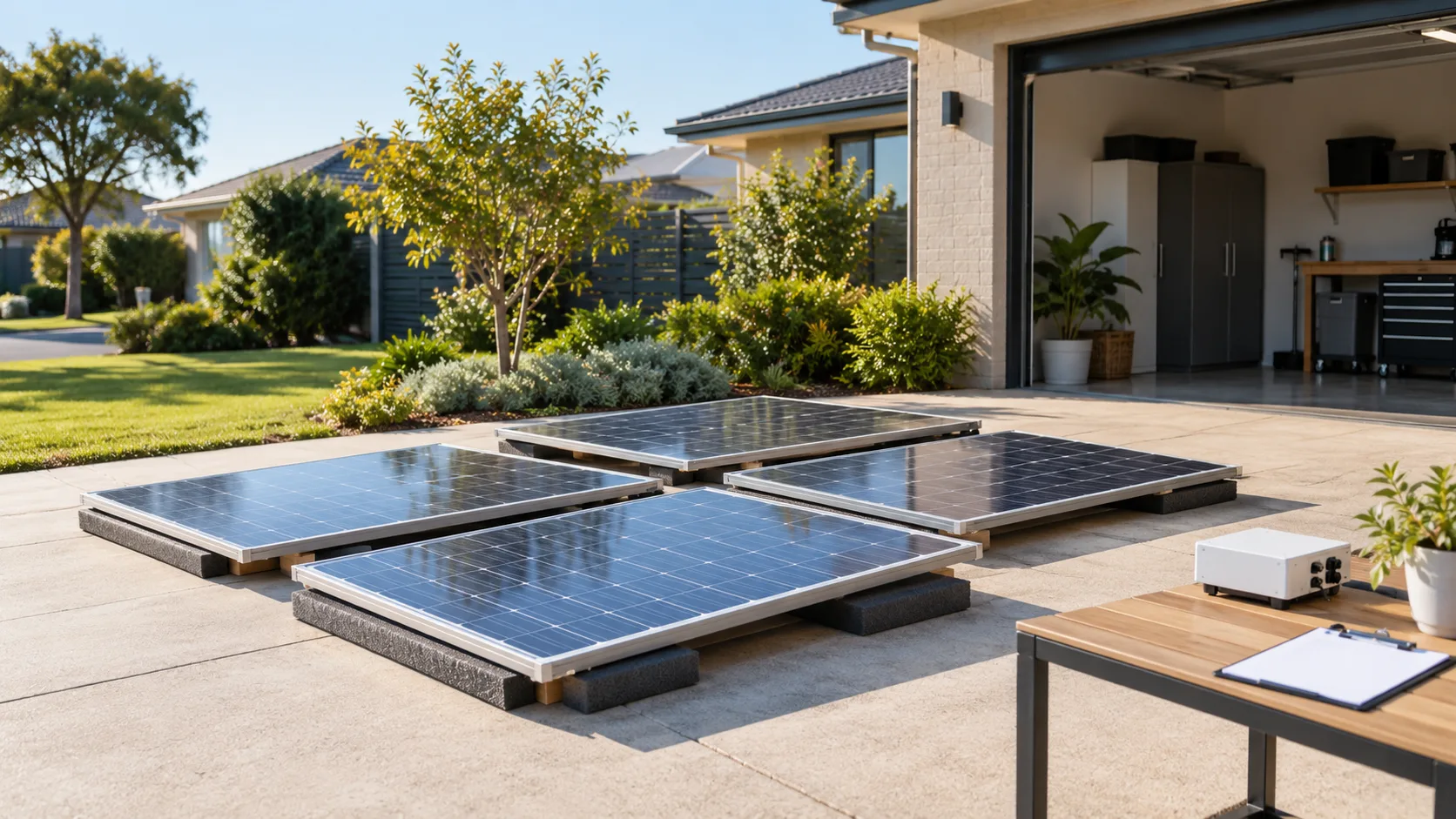
Quick answer: declare the components at ground level, not the system described in old paperwork
After a solar upgrade, a homeowner may have an original system proposal, an installer invoice and equipment that qualified people have already removed. These are not interchangeable. For a collection assessment, declare only the components that are actually at the ground-level handover point today. Count panels actually present, list inverters, rails, cables and other categories separately where they are present, and use broad visible wording rather than a technical conclusion. ReSova can review stated eligible equipment in Sydney and selected NSW after qualified removal. It does not disconnect, remove, test or diagnose the system, and a declaration does not confirm acceptance, price, vehicle, route, timing, booking, recycling, reuse or final destination.
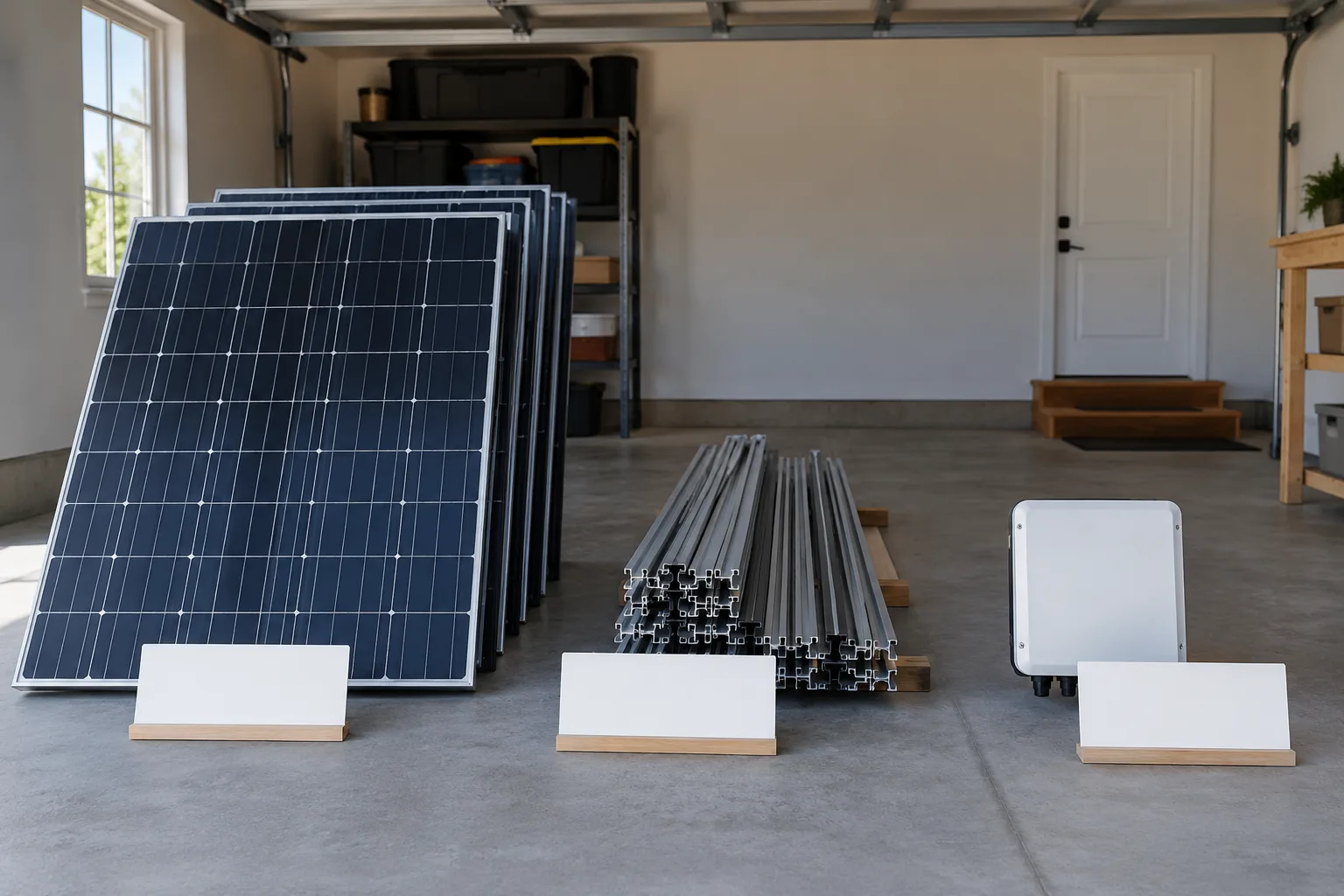
Declare components by the category you can actually see
| Category | Useful factual declaration | Do not infer |
|---|---|---|
| Panels | Actual count at ground level and broad visible state. | Original system capacity, technical performance or acceptance. |
| Inverters and electronics | Separate presence and broad visible state if known. | Testing result, value, reuse or processing route. |
| Rails, racking, cable and other items | Separate category and honestly stated unknowns. | That all are included in any future scope. |
This is not a request to identify every serial number or to make a safety judgement. Do not unpack, move, test or take apart equipment merely to make the list more detailed. The Australian Government advises that removal or replacement should be done by a licensed electrician. Once that work is complete, a short factual declaration is enough to begin the right conversation. The equipment-list guide gives adjacent category context; this page focuses on a homeowner after an upgrade.
Keep historic records useful without making them the ready batch
Original capacity, product paperwork and installation history can remain in your household records. They may explain what was once installed, but they cannot establish the number of panels now removed or whether related equipment is still installed, retained or scheduled for a later stage. Use the current declaration for the batch at hand. The post-upgrade handover checklist explains the broader handover decision; component declaration is the narrower next step of naming what is physically there.

Add the facts that make a ground-level handover understandable
From component declaration to review
- Confirm qualified removalKeep roof-mounted, connected and later-stage equipment outside the declaration.
- List current categoriesCount panels actually present and separately note other visible categories.
- Use broad visible factsDescribe only what is apparent and state unknowns rather than testing.
- Add current location factsState postcode, ground-level point, practical access facts and reachable contact.
- Request reviewUse an estimate enquiry only where the standard path fits; it remains an availability discussion.
A clear gate, a complete component list or a preferred date does not reserve a vehicle or create a booking. Responsible site parties retain their own electrical, removal, roof and safety responsibilities. If the batch changes, replace the relevant count or category rather than combining old and new information. That approach is useful for households and avoids presenting a partial replacement stage as a full system handover.
Choose an honest review route
For an eligible standard-path discussion, use the Collection Estimator with the current facts. For mixed components, 70+ panels, stages, several sites or complex access, use Commercial Services for a tailored-scope discussion. Neither route is direct booking; online time selection is paused and ReSova must review the stated information.
Sources and dates checked
- Australian Government — Replace and recycle your solar system, checked 6 October 2026: licensed-electrician removal/replacement boundary.
- PV CYCLE collection form, checked 6 October 2026: global comparator for separate equipment fields; not a ReSova or Australian procedure.
- ReSova — Residential collection, checked 6 October 2026: post-removal assessment boundary.
Key takeaways
- Declare what is actually at ground level after qualified removal.
- Keep panels and other component categories separate.
- Historic records inform home records but cannot replace the current batch.
- A declaration supports assessment, never a collection outcome.
Frequently asked questions
Can an old system invoice be used as a component declaration?
No. It is context only; declare what is actually already removed and at ground level.
Do components need technical testing first?
No. State broad visible facts only; ReSova does not provide technical testing.
Does a declaration confirm collection?
No. It supports assessment and availability discussion only.
Request a Collection Estimate
ReSova considers eligible, already removed equipment in Sydney and selected NSW areas after the ground-level handover and site access can be confirmed. It does not decide removal, technical condition or a final downstream outcome.