
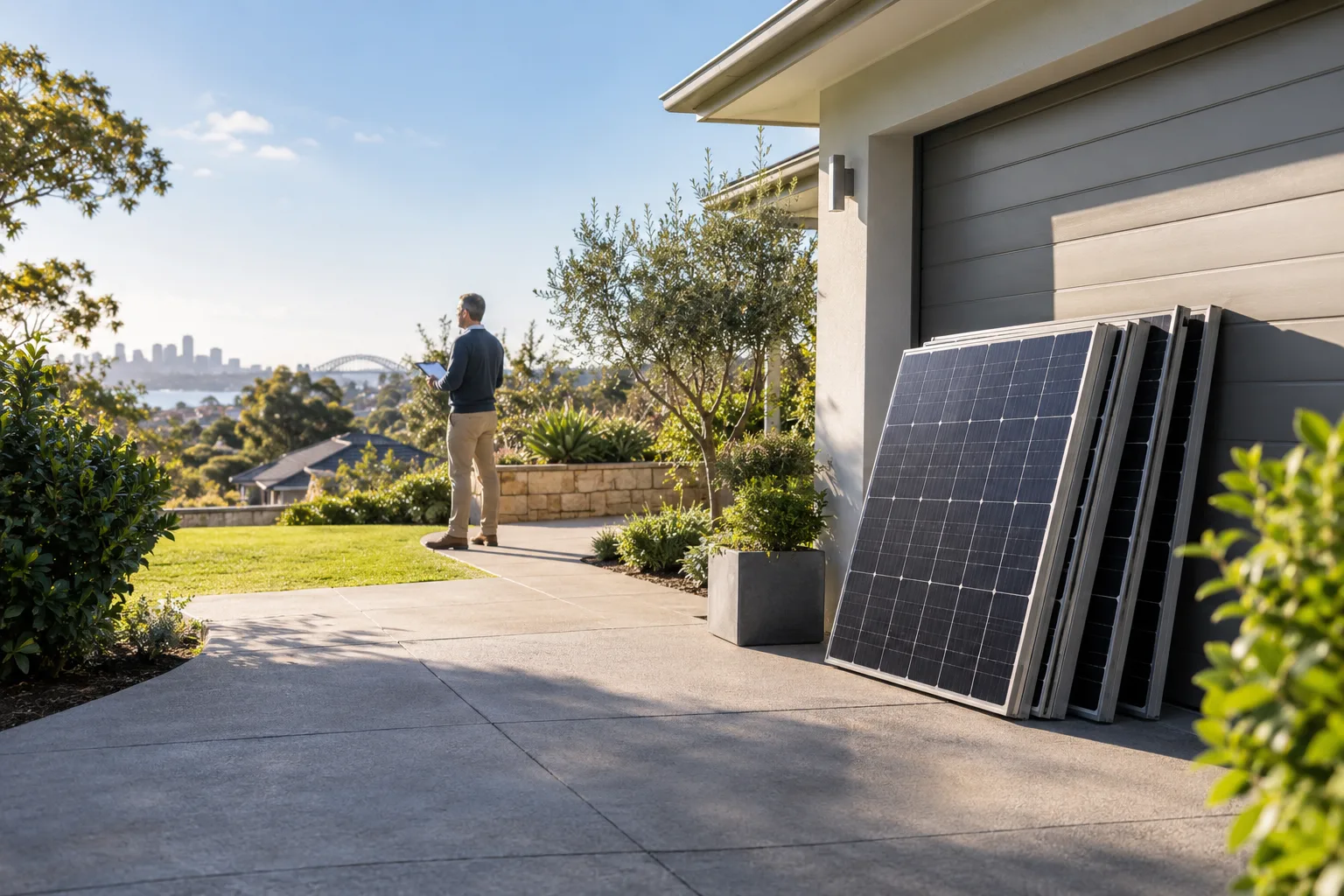
Quick answer: describe the batch beside you, not the system that used to be installed
A home solar upgrade can leave a homeowner with two different records: an old proposal, invoice or system-size note, and equipment that qualified people have already removed. For a collection assessment, they do different jobs. The historic record may help you understand your property, but it does not prove the current number of panels, whether other components are present, where the items are staged or whether access is unchanged. Start with the actual ground-level batch and state what you genuinely know. ReSova can review the supplied facts for eligible equipment in Sydney and selected NSW. It does not remove, disconnect, test or diagnose a system, and an enquiry does not confirm acceptance, price, time, booking, recycling or final destination.

Keep the old system record and the ready batch separate
| Keep as home context | Describe for the current handover | Do not infer |
|---|---|---|
| Original kW size, installer paperwork and upgrade history. | Actual panels at ground level, separately listed related equipment and broad visible facts. | That every original component is present, eligible or ready. |
| A preferred date or family schedule. | Current postcode, practical handover point, known access constraints and reachable contact. | That a request reserves a vehicle, route, time or booking. |
| What you hope happens after collection. | Only the facts visible and known now. | Reuse, recycling, processor or final destination. |
This separation prevents an understandable household shortcut: converting an original system capacity into an assumed panel quantity. Systems vary, upgrades may be staged and the items at ground level may be only part of the historic installation. Count only the panels actually ready. If an inverter, rails, cables or other items are present, list them separately rather than merging them into a single ’system’ line. Broad visible words such as intact, cracked, boxed or unknown are more useful than a technical conclusion. Do not unpack, move, test or make a safety judgement merely to create a fuller list.
Make a short, factual ready-batch note
A practical homeowner note has six fields: the number of panels actually at ground level; other categories recorded separately; broad visible state; the suburb or postcode; the handover point; and the person who can answer an access or change question. A photo can help explain the physical arrangement if it is safe and appropriate for the homeowner to take, but it does not decide eligibility. The residential collection page explains the current post-removal boundary, while the handover-change guide explains why an update matters when facts change.
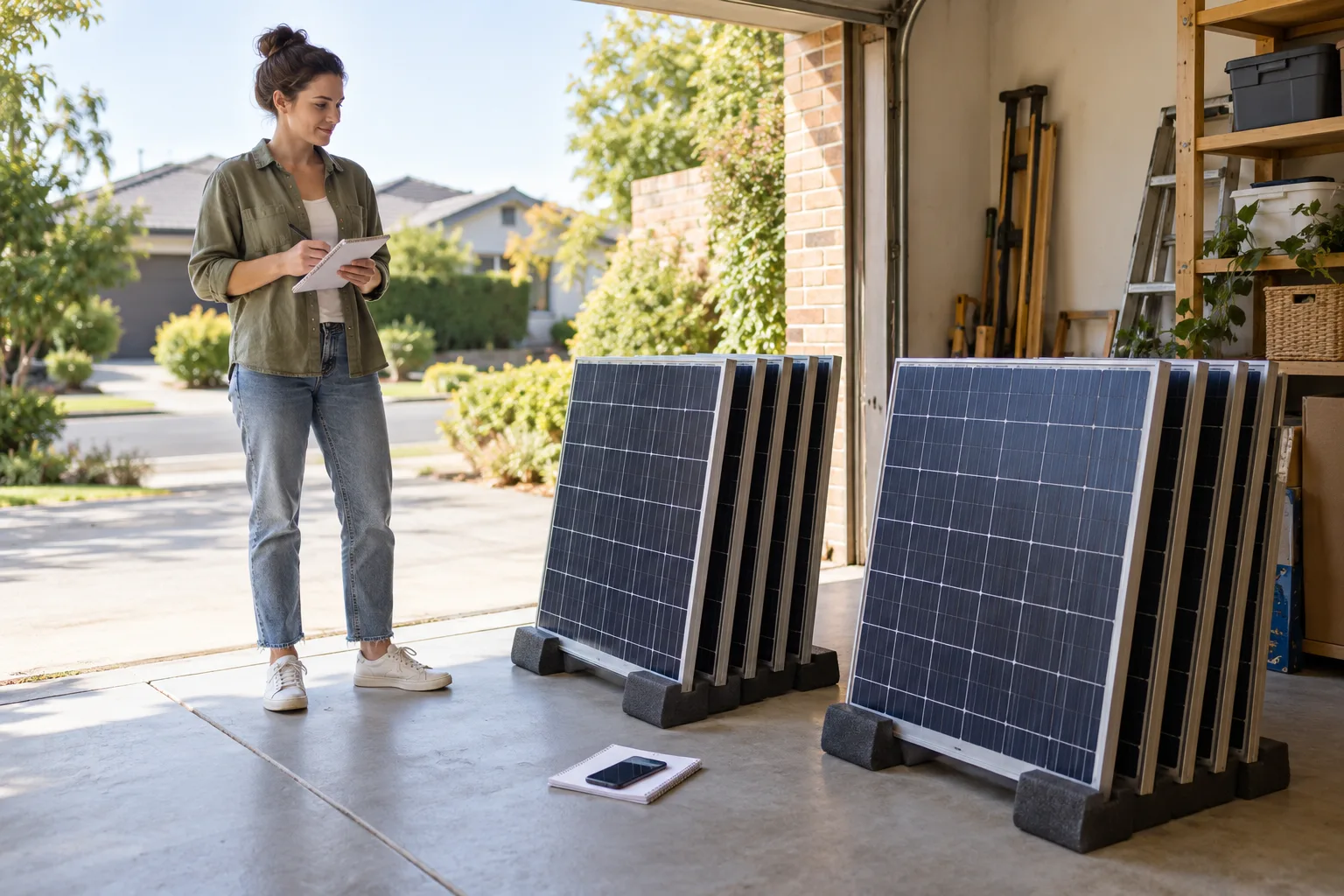
Confirm the ground-level handover facts without taking on site work
A homeowner fact-check flow after an upgrade
- Wait for qualified removal to be completeKeep installed, connected or roof-mounted equipment out of the ready description.
- Look at the actual ground-level batchCount what is there now and list non-panel categories separately.
- Record simple visible factsUse broad visible wording and honestly state unknowns; do not test equipment.
- Confirm practical contextNote the postcode, handover point, known access facts and reachable contact.
- Request the fitting reviewUse an estimate enquiry only where the standard pathway fits; a request remains an availability discussion.
The responsible site parties and qualified people retain electrical work, removal, roof work and safety responsibilities. ReSova does not take those responsibilities over. In particular, a clear driveway, an accessible side gate or a complete-looking note does not create a collection commitment. It simply gives the review a more accurate starting point. If another part of the upgrade is still being completed, say so rather than combining a forecast with the items already ready.
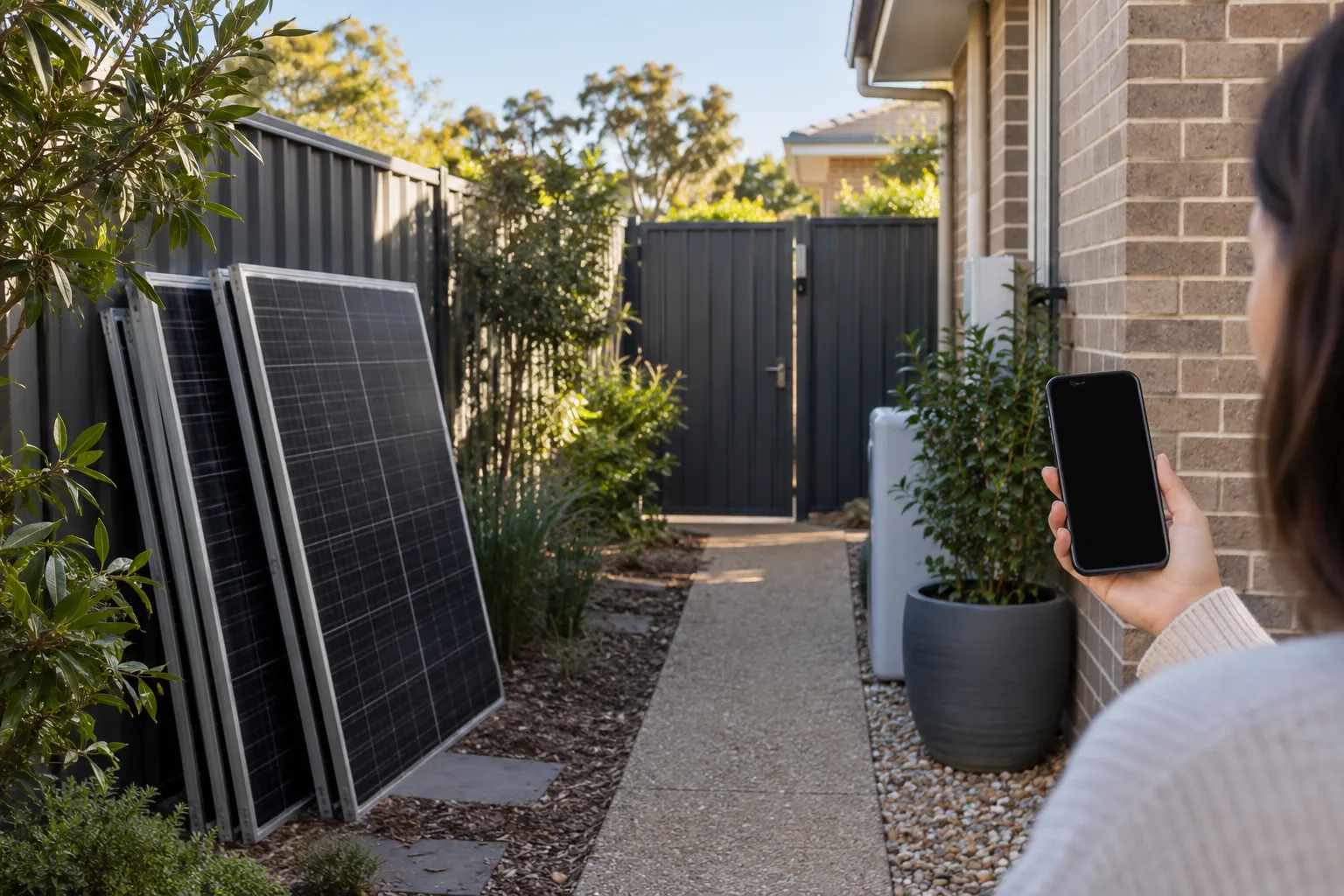
Choose an honest enquiry route
For a current eligible standard-path discussion, start with the Collection Estimator and provide the actual facts rather than an original system size. For mixed equipment, 70+ panels, stages, more than one location or complex access, use Commercial Services for a tailored-scope discussion. Neither path is direct booking: online time selection is paused, and ReSova must still review the stated information. That is especially important after an upgrade because the physical batch and access can change quickly.
Sources and dates checked
- Australian Government — Replace and recycle your solar system, checked 4 October 2026: replacement/removal needs professional assistance and a licensed electrician.
- US DOE FEMP — prepare for end of performance period, checked 4 October 2026: comparator for separating lifecycle records from a current project decision; not Australian service or legal guidance.
- ReSova — Residential collection, checked 4 October 2026: local post-removal assessment boundary.
Key takeaways
- Use the actual ground-level batch, not an original kW figure, for a collection review.
- Separate panels from other equipment and broad visible facts from technical conclusions.
- A request supports availability discussion only; it does not confirm any collection outcome.
- Qualified people and responsible site parties retain removal, electrical, roof and safety responsibilities.
Frequently asked questions
Can original system paperwork confirm what is ready for collection?
No. It can support your own records, but the review needs the actual already removed ground-level batch and current handover facts.
Does a request confirm collection or price?
No. It begins an availability and scope discussion; acceptance, price, vehicle, route, timing and downstream outcome remain unconfirmed.
Does ReSova remove the old system?
No. Electrical disconnection and removal remain with qualified people and responsible site parties before ReSova can assess a ground-level handover.
Request a Collection Estimate
ReSova considers eligible, already removed equipment in Sydney and selected NSW areas after the ground-level handover and site access can be confirmed. It does not decide removal, technical condition or a final downstream outcome.