Safe removal confirmed
Do not touch, isolate or remove equipment for collection unless the appropriate qualified people have completed the electrical and safety work.

How to prepare a damaged solar panel collection request in Sydney: qualified removal, clear condition disclosure, accessible staging and a tailored scope where needed.
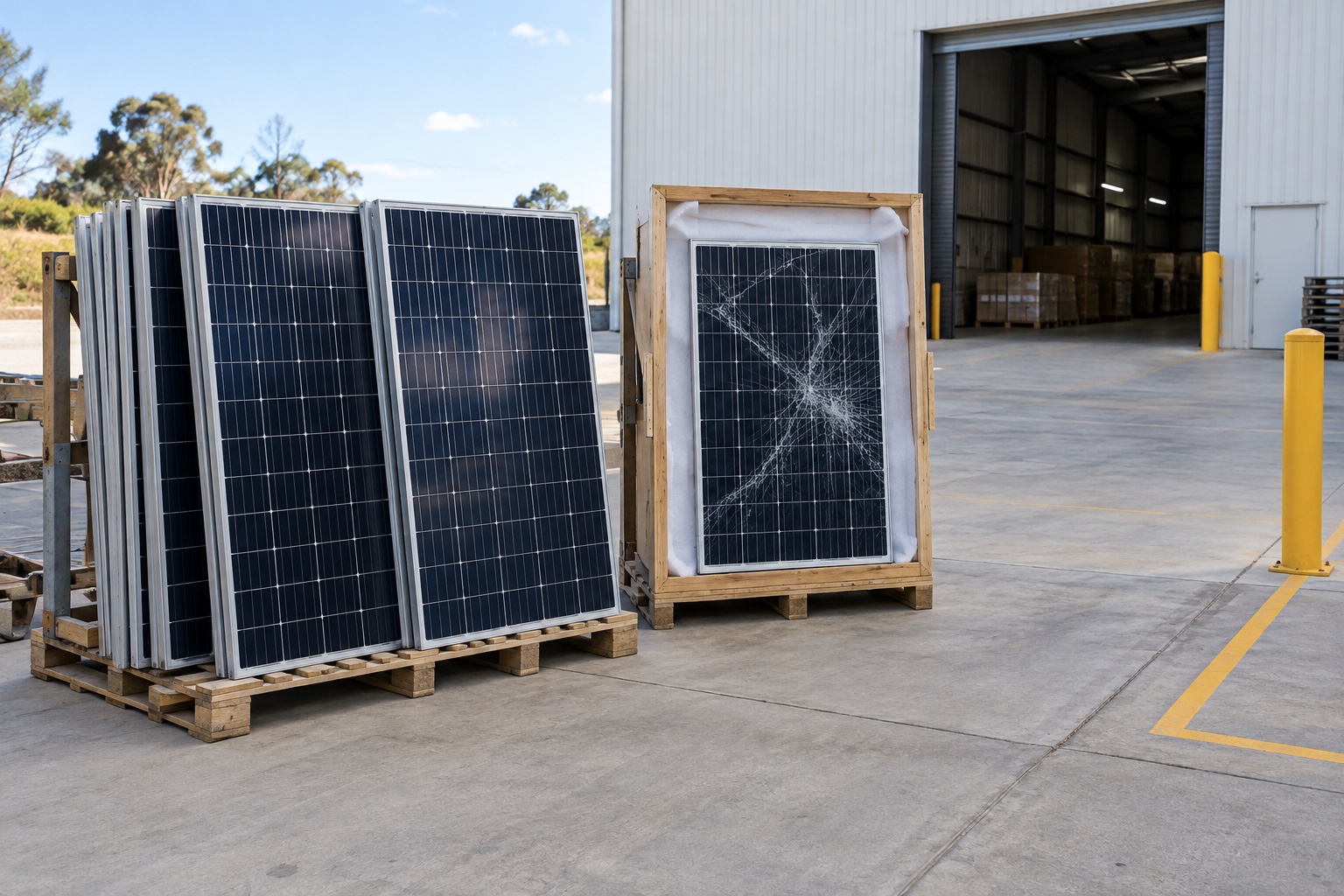
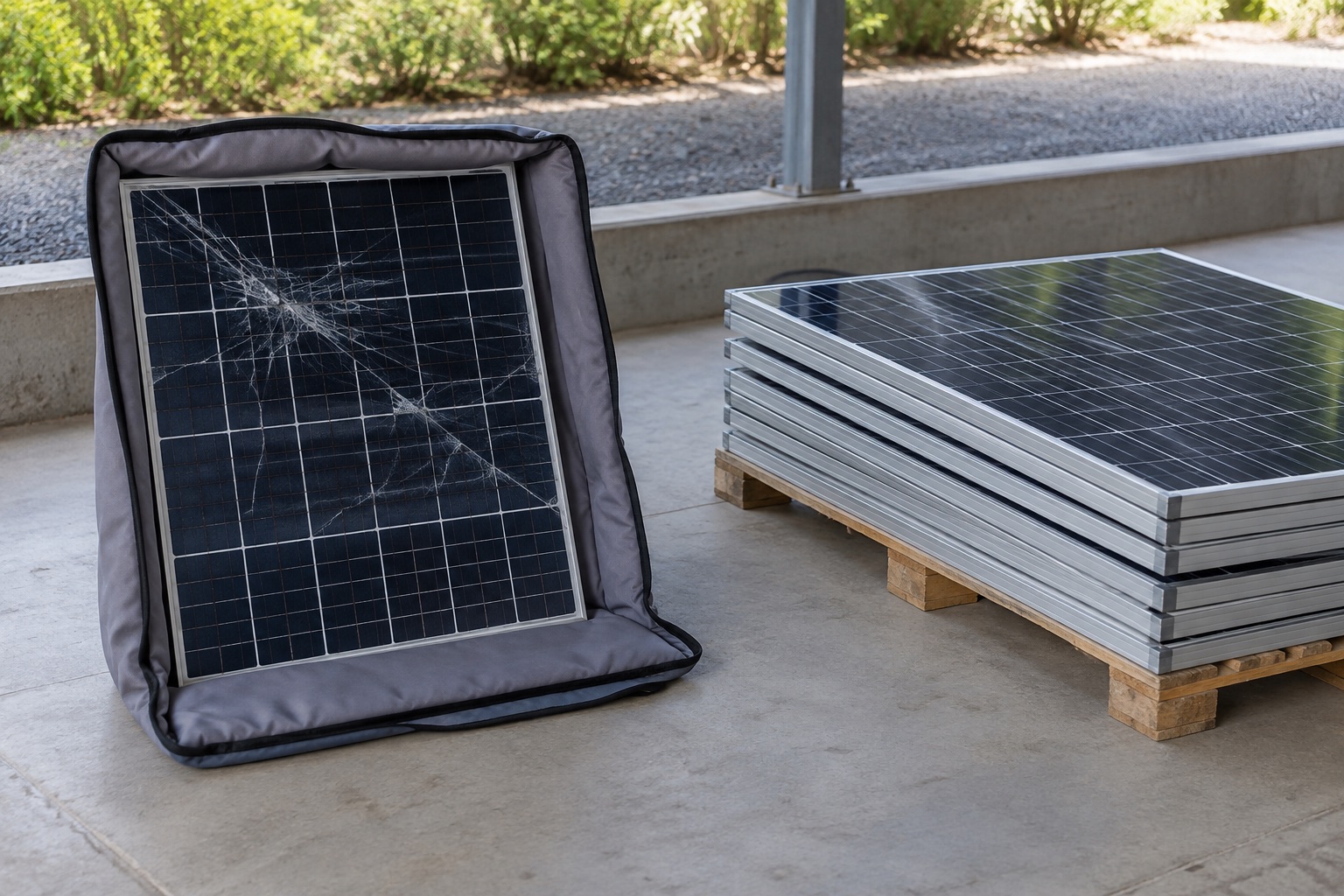
Damaged solar panels may be considered for collection once qualified people have safely removed them and the actual condition has been disclosed. For Sydney and selected NSW jobs, provide the count, broad visible condition, whether panels are shattered or fire-affected, how they are staged and the available loading access. ReSova does not perform electrical removal, make a safety certification or promise a particular processing result.
Do not touch, isolate or remove equipment for collection unless the appropriate qualified people have completed the electrical and safety work.
State the broad condition honestly, including cracked glass, shattered panels, fire effects, contamination or a mixed batch.
Describe the ground staging and loading route so the actual handling conditions can be scoped; do not assume special conditions are standard.
A cracked, shattered, fire-affected or mixed batch can affect how a collection is scoped. It should not be presented as normal intact equipment, and it should not be treated as a simple proof of what will happen downstream. Accurate description helps avoid a mismatched collection request.
These are practical collection inputs. They do not replace electrical, safety, contractual or legal obligations that may apply to a particular site.
| Disclosure | Why it helps | What it does not determine |
|---|---|---|
| Broad visible damage | Lets the collection request reflect the actual batch and access conditions. | A legal classification, safety certificate or final processing result. |
| Fire-affected / shattered context | Flags that a standard assumption may be unsuitable and scope needs review. | An automatic promise that the material will be accepted or collected on a certain date. |
| Ground-level staging detail | Helps assess vehicle/loading access and the practical handover. | Electrical removal or site safety management by ReSova. |
Electrical and removal work is handled by the appropriate qualified team before collection.
Share the actual broad condition and any special context without trying to self-classify the material.
Keep the batch accessible at ground level and explain access constraints.
Damaged, special or complex batches may need a direct scope rather than a standard estimate.
Eligible collected items are counted and the collection handover is recorded on a job docket.
Include the count, visible condition, staging point and loading access. Do not omit damage from the request.