
Quick answer
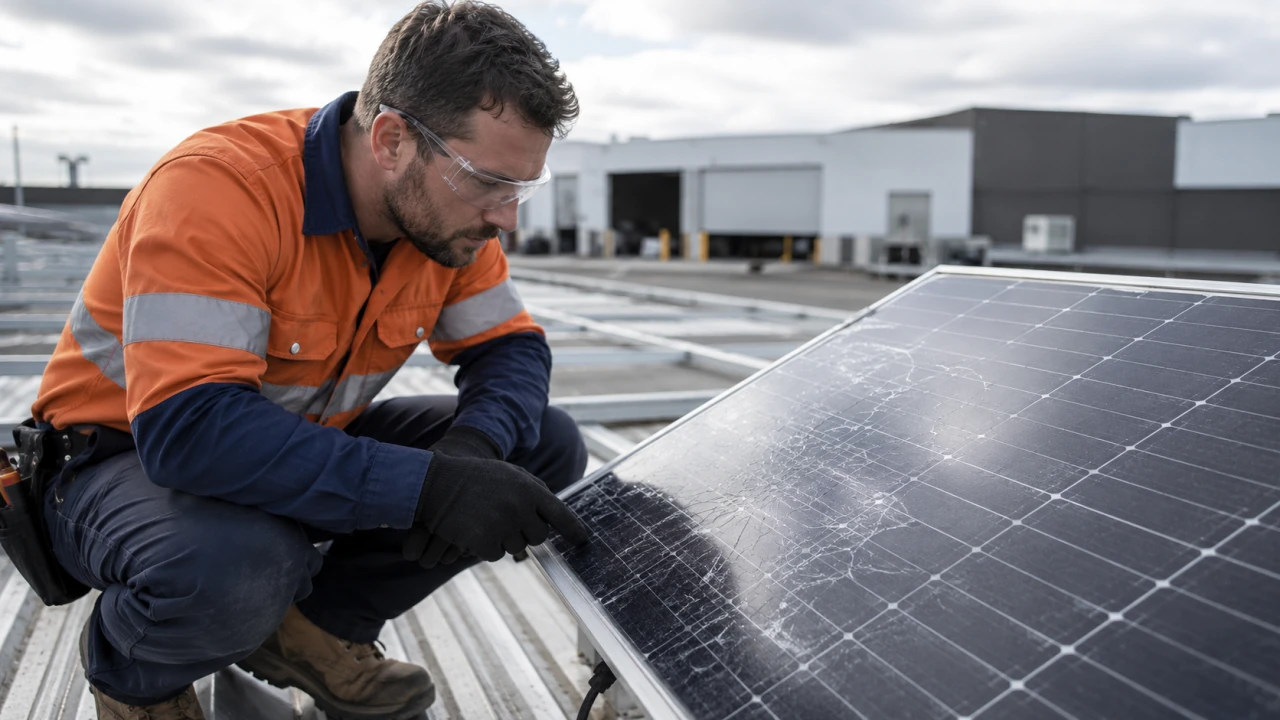
Yes, broken and cracked solar panels can generally be recycled — most of the glass, aluminium, silicon and metal content is still recoverable, even though a damaged panel usually yields lower-purity material than an intact one. The bigger issue is safety, not recyclability: a cracked panel can still carry dangerous DC voltage, even on a cloudy day, so treat it as live until it’s disconnected by a licensed person. Don’t drill, cut or dismantle a damaged panel yourself — store it safely away from foot and vehicle traffic and book it for collection like any other panel.
This comes up most often for installers and electricians assessing a client’s damaged system, and for homeowners after a storm, hail event or accidental knock — either way, the answer and the handling are the same.
A cracked panel is still electrically live
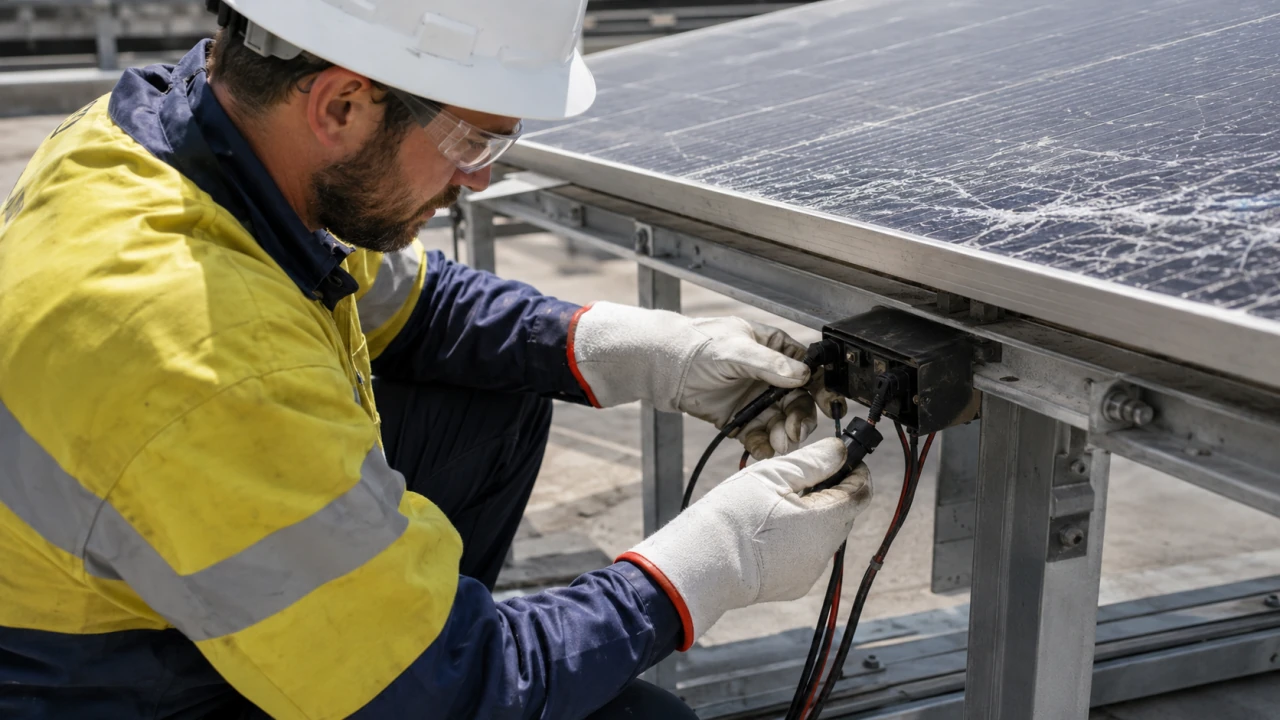
The most common mistake with a damaged panel is assuming it’s inert because it looks broken. It usually isn’t. Solar cells keep generating direct current from any light that reaches them, cracked glass and all, and that includes overcast days. If a panel has exposed wiring, a shattered surface or a damaged junction box, treat the whole thing as live rather than safe to touch. Under SafeWork NSW guidance, electrical work on solar panels must be completed by a licensed tradesperson — a damaged panel needs disconnecting the same way a working one would.
What not to do
Until a damaged panel is disconnected and collected, a few precautions matter:
- Don’t drill, cut or dismantle it — this can expose live components or release material unnecessarily.
- Don’t leave it where it’ll be handled repeatedly — every additional bump or knock risks more breakage.
- Keep it away from foot and vehicle traffic — sharp glass and unstable frames are a real physical hazard.
- Don’t assume it’s dead because it’s cracked — treat it as live until a licensed person disconnects it.
Can a broken panel actually be recycled?
Yes. A panel is roughly 95% recoverable material by weight, according to the Clean Energy Council, and damage to the front glass doesn’t undo that — the silicon cells and internal wiring generally sit inside polymer encapsulant layers that stay largely intact even when the surface cracks. Recyclers do get less-pure material out of a badly damaged panel than an intact one, but that’s a difference in yield, not a reason to send it to landfill. A real NSW precedent: Muswellbrook Shire Council’s approval for a 135 MW solar farm required that damaged or faulty panels — expected to be up to 10% of the roughly 300,000 installed — be recycled, rehabilitated or reused rather than landfilled, according to pv magazine Australia. Damaged panels being treated as recyclable, not disposable, is standard practice, not an exception.
Storm, hail and fire damage
Damage from a storm, hailstorm or fire follows the same logic as any other crack: check with your insurer about the claim first if it’s covered, but the panel itself still goes through the same disconnect-and-collect process either way. Fire-affected panels warrant extra caution — heat can compromise wiring and mounting hardware beyond what’s visible, so treat them as a job for a licensed person to assess, not something to inspect closely yourself.
Preparing it for collection
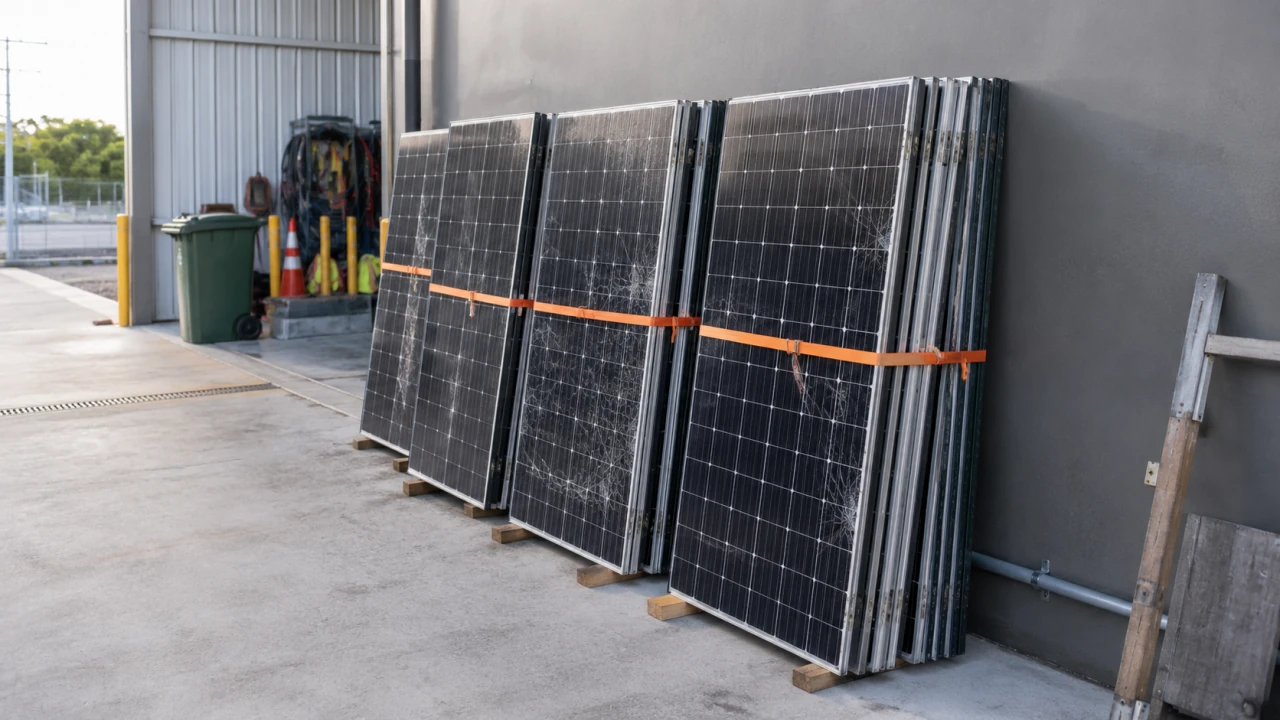
Once a damaged panel is safely disconnected, prepare it for collection the same way as any other panel: stack it securely, keep it out of high-traffic areas, and note the damage — photos help — when you book. There’s no separate process for damaged panels at the booking stage; the difference happens after collection, in how the panel is assessed and routed.
Getting it collected in Sydney
ReSova collects damaged and storm-affected panels from homes and commercial sites across Sydney alongside working ones — see what we accept on the what we collect page, or get an indicative price from the online estimator. For a commercial site with a mix of damaged and sound panels, the commercial collection pathway covers both in the one job.
Key takeaways
- A cracked panel can still generate dangerous DC voltage — treat it as live until a licensed person disconnects it.
- Don't drill, cut or dismantle a damaged panel yourself; keep it away from foot and vehicle traffic.
- Most materials in a damaged panel are still recoverable — recycling yield is lower than an intact panel, not zero.
- A real NSW project (Muswellbrook, 135 MW) mandated recycling rather than landfill for its expected faulty/damaged panels.
- ReSova collects damaged and storm-affected panels from homes and commercial sites alongside working ones.
Frequently asked questions
Is a cracked or broken solar panel dangerous?
It can be. A cracked panel can still generate DC voltage — even on a cloudy day — so it should be treated as live until it's disconnected by a licensed person. Exposed wiring or shattered glass adds a physical safety risk on top of the electrical one. Under NSW guidance, electrical work on solar panels must be completed by a licensed tradesperson.
Can broken solar panels actually be recycled?
Yes, in most cases. A panel is roughly 95% recoverable material, and much of that — glass, aluminium, silicon, trace metals — is still recoverable even when the panel is damaged, because the cells sit inside polymer layers that usually stay intact even when the front glass cracks. Intact panels do yield purer, more valuable material, but a damaged panel is still worth recycling rather than binning.
What should I do with a broken panel before collection?
Don't drill, cut or dismantle it yourself. Store it safely away from foot and vehicle traffic so it isn't broken further, and note the damage (photos help) when you book. Beyond that, prepare it the same way as any other panel for collection.
Does ReSova collect damaged or storm-affected panels?
Yes — damaged and mixed-condition panels are collected from both homes and commercial sites. Condition determines whether a panel is suited to reuse or goes straight to recycling; it doesn't determine whether it can be collected.
Get an Estimate
ReSova considers eligible, already removed equipment in Sydney and selected NSW areas after the ground-level handover and site access can be confirmed. It does not decide removal, technical condition or a final downstream outcome.