
Quick answer
Sydney businesses can request solar panel collection two ways: a one-off job for a single site, or an approved Trade Account, which gives 10% off eligible standard collection and transport charges with no subscription or fixed schedule. The online estimator covers eligible 10-to-69-panel jobs; other quantities and non-standard conditions require review. Damaged and mixed-condition equipment must be disclosed and remains subject to acceptance. A completed job docket records the actual collection handover only.
Who this is for
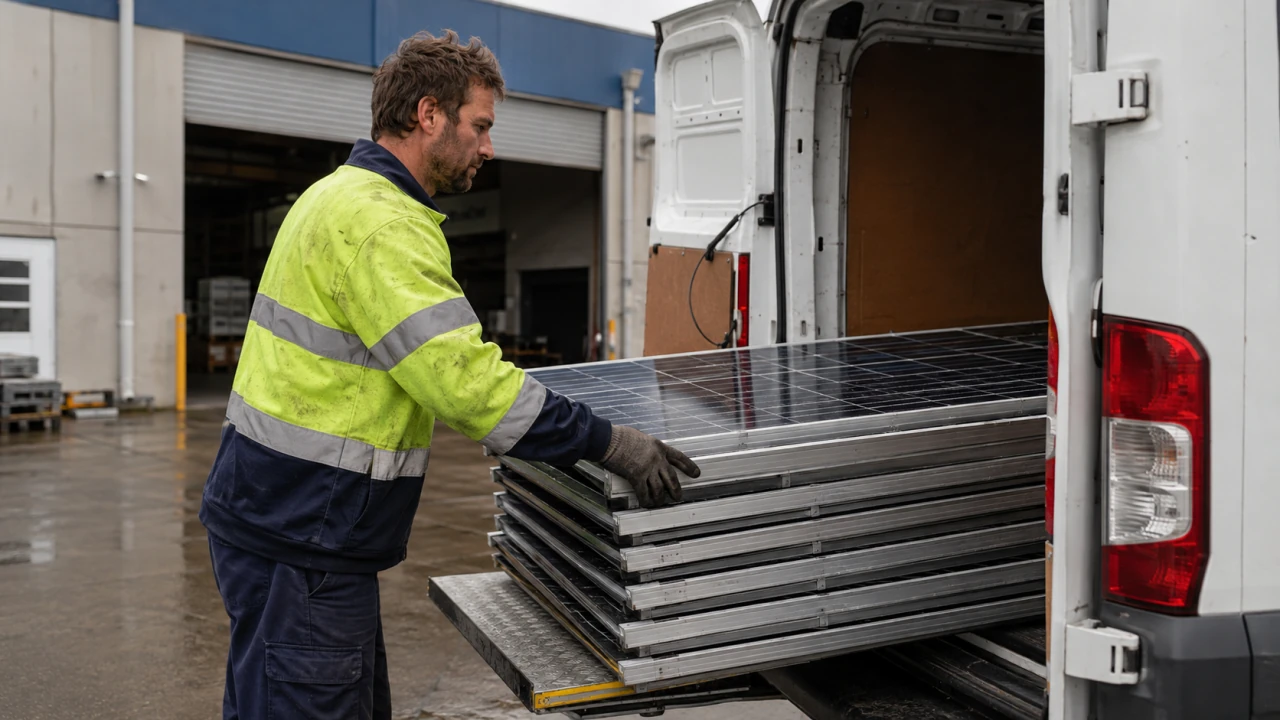
Commercial collection is built for installers, electricians, roofers and contractors who end up with removed panels on the van, in the yard or at the job site — as well as businesses managing a roof upgrade, warehouse system or office fit-out. Removed equipment can quickly become another job to manage on top of the actual work; commercial collection is designed to take that off your plate rather than turn into an extra disposal run.
One-off jobs vs Trade Account
A single job — one site, one collection — is priced and booked like any standard job through the online estimator. If you collect panels regularly, an approved Trade Account is usually worth setting up: it carries no subscription and no fixed pickup frequency, so you book only when you actually have panels ready, and the 10% discount applies to eligible standard collection and transport charges on every job once approved. Loading assistance, urgent collections, manual quotes and other non-standard charges sit outside the discount.
What counts as “bulk”
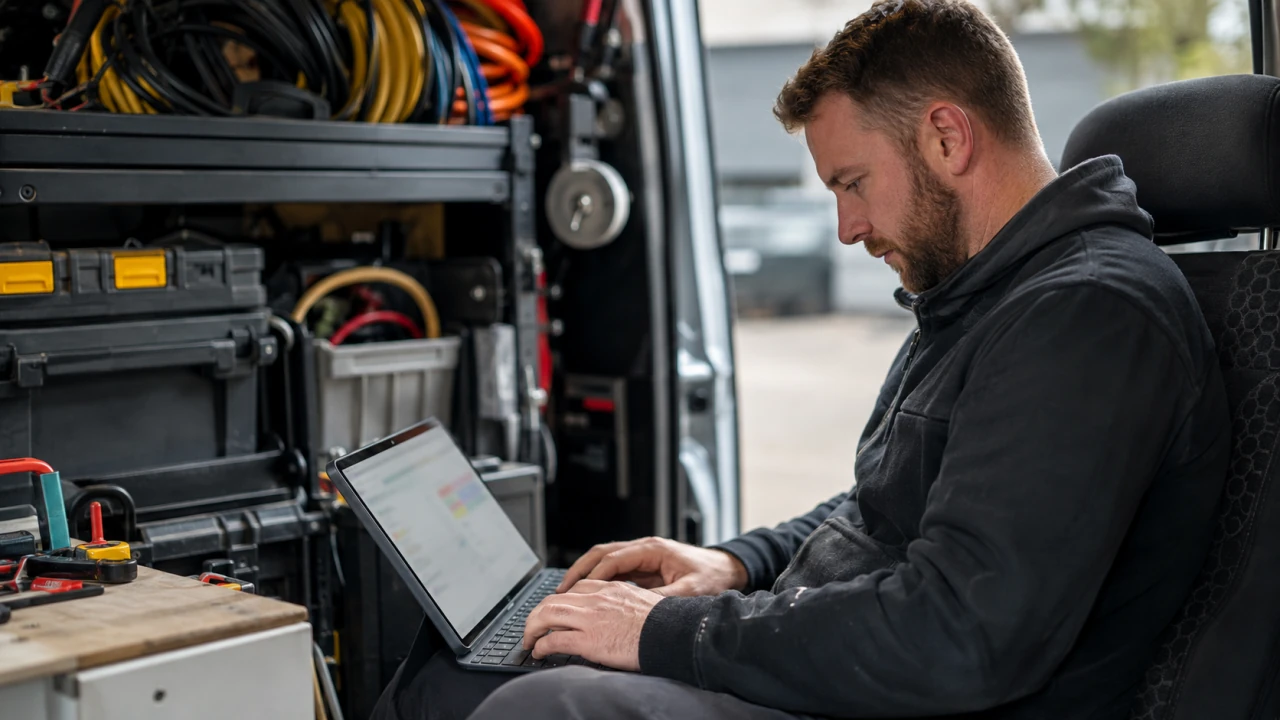
The online estimator automatically prices jobs of 10 to 69 panels. Below that, or above it, ReSova reviews the job manually rather than forcing it through the standard pathway. For genuinely large volumes — warehouse-scale systems, solar farm maintenance, or a multi-hundred-panel decommissioning — the job moves to bulk and utility-scale collection, which is planned around quantity, site access, loading and project timeline rather than priced instantly online.
Damaged and mixed-condition panels
Commercial sites rarely produce a uniform batch — a roof upgrade or warehouse clear-out usually turns up a mix of sound and damaged panels together. ReSova can assess a mixed-condition collection request when the actual condition is disclosed. Broad visible condition informs collection scope and handling; any reuse, recycling or recovery decision is separate and depends on an available downstream pathway. We cover the safety side of handling damaged panels in can broken or cracked solar panels be recycled.
Site access and documentation
Commercial jobs are scoped around access conditions, loading requirements and project timing. Completed handovers are counted and documented on a job docket. It records collection details only and is not a recycling certificate, audit record or guarantee of final processing. See our collection cost guide for the access and preparation details that affect an estimate.
Why scale matters
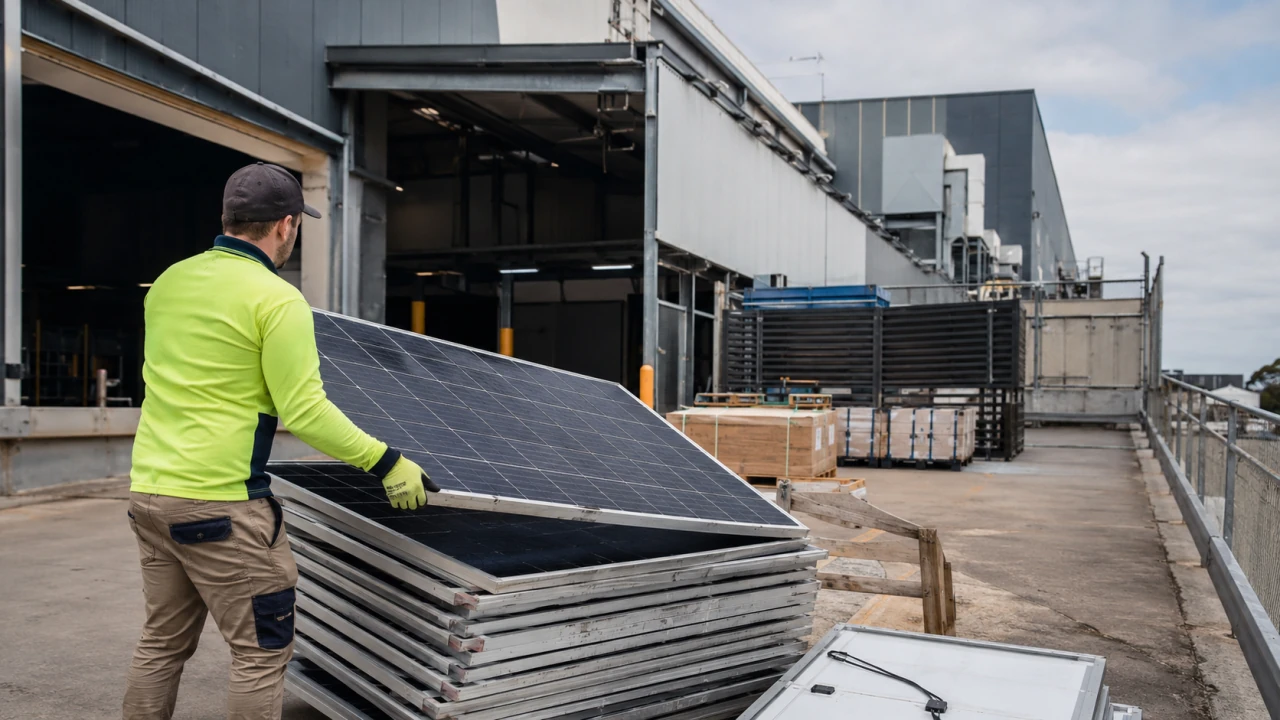
Commercial and bulk volumes aren’t a niche edge case — they’re a real and growing share of the panels needing a recovery pathway. In one publicly reported NSW example, Muswellbrook Shire Council approved a 135 MW solar farm of around 300,000 panels and required that faulty or damaged panels — estimated at up to 10% of the total, or roughly 30,000 units — be recycled, rehabilitated or reused rather than landfilled across the project’s construction and operating life, according to pv magazine Australia. Smaller commercial jobs sit on the same spectrum: a warehouse re-roof or office upgrade produces a genuine batch of equipment that needs the same documented, condition-based handling — just at a scale a standard collection can absorb.
Booking a commercial collection in Sydney
For a single job, get an indicative price from the online estimator. For repeat work, apply for a Trade Account to unlock the discount and skip re-quoting every time. If your project runs into the hundreds or thousands of panels, go straight to bulk collection instead of the standard estimator.
Key takeaways
- Sydney businesses can book a one-off job or set up an approved Trade Account (10% off eligible standard charges, no subscription).
- The online estimator automatically prices 10–69 panels; 70+ or unusual sites get a tailored quote.
- Damaged and mixed-condition panels are accepted — condition affects the pathway, not whether collection happens.
- Every completed commercial handover is counted and recorded on a collection job docket.
- Genuinely large projects (warehouse-scale, solar farms, multi-hundred-panel decommissioning) go through bulk/utility-scale collection instead.
Frequently asked questions
What counts as a bulk or commercial solar panel collection?
The online estimator gives an automatic instant quote for 10 to 69 panels. Below 10, or above 69, or for unusual site conditions, ReSova provides a tailored quote. Very large projects — warehouse systems, solar farm maintenance or decommissioning — go through the bulk collection pathway rather than the standard estimator.
Can I get a Trade Account discount for one-off jobs?
A Trade Account needs to be approved first, but once it is, there's no subscription or fixed pickup schedule — you book only when panels are ready, and the 10% discount on eligible standard collection and transport charges applies to each job. A single one-off job without an approved account is still priced normally.
Do you collect damaged or mixed-condition equipment from commercial sites?
Yes. ReSova collects many used or damaged panels from commercial jobs. Condition affects which pathway a panel takes afterwards — reuse for sound panels, recycling for damaged ones — not whether it can be collected in the first place.
What if my project has hundreds or thousands of panels?
That falls under bulk and utility-scale collection rather than the standard online estimator. See our large-project page for solar farm and multi-hundred-panel decommissioning support, or request a tailored bulk quote.
Request a Collection Scope
ReSova considers eligible, already removed equipment in Sydney and selected NSW areas after the ground-level handover and site access can be confirmed. It does not decide removal, technical condition or a final downstream outcome.