
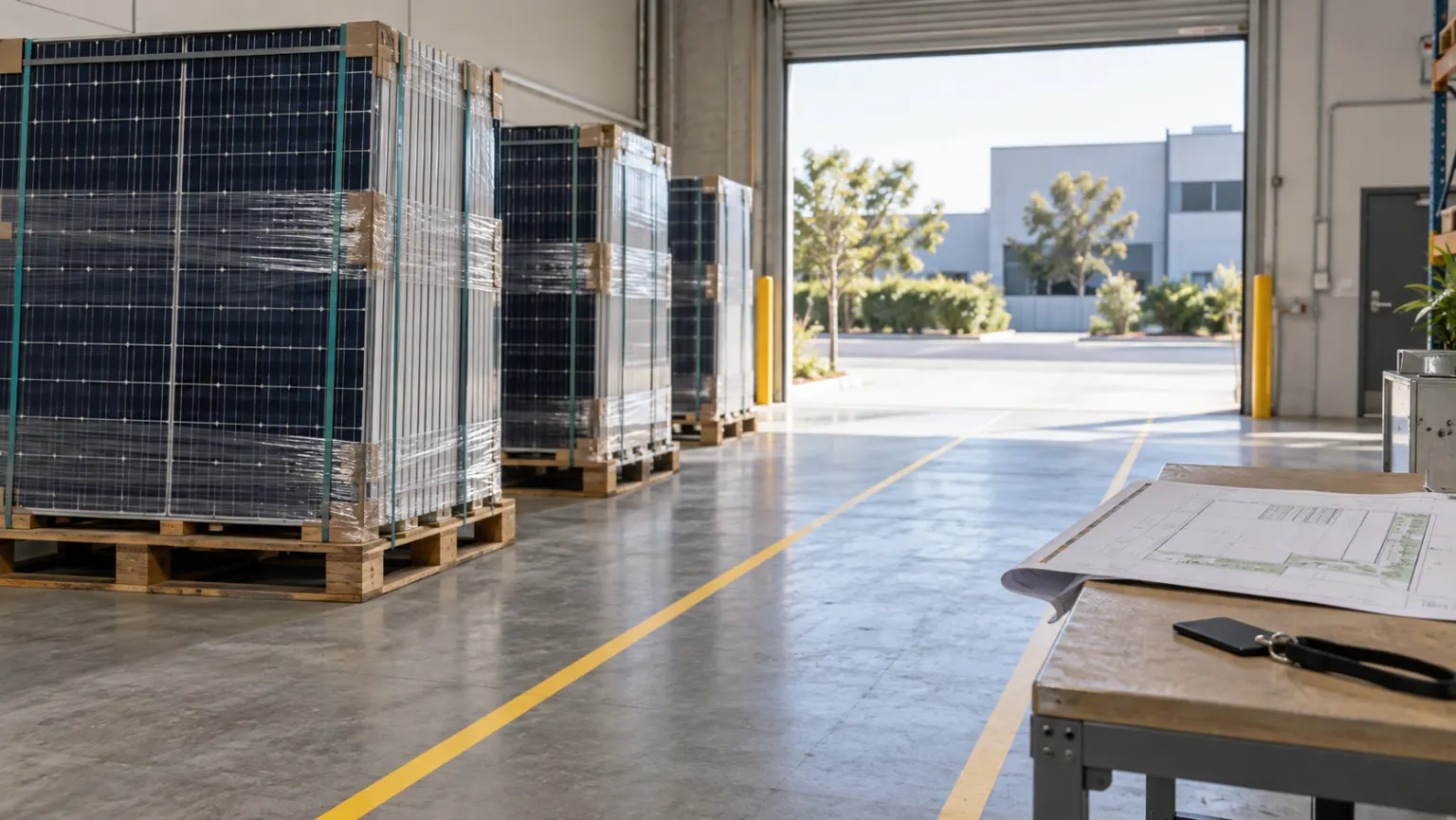
Quick answer: describe the existing staging, as it is
A palletised batch can be described for a scope review without changing it. Share the facts that exist now: actual panel count if known, pallet or batch count, obvious panel groups, separately listed equipment, broad visible condition, ground-level handover point, constraints, site rules and a contact. Palletisation does not by itself show safety, loading suitability, eligibility, reuse, recycling or a confirmed collection.
Record the facts of the current batch
- Actual panel count where it is already known; otherwise say that it is unknown and provide the pallet or batch count.
- Any obvious model grouping, without guessing from a broad system description or requiring extra inspection.
- Other equipment that is present, listed as its own category rather than folded into the panel count.
- Broad visible condition and the existing ground-level staging or handover point.
| Current fact | Why it helps describe the batch | What it cannot prove |
|---|---|---|
| Panel count, if already known | Shows the factual quantity of panels in the ready batch. | Technical condition, eligibility, price or a confirmed collection. |
| Pallet or batch count | Shows how the equipment is currently grouped or staged. | The number of panels inside each pallet or a loading method. |
| Obvious model groups and broad visible condition | Helps distinguish what can be described without extra handling or testing. | Performance, reuse value, recycling outcome or final destination. |
| Handover and access facts | Gives the real context for a ground-level scope review. | A vehicle, route, arrival time or booking. |
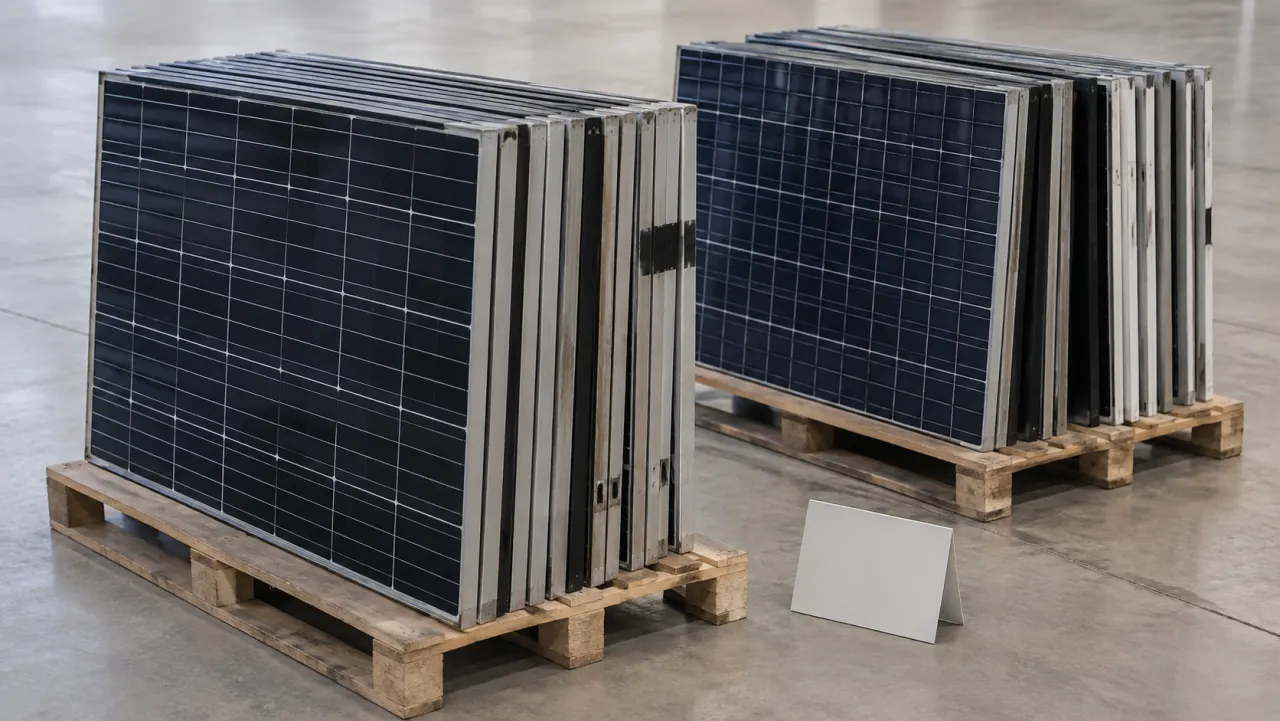
Do not add handling just to answer a scope question
Do not unpack, repack, restack, move, overlap, test or read serial numbers merely to produce extra details for a review. State what is known from the current staging and existing records, and identify what remains unknown. This article is about factual scope information, not instructions for handling the batch. The responsible site parties remain responsible for their own safe work methods and workplace controls.
A warehouse stock record, a pallet label or an asset register may help explain the batch, but it is not automatically the same as a verified ready-panel count. If the record and the visible batch cannot be reconciled without additional handling, say what is known and what is not. That is more useful than turning an information request into a technical inspection or repacking task.
List panels and other components separately
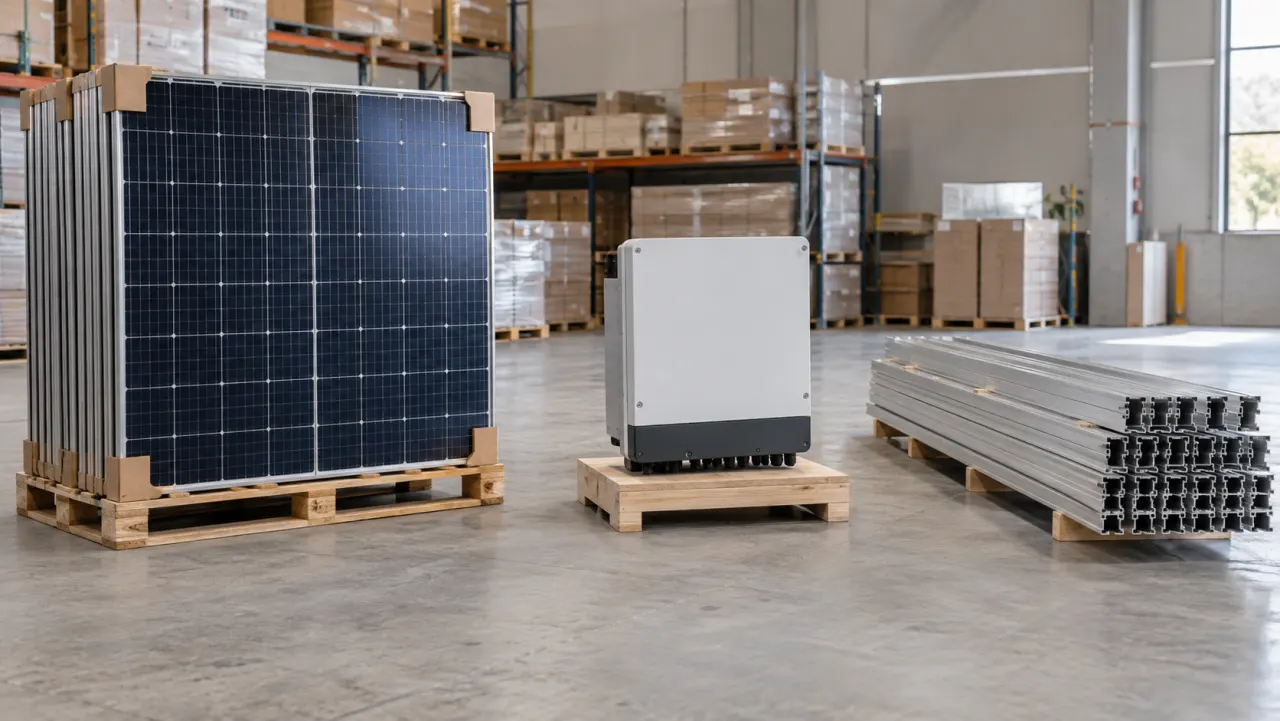
Panels, inverters, rails, racking, cables and other components should each be listed separately, even if they are on one pallet or came from the same system. Their co-location does not make them one collection scope or establish eligibility. Use the equipment-list guide and what ReSova collects to structure the description.
For example, an inverter placed beside a palletised solar panel collection batch is still an inverter category, while bundled rails remain a separate component category. This simple separation reduces ambiguity for installers clearing a job, facilities teams managing a storage area and commercial coordinators consolidating a project brief. It does not decide whether any category will be accepted together.
Complete the ground-level handover facts
Once appropriately qualified people have safely removed the equipment, add the current ground-level handover point, entry process, known loading constraints, site rules and a contact who can confirm the facts. Read the warehouse cleanout guide, vehicle-access checklist and ground-level handover guide. Mixed, staged, multi-site or complex requests may need a tailored commercial scope. These details support assessment only; they do not reserve a vehicle, route, time or collection.
Turn existing warehouse staging into a clear scope brief
- Describe, do not rearrangeStart with the panels as currently staged and state whether the panel count is known, unknown or represented only by pallet or batch count.
- Separate the categoriesList panels, inverters, rails, racking, cables and other equipment independently, even when they share a storage area.
- Add the site contextRecord the actual ground-level handover point, entry process, known constraints, site rules and the reachable contact.
- Choose the right discussionUse the factual brief to begin an eligible standard or tailored commercial scope discussion; it is not a promise of collection or a change to the site’s own handling responsibilities.

Sources and dates checked
- SafeWork NSW — Pallet racking guide, checked 24 September 2026.
- Australian Government — Replace and recycle your solar system, checked 24 September 2026.
Key takeaways
- Describe the current staging honestly; do not change a batch simply for review.
- A pallet count is context, not proof of panel count, eligibility or collection.
- List components separately and include the real ground-level handover and access facts.
Frequently asked questions
Do panels need to be repacked or palletised for a scope review?
No. Describe the existing staging honestly. Do not add repacking, unpacking, restacking or other handling simply to prepare information for a scope review.
Does a pallet count confirm the panel count or collection eligibility?
No. A pallet count is useful context, but it does not prove the number of panels, safety, eligibility, loading method, collection or downstream outcome.
Can ReSova restack, package or test panels for the customer?
No. ReSova does not provide repacking, restacking, technical testing or electrical work. It assesses eligible equipment already safely removed and ready for ground-level handover.
What current staging facts should be shared for review?
Share the actual count if known, pallet or batch count, obvious model groups, separately listed components, broad visible condition, ground-level handover point, loading constraints, site rules and a reachable contact.
Commercial Services
ReSova considers eligible, already removed equipment in Sydney and selected NSW areas after the ground-level handover and site access can be confirmed. It does not decide removal, technical condition or a final downstream outcome.