

Quick answer: describe the real ground-level handover area
A commercial solar handover staging brief gives a facilities manager, project coordinator or installer one factual view of where an already removed solar-equipment batch is currently held and who can confirm the relevant facts. It is deliberately narrower than a site-safety plan, traffic plan, loading method or collection booking. State the actual ground-level area, the current batch boundary, entry and handover facts the site already knows, operational context and a reachable contact. That information can support ReSova’s assessment of eligible equipment; it does not confirm acceptance, price, vehicle, route, timing, booking, recycling, reuse, processing or final destination.
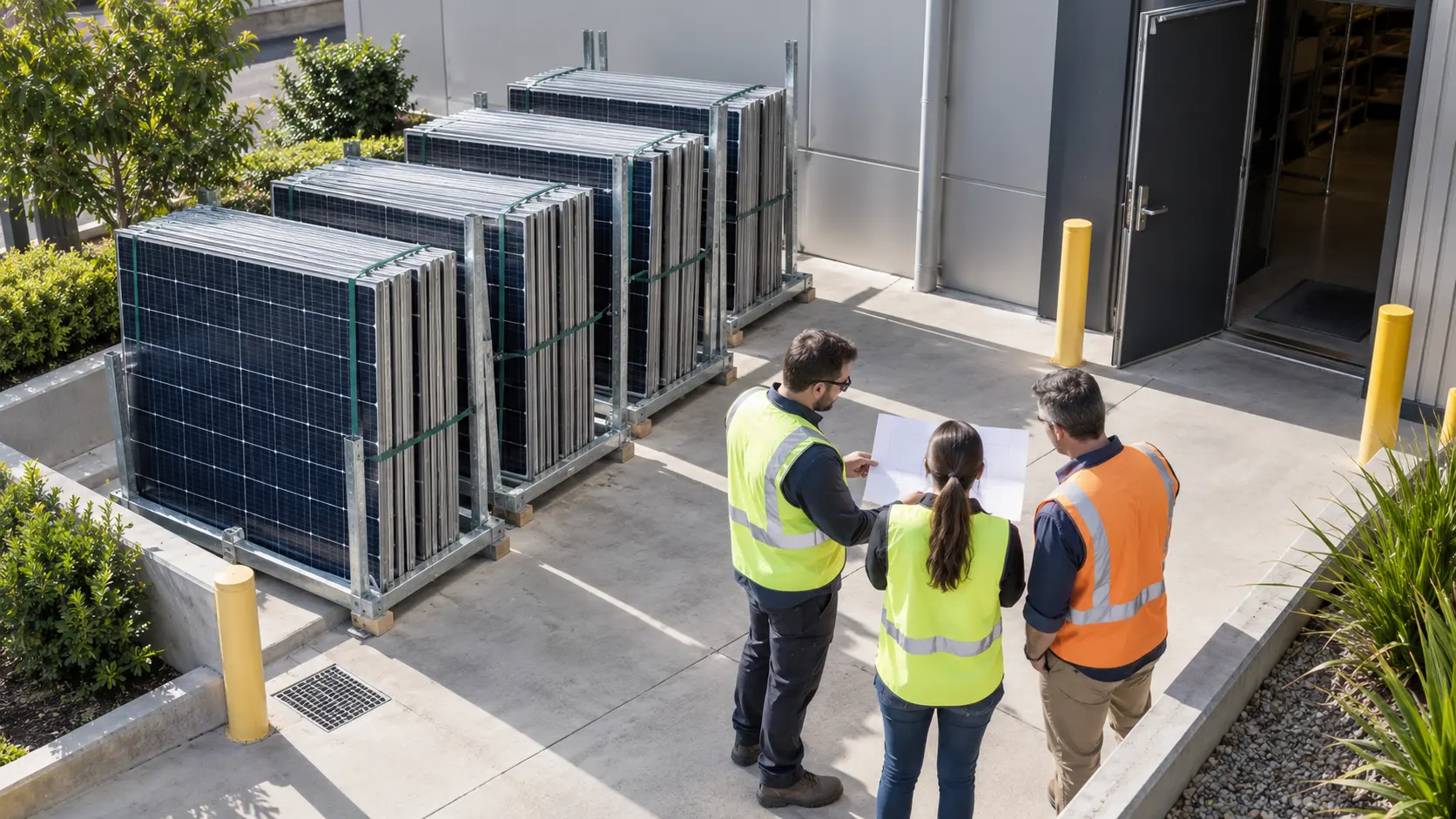
What the staging brief does — and does not do
The brief makes current facts easier to compare when an operating site has more than one team involved. It should describe conditions as they are, without telling the site how to conduct traffic management, safety, electrical work, removal or loading. ReSova does not provide those services. The vehicle access checklist owns the separate question of vehicle-entry facts; the during-business-hours guide addresses operating-site coordination. This article owns the shared description of the physical staging area and handover context.
| Current staging fact | Why it helps the conversation | What it does not promise |
|---|---|---|
| Ready-batch area | Shows where already removed equipment is presently held at ground level. | Acceptance of every item, a technical assessment or a confirmed collection. |
| Entry and handover facts | Lets the team state the actual gate, reception process or site contact information it knows today. | A vehicle, route, arrival time, loading method or booking. |
| Operating context | Flags ordinary facts such as current business hours or a known restricted period for the responsible site team to confirm. | A commitment to work within a particular time or operational arrangement. |
| Reachable contact | Makes it clear who can correct current facts if the site or batch changes. | Transfer of site, traffic or safety responsibility to ReSova. |
Show the area with current facts, not a prescribed method
A few clear, current photographs or a simple location note can help distinguish the relevant area from an entire commercial property. Keep the description visual and factual: where the ready batch is, the point the site expects a visitor to report to, and any practical information the authorised contact can confirm. Do not present a sketch as a traffic-management design, lifting method or approval. PV CYCLE’s collection form provides a useful global comparator because it asks organisations to distinguish contact and site details from material information; ReSova does not adopt that form as its procedure.
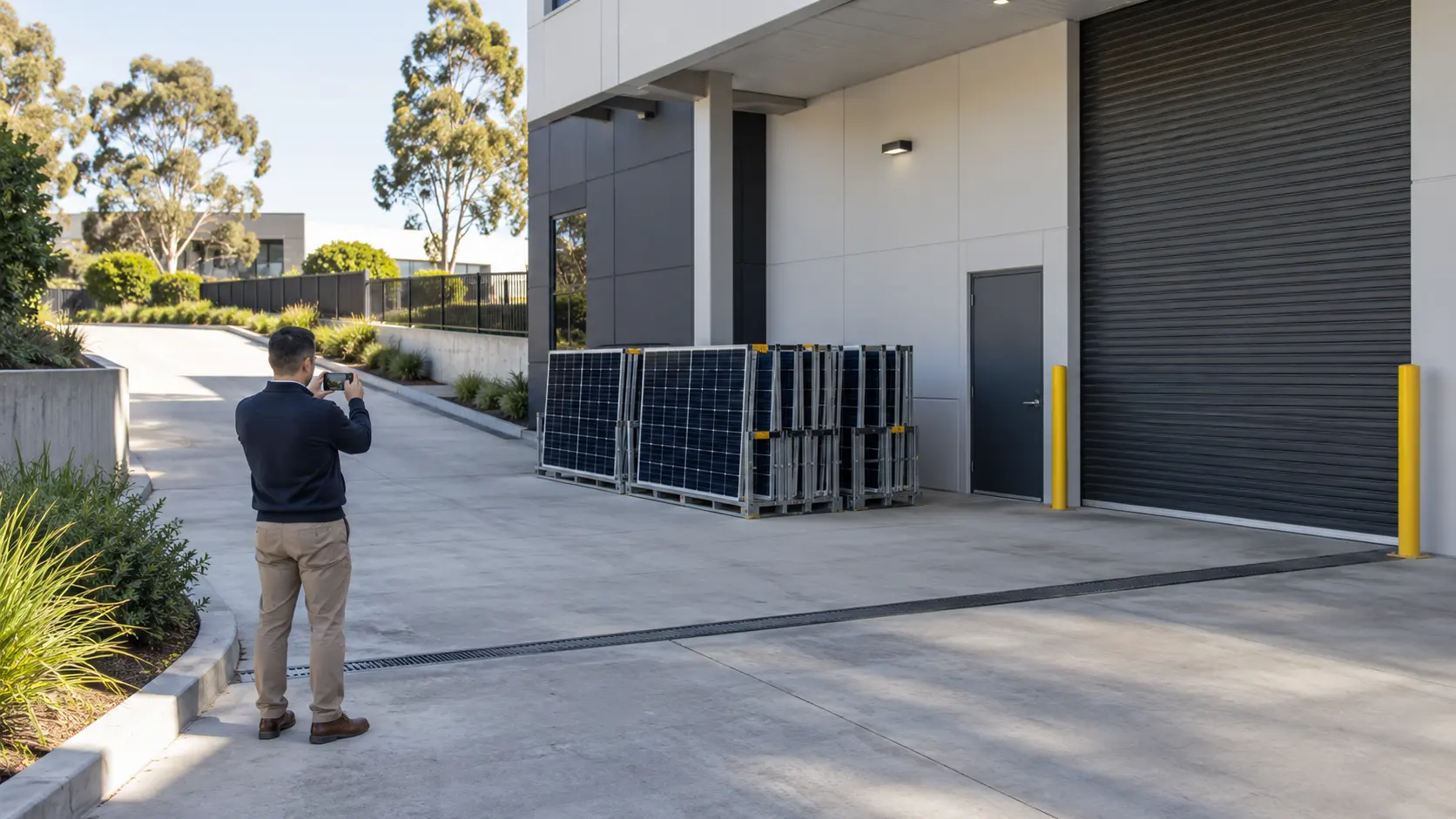
Keep responsibilities with the people who hold them
The removal lead can report what appropriately qualified people have already removed. The facilities or property team can state its own entry, operating and handover facts. The current site contact can correct a change. ReSova can assess the relevant post-removal facts for eligible equipment. Australian Government guidance says replacement and recycling of solar components need professional assistance and removal or replacement should be done by a licensed electrician. That boundary matters: an access brief does not authorise electrical disconnection, roof work or any site activity.
A commercial staging-brief decision flow
- Confirm the ready batchKeep installed, connected and future-stage material out of the brief; identify only equipment already safely removed and available at ground level.
- Describe the actual staging areaRecord the present area and the site’s known handover and entry facts without creating a loading or safety method.
- Name the responsible fact holdersIdentify who can confirm the batch, who can confirm the site’s operating facts and who can report a change.
- Update changed factsCorrect the brief when the area, access facts, operating context, contact or equipment categories change.
- Request the appropriate reviewUse the estimator only where its current standard criteria fit; take complex commercial facts to Commercial Services for a tailored discussion.

Update the brief when the site changes
Treat a different ground-level area, a changed gate or reception process, a revised operating restriction, a new contact, or a changed batch category as a new current fact. Do not assume an earlier scope discussion silently carries over. The U.S. Department of Energy’s photovoltaic end-of-performance guidance is a useful planning comparator because it separates project stages and component information; it is not Australian legal advice and does not establish a ReSova process. The practical point is simply to make an update visible before asking someone to rely on it.
Choose the review path that fits the current site
For an eligible standard 10–69-panel request that matches the Collection Estimator criteria, use the estimator with the actual ready-batch facts. For a commercial site with staged availability, mixed equipment, 70+ panels, multiple locations or access questions that need coordination, use Commercial Services. A good staging brief helps a tailored conversation start from the correct facts; it does not become a confirmation of service or a guarantee of any downstream result.
Sources and dates checked
- Australian Government — Replace and recycle your solar system, checked 2 October 2026: professional-assistance and licensed electrical removal/replacement boundary.
- Australian Government Department of Climate Change, Energy, the Environment and Water — Solar panels, checked 2 October 2026: national context on end-of-life panel collection, transport and recycling pathways; it does not confirm local service availability.
- PV CYCLE — Solar panel collection form, checked 2 October 2026: external comparator for separating site, access, contact and material facts; not a ReSova or Australian procedure.
- U.S. Department of Energy FEMP — Prepare for end of performance period, checked 2 October 2026: project-stage information comparator; not Australian legal or service guidance.
Key takeaways
- A staging brief should describe the real ground-level area holding already removed equipment, rather than an entire commercial site or a future stage.
- Record present entry, handover, operating and contact facts without turning them into a traffic plan, loading method or booking.
- Keep the removal lead, facilities team, site contact and ReSova assessment roles distinct.
- Update the brief whenever the batch, area, access facts, operating context or contact changes.
- The brief supports a tailored scope discussion only; it does not promise acceptance, price, vehicle, timing, booking or downstream outcome.
Frequently asked questions
Does a commercial staging brief guarantee collection?
No. It is a factual input to a scope review of eligible equipment. It does not guarantee acceptance, price, vehicle, route, time, booking or downstream outcome.
Should the staging brief include a traffic or site-safety plan?
No. The responsible site team retains its own safety, access and traffic arrangements. The brief can state facts the site already knows, without prescribing a method or transferring responsibility to ReSova.
Can the brief state a preferred loading method or arrival time?
It can identify a site's current practical constraints or preferences, but these are not a confirmed loading method, vehicle, route, arrival time or booking.
Should equipment still installed on a roof be included?
No. Keep installed, connected or later-stage equipment separate. The brief concerns equipment that appropriately qualified people have already safely removed and made available for ground-level handover.
Discuss a Commercial Collection
ReSova considers eligible, already removed equipment in Sydney and selected NSW areas after the ground-level handover and site access can be confirmed. It does not decide removal, technical condition or a final downstream outcome.