
Quick answer
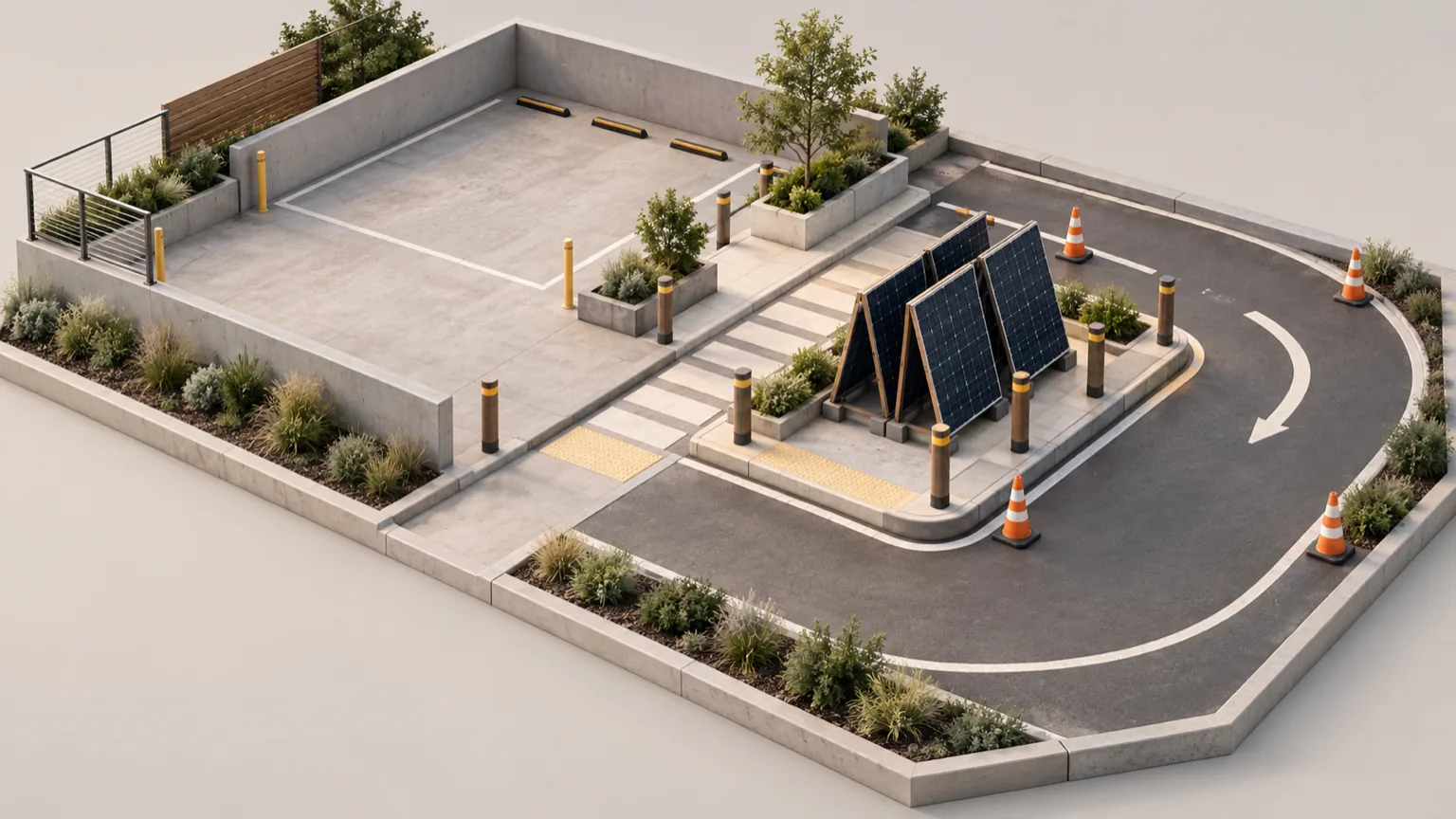
A ground-level handover area is a clearly described place for an already removed batch—not simply a street address. It helps a project team communicate what is ready, where it is, how the point is approached and who can confirm the day-of facts. It does not replace the site’s own safety controls, technical judgment or qualified removal work.
What a handover area is—and is not
A useful handover area description identifies the real ground-level point for the current batch. It can be a named loading area, a designated accessible point or another location the site team can clearly explain. It does not tell a team how to remove panels, dictate temporary-storage methods, certify a site as safe or guarantee a provider will accept a job. Those distinctions matter when a collection enquiry follows work undertaken by different responsible parties.
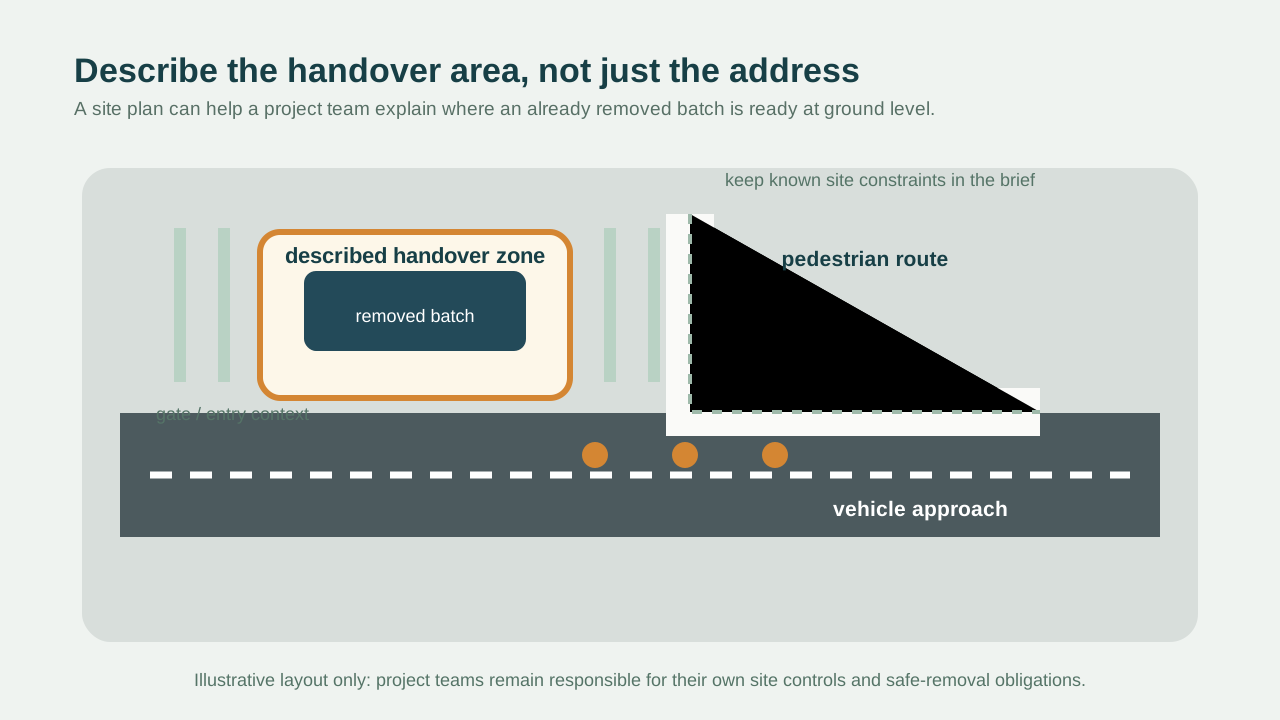
Describe the batch, place, route and contact
This four-part approach is intentionally practical. It fits a small installer job as well as a property or facilities project, without claiming that every site needs the same level of detail. The goal is a request that reflects the job as it exists after removal.
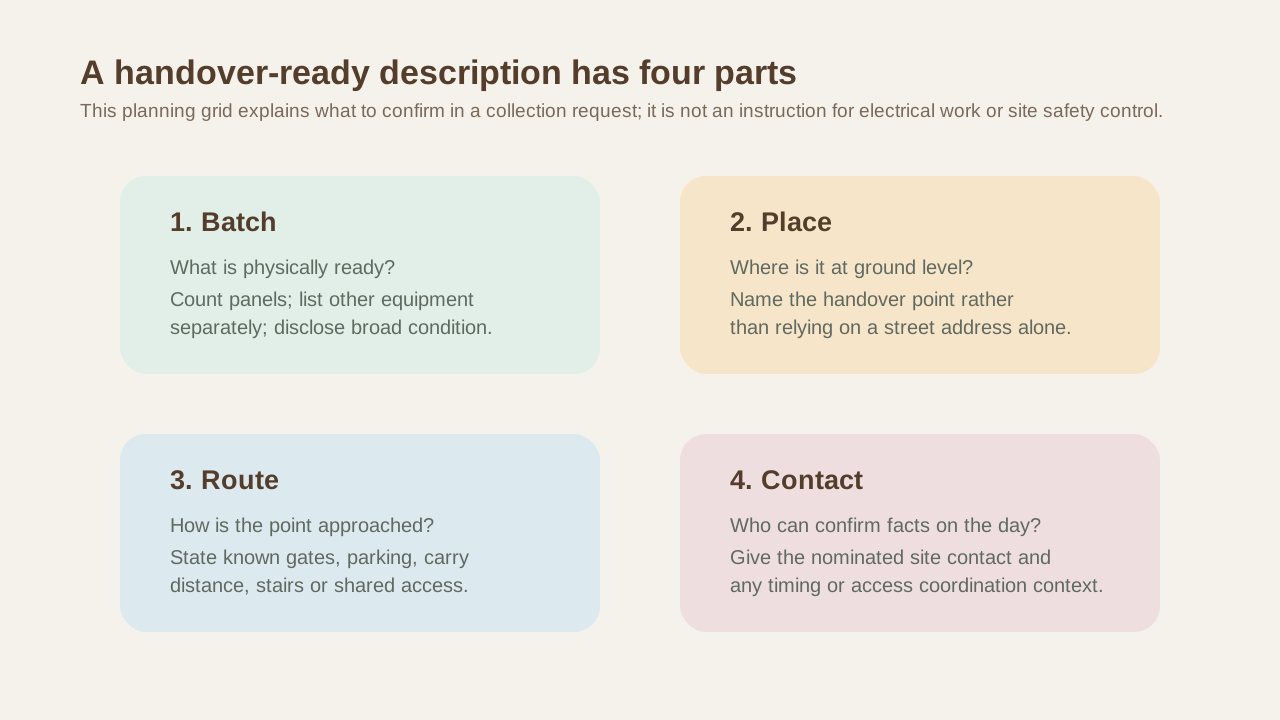
| Part | Useful detail | Avoid assuming |
|---|---|---|
| Batch | Actual panel count, separately listed equipment and broad visible condition. | That an old system record, appearance or one label proves technical condition or downstream suitability. |
| Place | The specific ground-level handover point available for the current batch. | That a suburb or street address alone describes the handover. |
| Route | Known gates, parking, shared access, stairs, carry distance or access coordination context. | That any individual detail guarantees a loading arrangement or time. |
| Contact | The person who can confirm the real site facts on the day. | That a contact can replace a clear site description. |
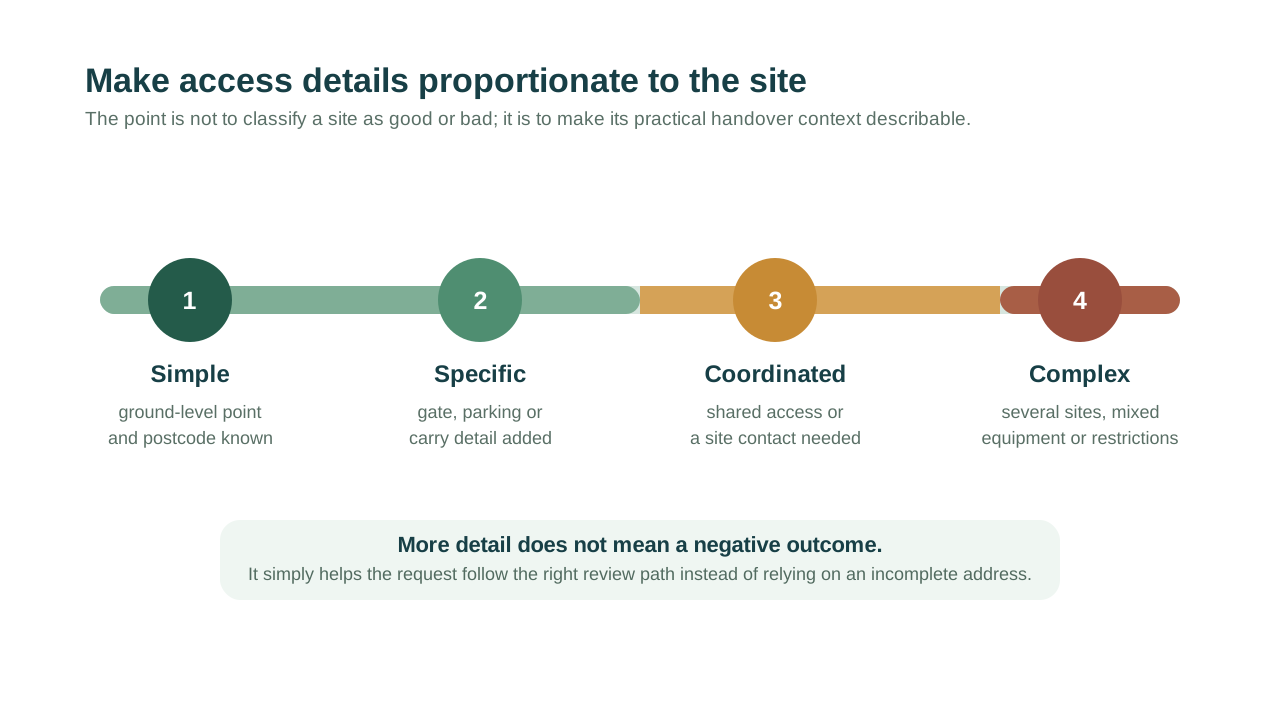
Describe access proportionately
A simple ground-level point may need only a location and contact. A shared property, constrained loading area, large batch or several sites may need more context. More detail is not a negative signal; it helps the project choose a suitable review path. For a complex commercial job, the tailored collection scope guide explains how to turn those facts into a concise brief.
- If the batch includes only panels, use an actual count rather than relying on a system-capacity figure. See system size versus panel count.
- If panels are mixed with other equipment, list the items separately and avoid assuming that one pathway applies to every component.
- For a strata, shared-property or building project, make the nominated access contact and actual handover point clear. The Strata collection guide covers the broader coordination context.
- Keep the description factual: it should help a provider assess a post-removal collection, not present a diagram as evidence of a real project or a safety certification.
Write the site brief in four lines
A compact ground-level handover description
- WhatState the actual removed batch, its count, separately listed equipment and broad visible condition.
- WhereName the ground-level handover point that will be available for collection discussion.
- HowAdd known route context such as parking, gates, stairs, carry distance or shared access.
- WhoGive the person who can confirm the facts and coordinate the project’s own site arrangements.
Sources
- Australian Government — Replace and recycle your solar system
- Australian Government — Solar panels
- ReSova — Solar panel collection
- ReSova — Commercial Services
Key takeaways
- A collection address is not always enough; the project should identify the actual ground-level handover point.
- A factual handover description covers the batch, place, route and nominated contact.
- Access details should be proportionate to the real site and do not guarantee acceptance, timing or loading arrangements.
- ReSova begins after qualified removal; the guide does not replace electrical work or the site’s own safety controls.
- A complex site can be described through a tailored collection scope rather than forced into an incomplete standard path.
Frequently asked questions
What is a ground-level solar-panel handover area?
It is the specific accessible ground-level point a project team describes for an already removed batch. It is more useful than an address alone because it can include the actual panel batch, approach route and day-of contact.
Does a handover area need to be a permanent storage area?
No. This guide does not prescribe storage or site-safety arrangements. It helps a team describe the actual point that will be available for collection scope review after qualified removal is complete.
What access details should I provide?
State practical facts that could affect the approach to the stated point, such as known parking, gates, shared access, stairs, carry distance or a site contact. Do not assume those details guarantee acceptance, timing or loading arrangements.
Can ReSova collect equipment from a roof?
No. ReSova's role begins after appropriately qualified people have safely removed eligible equipment and made it available for a ground-level handover.
Get an Estimate
ReSova considers eligible, already removed equipment in Sydney and selected NSW areas after the ground-level handover and site access can be confirmed. It does not decide removal, technical condition or a final downstream outcome.