

Quick answer
A tailored scope is useful when a collection request cannot be truthfully reduced to a standard panel-only job. It can be the appropriate route for 70+ panels, mixed equipment, several sites, unusual access or a commercial-project handover. The purpose is not to make an outcome sound more certain. It is to give ReSova the practical facts needed to assess an eligible, post-removal collection request.
When a tailored scope is useful
A standard online path can be useful for an eligible, straightforward panel-only job. A project needs a clearer conversation when the quantity, equipment mix, location pattern or access context would be lost in a short form. The collection estimator remains the starting point for its stated eligible standard range; Commercial Services is the appropriate route for a project that needs its real conditions reviewed together.
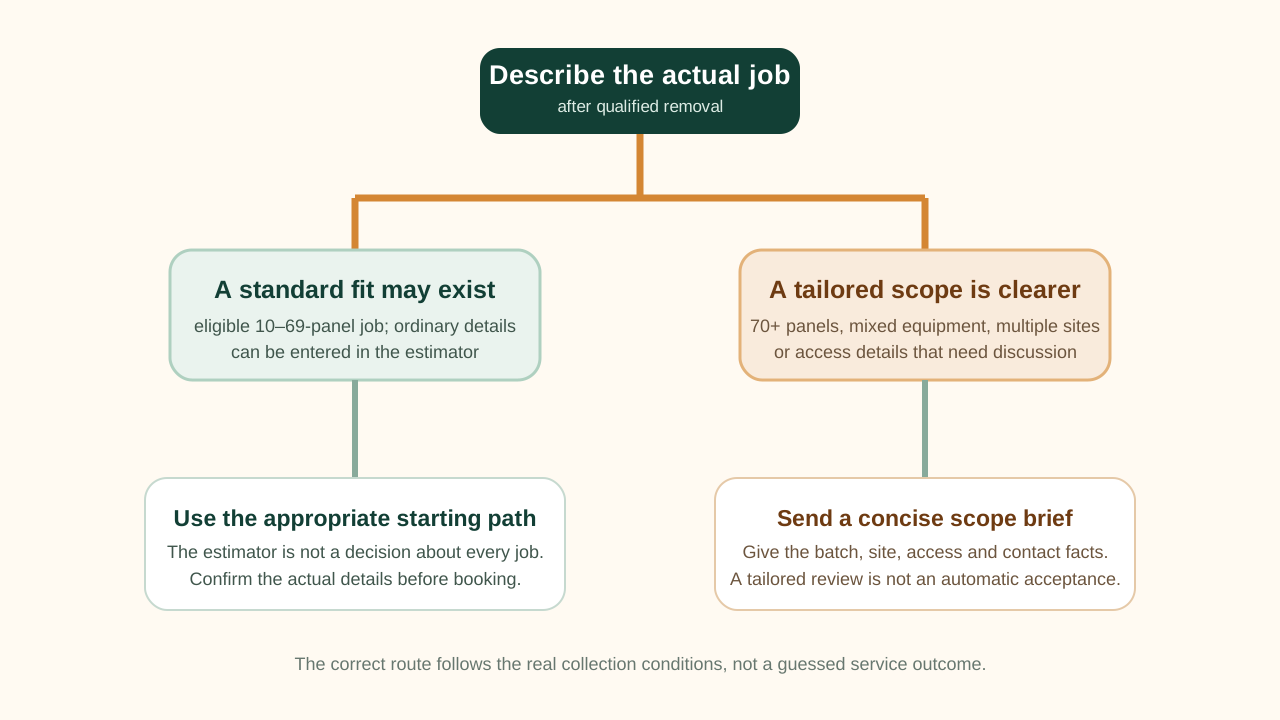
| Job detail | Why a tailored brief can help | What it does not establish |
|---|---|---|
| 70+ panels or a large commercial batch | The project can describe the current batch and handover context as one scope. | A fixed price, vehicle type, date or acceptance. |
| Panels plus separately listed equipment | The equipment mix can be assessed without assuming all items share one pathway. | Technical condition, reuse suitability or a final destination. |
| Several locations or staged project work | The team can distinguish the sites and explain which batch is ready where. | A multi-site collection commitment before review. |
| Known access constraints | The handover point, route and nominated contact are visible in the request. | That a constraint will be solved by a particular loading arrangement. |
Build a six-part collection brief
The most useful brief is compact and factual. It is not an electrical report, a waste classification, a removal method statement or a claim about processing. Start with the panels that are actually ready, then add only the details that make the ground-level handover understandable.
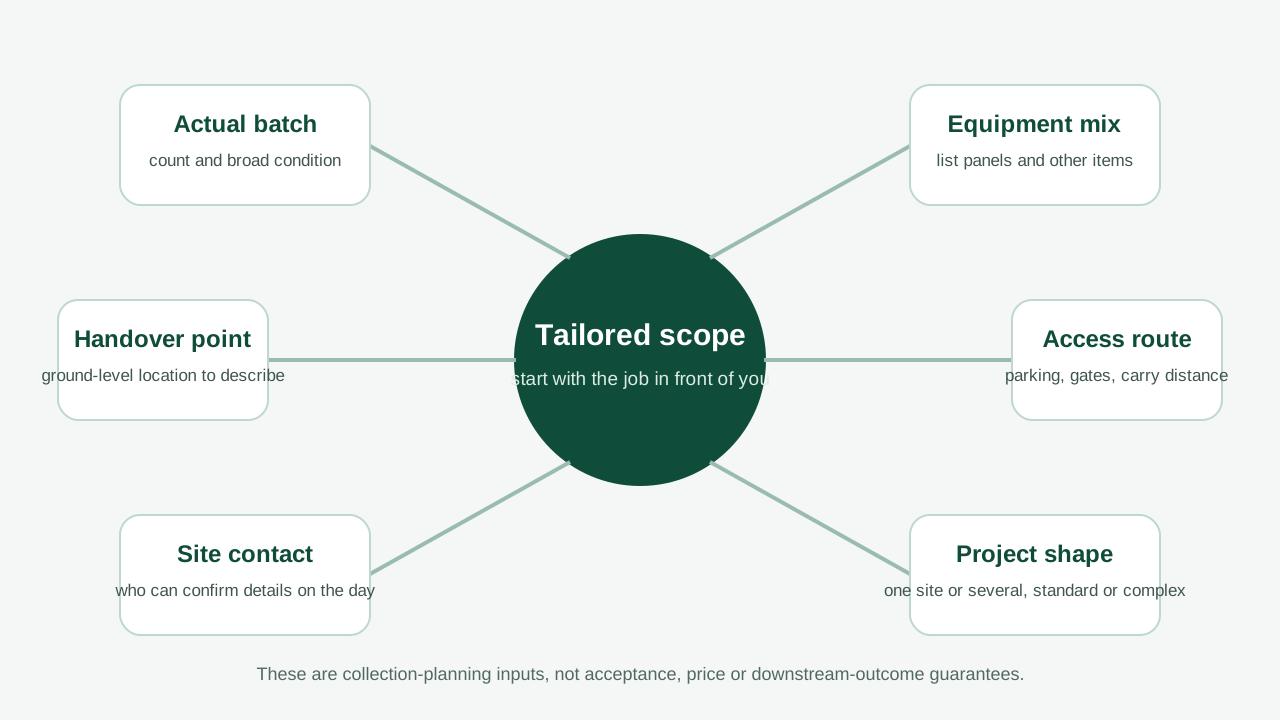
- State the actual panel count, not only an old system-capacity figure. The panel-count guide explains why those inputs are different.
- List inverters, rails, racking or other equipment separately instead of assuming every item belongs in the panel total.
- Use broad visible-condition language and disclose a mixed, damaged or unusual batch without attempting a technical diagnosis.
- Name the ground-level handover point, postcode or site location, and practical access facts such as gates, parking, stairs, shared areas or carry distance.
- Give one nominated project or day-of contact who can confirm the facts supplied.
Keep the sequence clear
The Australian Government’s replacement guidance distinguishes the need to remove or replace components before a recycling pathway is considered. For collection planning, that means the project can describe what is actually at ground level after removal, rather than treating a preliminary equipment list as the handover itself.
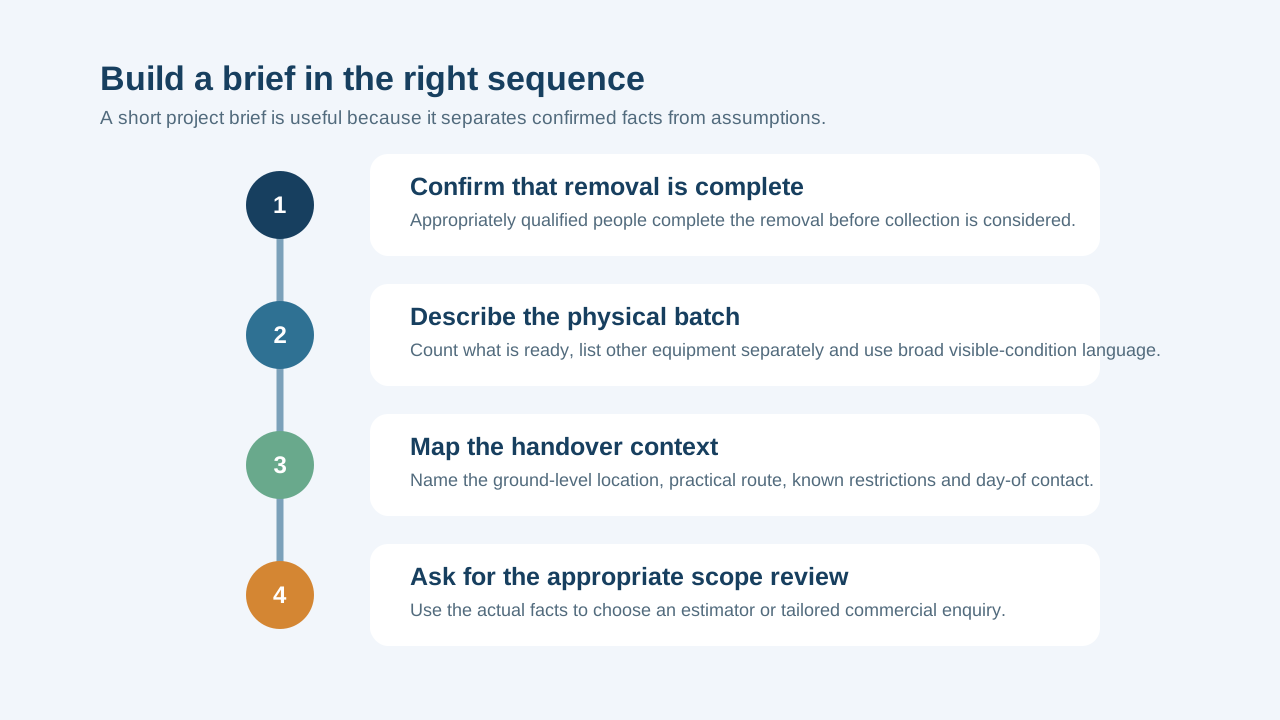
A concise brief checklist
Prepare the request without overcomplicating it
- Separate removal from collectionConfirm that appropriately qualified people have completed safe removal before a collection handover is discussed.
- Describe what is actually readyCount panels, list other equipment separately and use broad, factual condition language.
- Describe the place and routeName the ground-level point and the practical access context without assuming a loading solution.
- Name the contact and enquiry routeProvide the project contact, then use the standard estimator or Commercial Services according to the real job.
Sources
- Australian Government — Replace and recycle your solar system
- Australian Government — Solar panels
- ReSova — Commercial Services
- ReSova — What we collect
Key takeaways
- A tailored scope is for a job whose true collection context cannot be captured in a standard panel-only path.
- Start with completed facts: actual batch, separately listed equipment, broad condition, handover point, access context and contact.
- Qualified removal is separate from ReSova’s post-removal collection role.
- A tailored review is not acceptance, pricing, timing or a downstream-processing guarantee.
- Use the estimator for an eligible standard job and Commercial Services when a project needs a fuller factual brief.
Frequently asked questions
When should I request a tailored solar-panel collection scope?
Request a tailored scope when a job has 70+ panels, mixed equipment, multiple locations, a commercial-project context or access details that cannot be accurately described in the standard path. Provide the actual batch and site facts rather than assuming an outcome.
Does a tailored scope mean ReSova will accept the job?
No. It gives ReSova the facts needed to assess an eligible post-removal collection request. It is not an automatic acceptance, fixed price, collection time or promise about where equipment goes after handover.
What should a collection scope brief contain?
Include the actual panel count, separately listed equipment, broad visible condition, postcode or site location, ground-level handover point, known access constraints and a nominated project contact. Keep electrical-removal and technical-condition decisions with the responsible qualified people.
Can ReSova prepare the brief before panels are removed?
A project team can prepare its own context early, but ReSova's collection role starts only after appropriately qualified people have safely removed the equipment and the actual ground-level batch can be described.
Commercial Services
ReSova considers eligible, already removed equipment in Sydney and selected NSW areas after the ground-level handover and site access can be confirmed. It does not decide removal, technical condition or a final downstream outcome.