
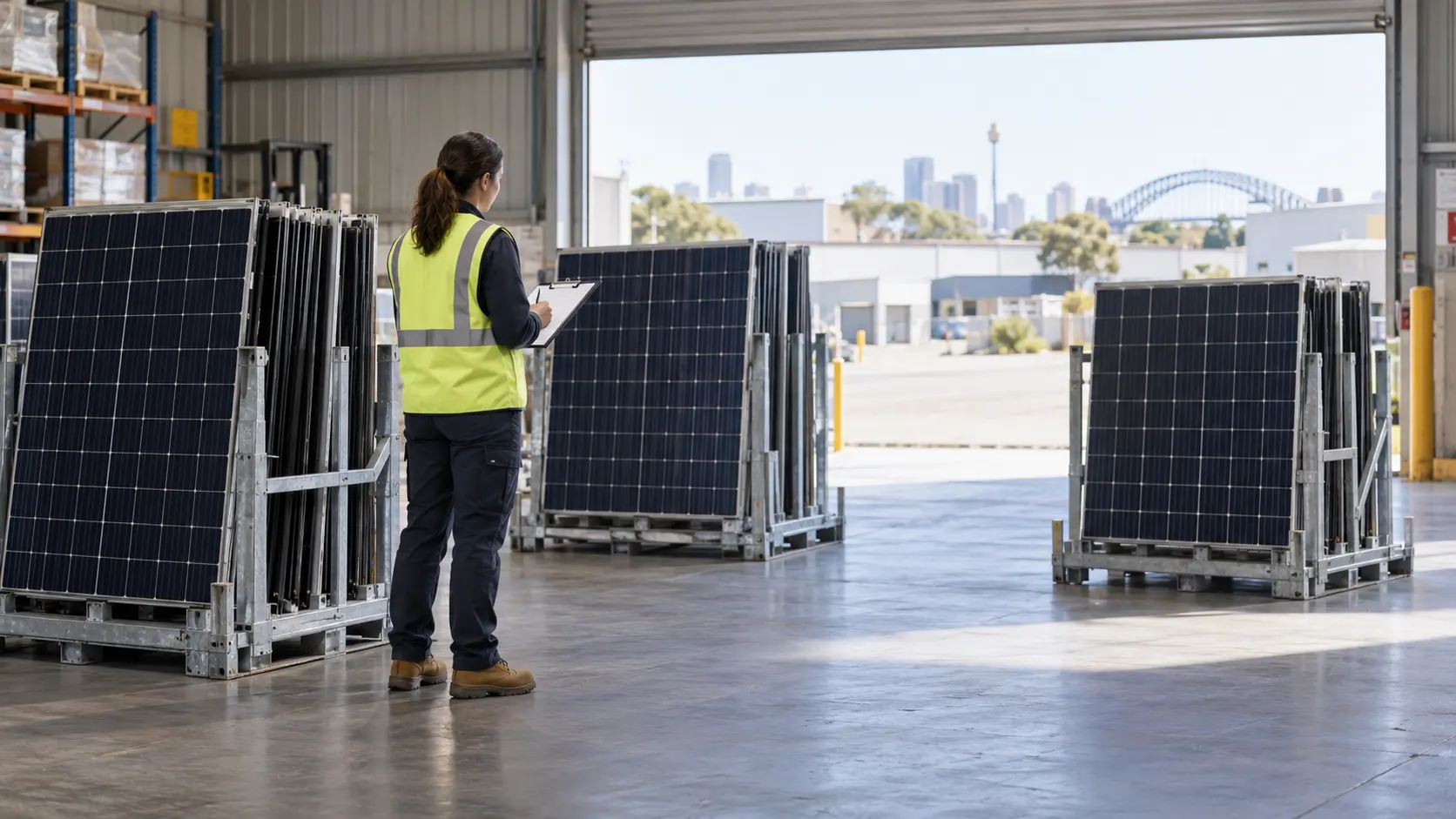
Quick answer: record the batch that exists today
A warehouse solar equipment batch register is useful when a team needs to separate the equipment actually ready in a warehouse today from a project’s original system total, older stored stock or equipment expected in a later stage. It is not a technical assessment, a valuation, a waste classification or a collection booking. For a possible collection-scope discussion, the helpful facts are simple: the current ground-level area, category counts, broad visible state, honest unknowns, the person authorised to confirm the record and any current handover facts. ReSova assesses eligible equipment that qualified people have already safely removed and made available for ground-level handover; the record does not itself confirm acceptance or any downstream outcome.
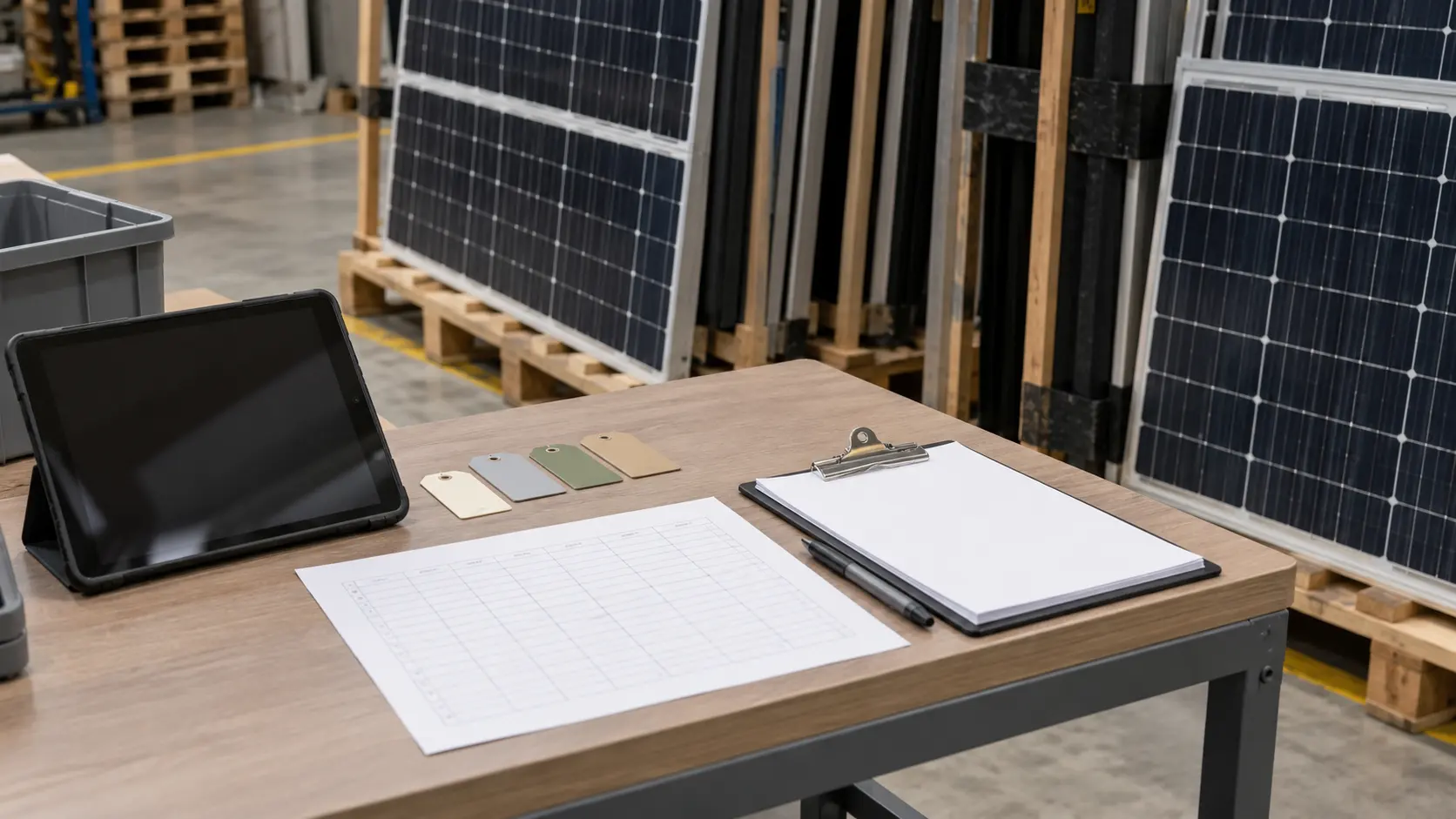
Define the current batch before comparing numbers
Start with a plain boundary: what is physically in the nominated warehouse area and available for a ground-level handover now? That boundary avoids a frequent mismatch between a former rooftop system size and the current batch. Panels, inverters, rails, racking, cables and other equipment should be listed as separate categories. A broad visible note such as ‘stacked panels; condition not assessed’ is more honest than a technical conclusion. The warehouse cleanout guide covers broader inventory and access planning; this register keeps the changing, current batch clear.
| Register field | Record now | Do not infer |
|---|---|---|
| Batch identity | Warehouse area, record date and the current person authorised to confirm it. | That every item at the site, in another bay or on a future project stage belongs to this batch. |
| Equipment categories | Actual panel count and separately listed inverters, rails, racking, cables or other equipment. | Original system capacity, a resale value, eligibility or a downstream destination. |
| Visible state | Broad visible condition and any unknowns that the team can honestly identify. | A test result, diagnosis, packing instruction or recycling outcome. |
| Handover facts | The current ground-level point, known access facts and a reachable contact. | A vehicle type, route, arrival time, loading method or booking. |
Keep the register current when the batch changes
A record only helps if it describes the present batch. Set a simple internal rule: update it when the count, category, visible state, warehouse area, access facts or authorised contact changes. Do not rely on an old removal estimate or a photo from an earlier stage. PV CYCLE’s collection-form fields are a useful external information-design comparator because they distinguish contact, location and collection context; they are not a ReSova procedure or Australian requirement. The point is to identify the fact that changed, not to manufacture a certainty about collection.
A factual current-batch register flow
- Set the batch boundaryIdentify only the equipment already safely removed and physically available in the nominated ground-level warehouse area.
- Count and separate categoriesRecord current panels and other equipment in distinct lines; leave installed, connected and later-stage material outside the batch.
- Name honest unknownsUse broad visible facts without testing, diagnosing or assigning an outcome to any item.
- Confirm who owns the factsRecord the warehouse or project person who can confirm the current location, category count and practical handover information.
- Replace stale factsWhen a current fact changes, correct the register and scope conversation rather than treating an earlier estimate as a booking amendment.
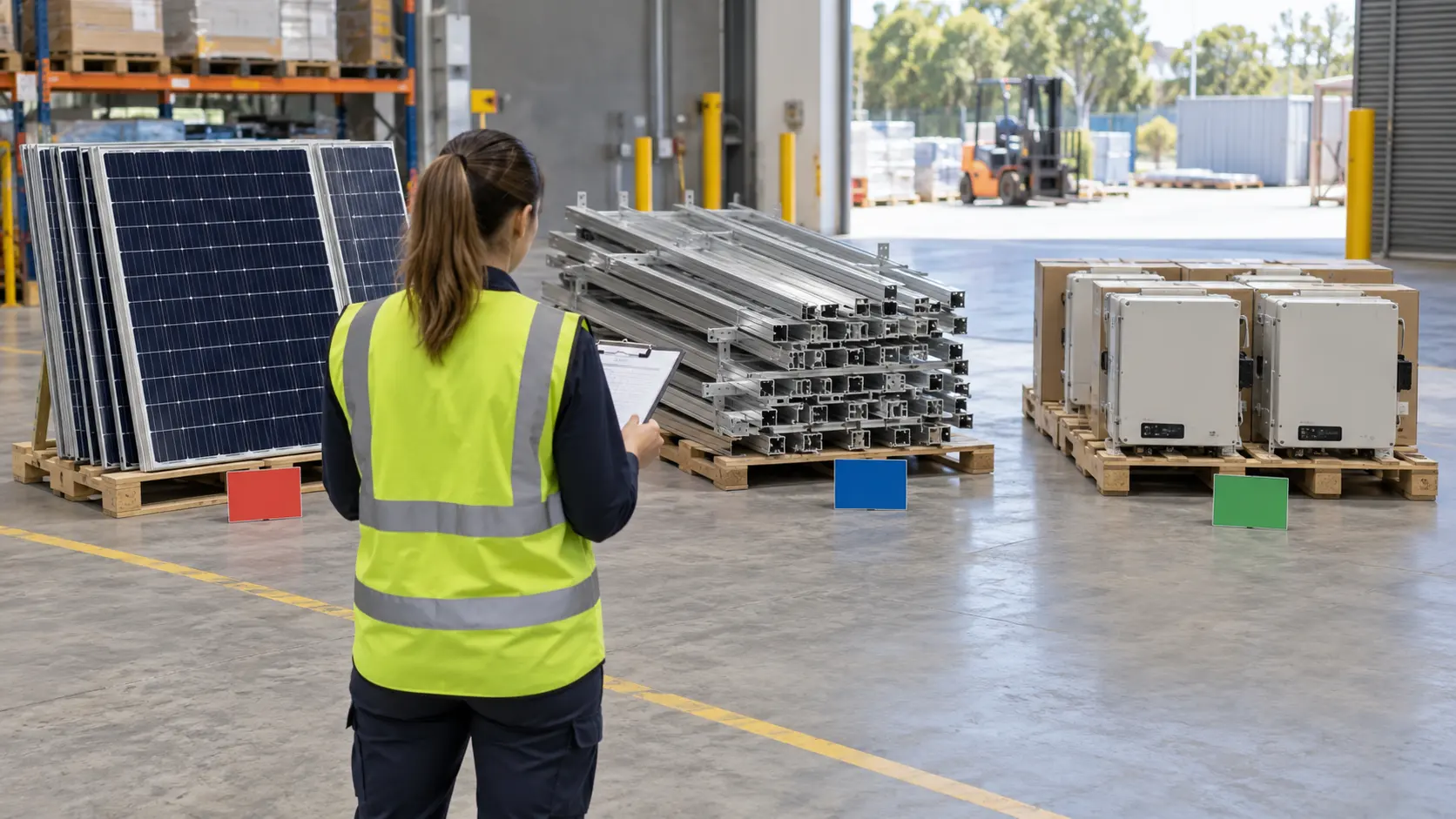
Reconcile the scope record with your own warehouse record
A collection-scope record should sit beside, not replace, the warehouse’s own stock, asset, project or chain-of-custody records. The warehouse remains responsible for its internal reconciliation and any records required by its business, customer or contractor arrangements. ReSova does not conduct technical testing or provide legal advice. The business collection-records guide explains the difference between practical collection documentation and broader internal recordkeeping. If a stock line is uncertain, state that uncertainty instead of assigning it to the ready batch by assumption.

Use the register to choose an honest review path
A standard eligible panel-only request may suit the Collection Estimator where its current criteria match the actual ready batch. Use Commercial Services for warehouse-held equipment with mixed categories, 70+ panels, staged availability, multiple sites or access details that need a tailored discussion. A complete register can reduce avoidable back-and-forth, but it cannot create a promise of eligibility, price, vehicle, route, timing, booking, recycling, reuse, processing or final destination.
Sources and dates checked
- Australian Government Department of Climate Change, Energy, the Environment and Water — Solar panels, checked 2 October 2026: national context on end-of-life solar-panel collection, transport and recycling pathways; it does not confirm an individual local collection.
- PV CYCLE — Solar panel collection form, checked 2 October 2026: external comparator for separating organisation, contact, access and material facts; not a ReSova or Australian procedure.
- U.S. Department of Energy FEMP — Prepare for end of performance period, checked 2 October 2026: comparator for component and project-stage recordkeeping; not Australian legal or service guidance.
- ReSova — Commercial Services, checked 2 October 2026: current commercial scope-review entry point and service boundary.
Key takeaways
- A current-batch register covers only equipment already safely removed and physically available in the nominated ground-level warehouse area.
- Separate panel counts from inverters, rails, racking, cables and other equipment; retain honest visible facts and unknowns.
- Update the record whenever counts, categories, location, access facts or the authorised contact change.
- Keep the scope record distinct from internal stock, asset and chain-of-custody records.
- The register supports a collection-scope assessment only; it does not confirm acceptance, price, timing, booking or a downstream outcome.
Frequently asked questions
Does the original rooftop system total belong in a current warehouse batch register?
Only if that exact equipment has already been safely removed and is actually part of the current ground-level warehouse batch. Keep installed equipment and later stages separate from the record.
Does a batch register confirm that ReSova will accept the equipment?
No. It supports a scope review of eligible equipment only. It does not confirm acceptance, price, vehicle, route, timing, booking, recycling, reuse, processing or final destination.
Must a warehouse create a technical condition report or serial-number list?
Not for this factual handover record. Record useful current categories, broad visible state and honest unknowns. Keep any internal technical or asset records that your own business requires separate.
Does a collection record replace the warehouse stock record?
No. The warehouse remains responsible for its own inventory and reconciliation. A collection-scope discussion is not a stocktake, transfer record or downstream-processing confirmation.
Discuss a Commercial Collection
ReSova considers eligible, already removed equipment in Sydney and selected NSW areas after the ground-level handover and site access can be confirmed. It does not decide removal, technical condition or a final downstream outcome.