Inventory and authority
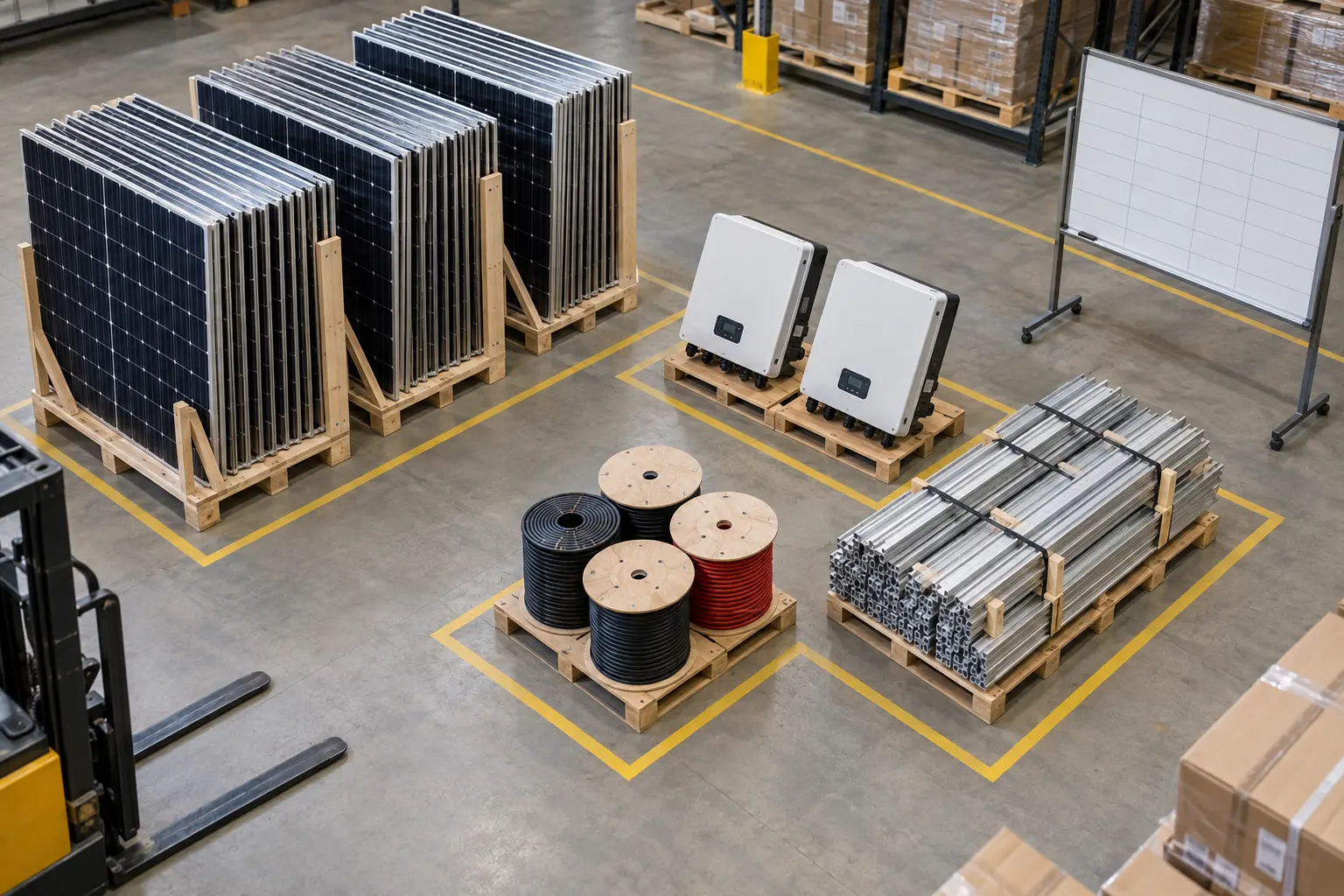
Count panels by practical group, list inverters, rails, cable and other components separately, and identify the owner or authorised project contact for the actual batch.

Plan local collection of safely removed solar panels and related equipment stored at Sydney warehouses, depots and commercial facilities using an inventory-led handover scope.

ReSova helps warehouse managers, facilities teams, electricians and commercial project coordinators prepare a local on-site collection request for eligible solar panels and related equipment already removed and held at ground level. The decision starts with the actual inventory, ownership or project contact, condition groups, photographs, staging method, loading access, operating constraints and preferred handover window. A standard estimator is suitable only for an eligible 10–69-panel batch; mixed equipment, recurring batches, 70+ panels, multiple projects or constrained sites need a tailored commercial scope. ReSova does not promise acceptance, a vehicle, timing, price, recycling outcome or final destination before the real scope is reviewed.
Count panels by practical group, list inverters, rails, cable and other components separately, and identify the owner or authorised project contact for the actual batch.
Describe intact, cracked, loose, weather-exposed or mixed-condition items and how they are stored. Photographs inform review but do not certify safety, value or eligibility.
Record gate, dock, parking, lift or forklift dependencies, internal distance, operating hours, induction requirements and the handover contact without prescribing a loading solution.
These sources provide industry and policy context. They do not confirm a price, acceptance decision or downstream outcome for an individual ReSova collection.
Stored solar equipment may come from one replacement project, several service jobs, returned stock or an incomplete asset record. The useful commercial question is not simply how many panels appear to be present. A decision-ready collection brief identifies which items are actually authorised for handover, separates equipment types and condition groups, states whether the batch is complete, and records the real route from the staging zone to the collection point. This page owns the live warehouse collection workflow. The related warehouse-cleanout article remains the planning guide for sorting a cluttered or mixed storage area before a request is ready.
These are practical collection inputs. They do not replace electrical, safety, contractual or legal obligations that may apply to a particular site.
| Warehouse scenario | Information to provide | Appropriate route |
|---|---|---|
| Single known batch of 10–69 removed panels | Panel count, condition, postcode, staging photographs and clear ground access. | Start with the estimator if the batch meets its eligibility conditions. |
| Panels mixed with inverters, rails, cable or other equipment | Separate counts or practical groups, ownership and condition notes. | Use a tailored commercial scope so each category can be reviewed. |
| Recurring installer returns or multiple project lots | Batch ownership, accumulation pattern, project contacts and proposed handover cadence. | Discuss a commercial collection workflow; do not assume a standing service or schedule. |
| 70+ panels or multi-site inventory | Site-by-site quantities, staging, access and responsible contacts. | Use the bulk-project route for a project-specific scope. |
| Unknown, hazardous or still-connected equipment | Quarantine the assumption and obtain the appropriate specialist review. | Do not include it in a collection request as if acceptance were confirmed. |
Confirm which removed items belong to the current request and who can approve their handover.
Count practical panel groups and list related equipment, condition differences and unknown items separately.
Describe the staging point, ground-level route, gate or dock constraints, site contact and operating restrictions.
Use the estimator only for an eligible standard panel batch; send mixed, recurring, large or constrained work for tailored review.
Keep the collection record with the warehouse inventory and project documents; it does not replace regulatory or downstream certificates.
These illustrative scenes show the factual inputs that help scope a request. They are not photographs of a confirmed ReSova job and do not confirm acceptance, collection timing or a downstream outcome.

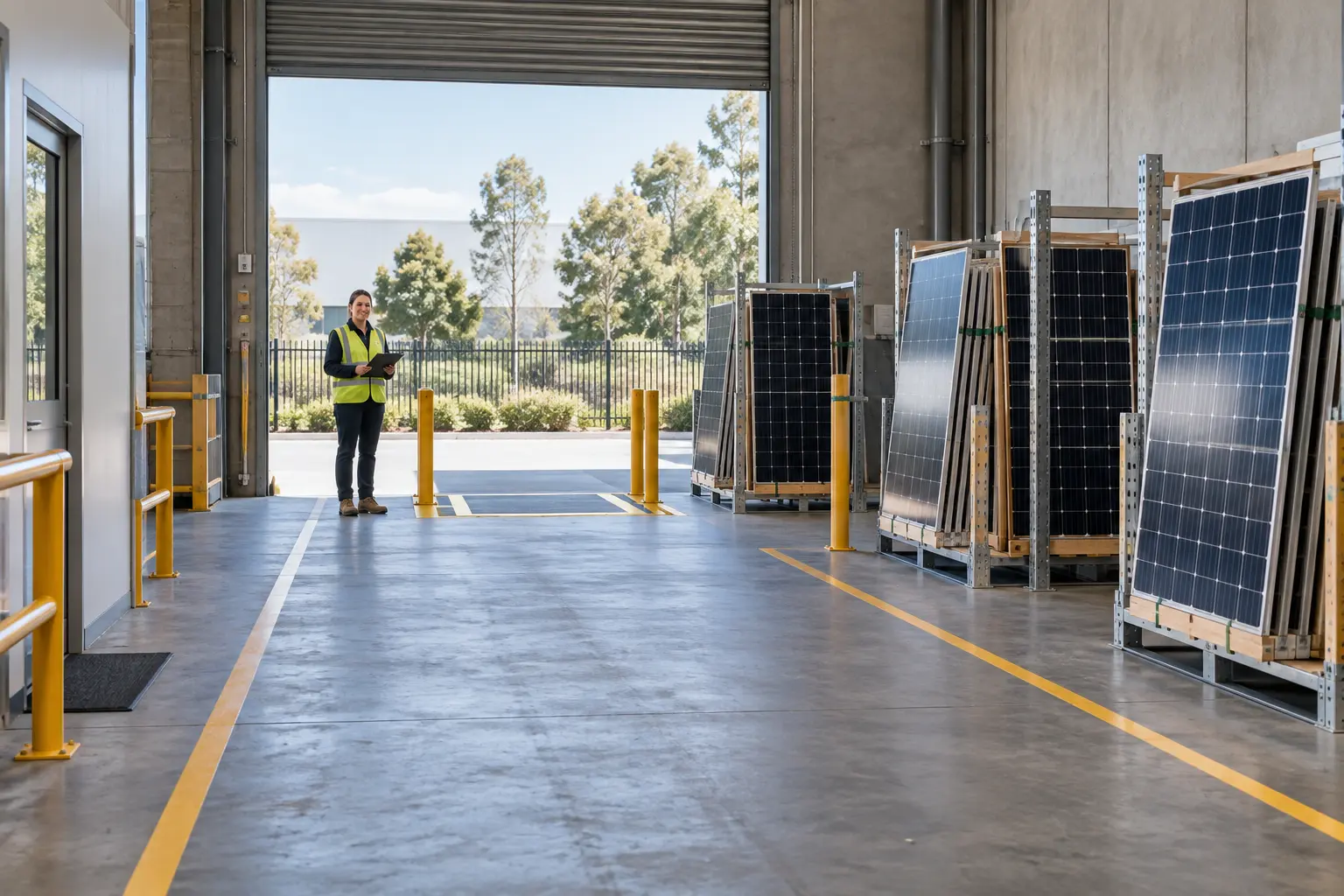
Prepare the actual inventory, ownership or project contact, condition groups, photographs, postcode, staging method and access constraints. ReSova will review the scope; an enquiry is not a promise of acceptance, collection timing, vehicle or downstream destination.