
Ask what the programme statement actually covers
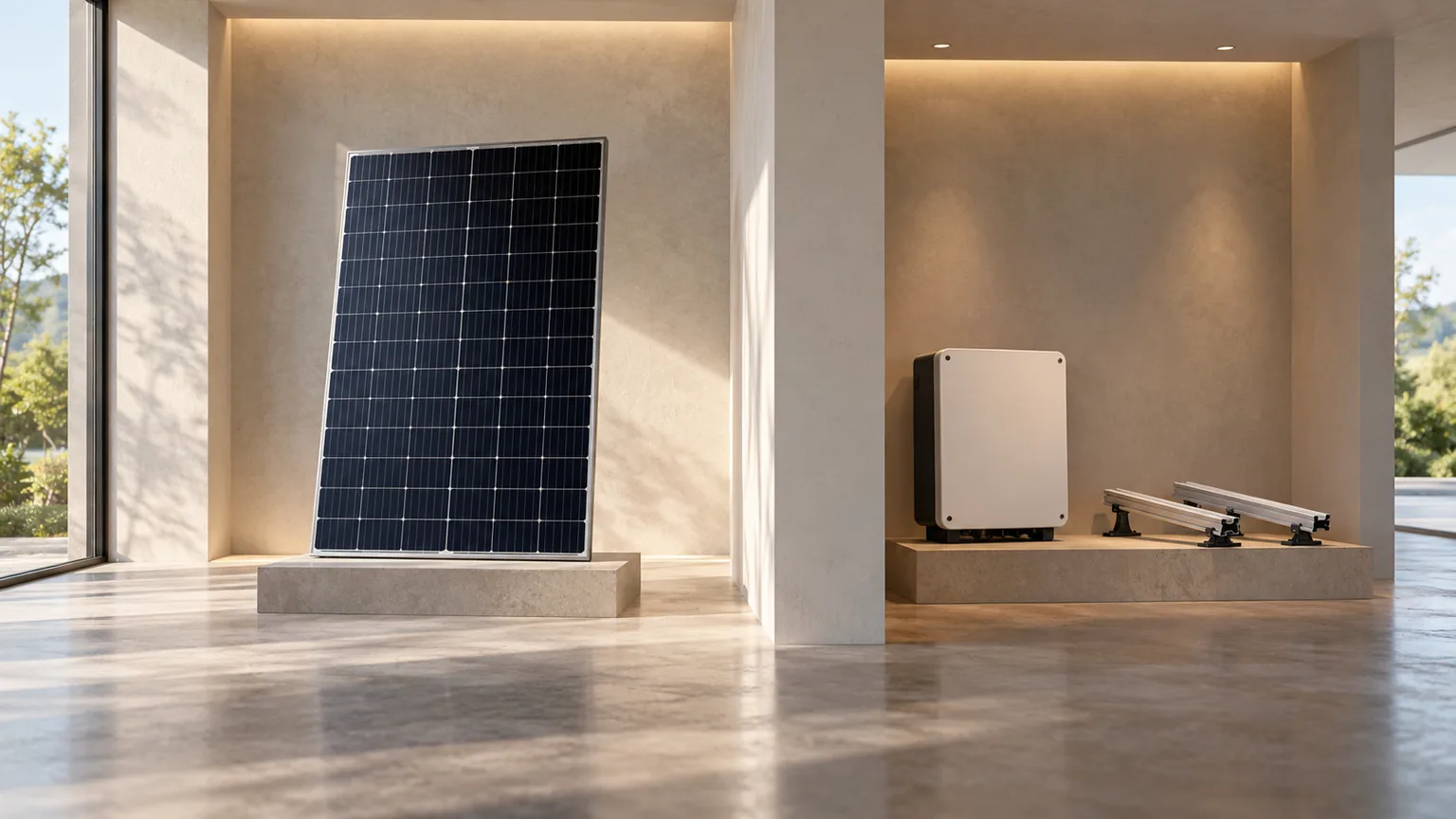
A solar recycling programme scope comparison is useful when a procurement or facilities reader finds an encouraging claim and needs to know whether it answers the current equipment question. The word solar can describe a module technology, a manufacturer’s products, a recycling programme or an entire installation. Those are not the same object. A statement about one object’s recovery does not automatically include the inverter, rails or cable stored beside it, or establish that a local collector can receive them.
Start with the statement’s issuer, named programme, product scope, geographical context and stage. A general programme description is different from an individual receiving agreement. A request page is different again: it asks questions before an answer exists. Keep that separation even when the same website presents the pages together. This is a way to read an industry claim accurately, not a provider ranking, technical assessment or interpretation of Australian law.
Two global designs show why scope cannot be assumed
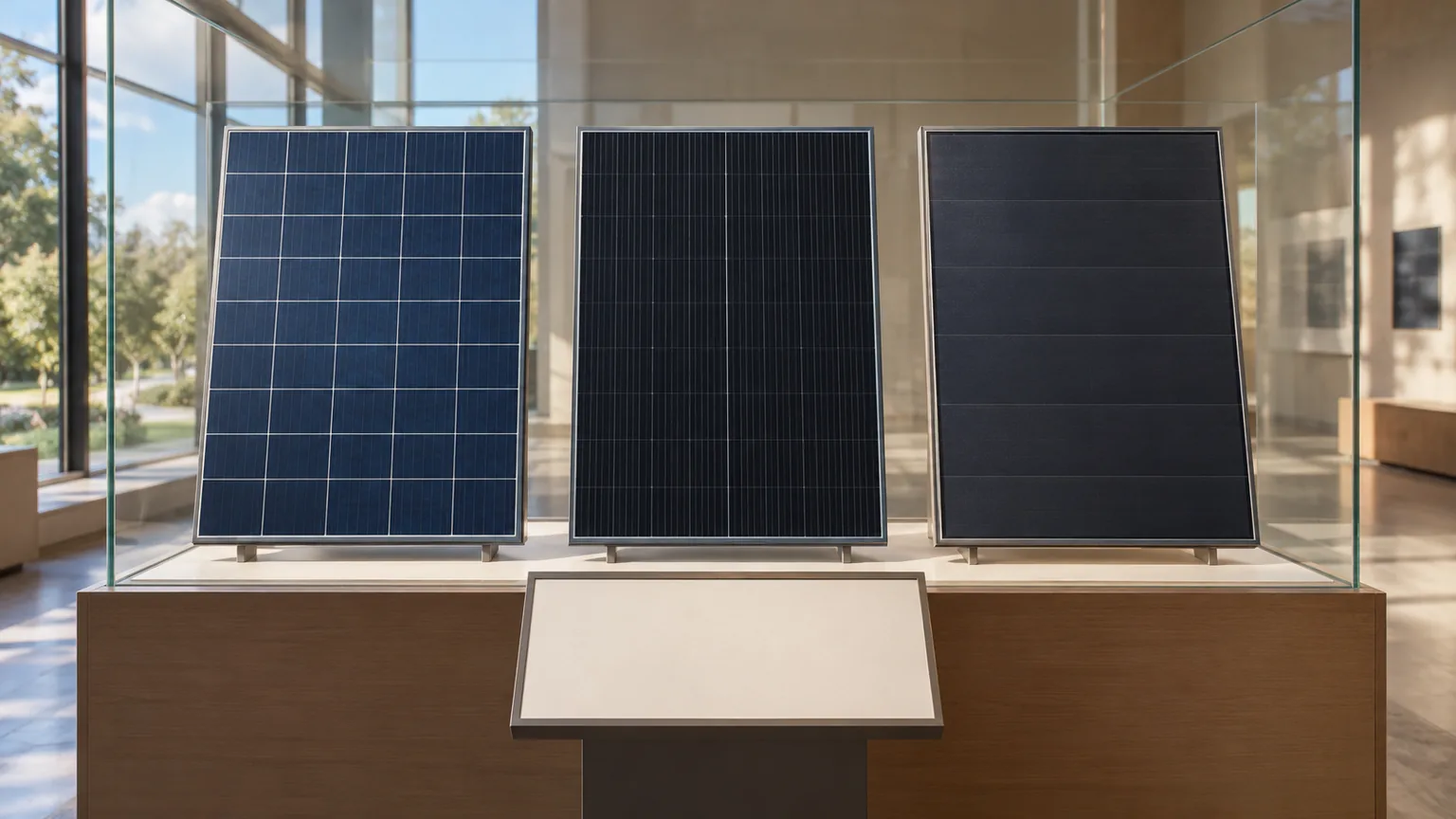
First Solar’s recycling page frames its programme around the manufacturer’s modules and its CdTe photovoltaic technology. PV CYCLE International’s collection form instead presents several technology choices and a separate inverter section. These are distinct communication designs: a manufacturer-module programme description and a broader enquiry interface. The comparison does not assert that First Solar universally excludes every other item, or that every PV CYCLE field guarantees acceptance. Only the stated page scope is being compared, not a separately negotiated agreement.
| Observed source structure | Useful reading distinction | Unsupported local inference |
|---|---|---|
| First Solar manufacturer/module framing | Retain the named products and programme when interpreting its statements. | All equipment from a solar installation is covered, or ReSova provides the same process. |
| PV CYCLE technology choices | A form can distinguish several types without verifying the customer’s answer. | Appearance identifies technology, or a selectable option accepts the batch. |
| PV CYCLE separate inverter questions | A module question and a related-equipment question are separate information objects. | An inverter is included in a panel total or a quoted module-only outcome. |
| Soren request and later validation/date steps | Providing information is distinct from a later operational agreement. | A foreign submission, threshold or stated procedure creates a Sydney service entitlement. |
Soren provides a further useful stage distinction by separating a request from later validation and date contact. Its French conditions do not become ReSova account, volume, timing or handling rules. Likewise, this article adopts no overseas recovery percentage, pricing arrangement or promise of global availability. A source can be authoritative about its own programme without being evidence about another business’s current service.

Use the comparison to preserve category questions, not add tests
For a local company reader, the decision-useful output is a narrower question. Instead of ’the programme recycles solar, so our whole system is covered’, ask which current categories need review and which assertion has not been established. Existing equipment information can help explain what the team believes it holds; an unsupported technology or programme relationship stays unknown. Do not identify module chemistry from colour, a photograph or visual similarity, and do not arrange extra opening, dismantling, sampling or testing to complete this comparison.
An illustrative procurement case makes the distinction concrete. A warehouse file contains a module-recycling brochure, while the actual removed equipment includes panels and an inverter. The brochure’s module claim does not answer the inverter question. The team can disclose both categories and the available facts, then ask for current scope review. It should not copy a foreign form’s technology selector into a claimed technical finding or treat a programme description as the local receiving arrangement. This is not an actual ReSova project or acceptance decision.
The B05 mixed-equipment guide owns the detailed category and unit ledger. The W02 product-data analysis owns whether a model reference applies to an item. This article answers a different question: even if the equipment description is supported, does an external programme claim cover that description and establish anything about a local enquiry? The answer cannot be inferred from shared solar terminology. It requires keeping the programme’s scope and the requested service separate.

Turn the claim into a bounded question for review
Claim-to-enquiry reading flow — not an acceptance test
- Name the source and objectIdentify whose programme and which product or category the statement describes.
- Retain its contextKeep geography, stated scope and general claim/request/agreement stage distinct.
- State the unsupported implicationDo not extend a module claim to other components or a foreign programme to a local receiving route.
- Use existing current factsDisclose actual categories and unknowns without adding testing, technical identification or new paperwork requirements.
- Request local scope reviewKeep programme claims separate from equipment, ground-level point, access and authorised-contact facts.
ReSova assesses local collection enquiries in Sydney and selected NSW only for equipment appropriately qualified people have already safely removed and made available for ground-level handover. Current quantities and units, broad visible-condition disclosures, location, access and authorised contact remain necessary to understand the request; a programme page cannot supply them. Use Commercial Services for a mixed or complex scope discussion and the equipment hub for ReSova’s own scope context, not this comparison as a provider directory.
Online time selection remains paused. A programme claim, account, estimate, photograph or completed form does not promise acceptance, price, vehicle, route, timing, booking, recycling rate, reuse, processor or final destination. ReSova does not provide electrical disconnection, removal, roof work, site-safety, traffic-management, technical-testing or legal advice. The practical benefit is knowing which inference to leave unconfirmed, so an enquiry asks about the actual equipment rather than an assumed outcome.
Primary comparisons and dates — checked 19 October 2026
The operator pages were inspected on the date below. Original publication/update dates were not established; none is presented as a new announcement. The selection compares source boundaries rather than making claims about programme performance or Australian legal requirements.
- First Solar — Recycling, checked 19 October 2026: manufacturer/module programme framing; no numerical recovery, price or local service commitment imported.
- PV CYCLE International — Collection form, checked 19 October 2026: distinct technology options and inverter questions; a field is not verification or acceptance.
- Soren — On-site collection request, checked 19 October 2026: request versus validation/date stages only; no French thresholds, law, packing or service terms adopted.
- Australian Government — Replace and recycle your solar system, checked 19 October 2026: professional-removal boundary, not a ReSova programme condition.
Key takeaways
- Name the programme and product before extending a claim.
- A selectable enquiry field neither verifies technology nor accepts equipment.
- A module claim does not cover other system categories by implication.
- Global programmes do not establish a ReSova receiving route or outcome.
Frequently asked questions
Does a manufacturer's module recycling claim include an entire solar system?
Do not infer that. Read the stated product and programme scope. An inverter, racking, cable or another manufacturer's equipment is not included merely because it belonged to the same installation. Current local categories still need separate review.
Does a technology option on an overseas form mean acceptance is confirmed?
No. An enquiry field asks for information; it does not verify an item's technology, accept it or establish a local receiving route. Do not identify technology from appearance or copy foreign conditions as ReSova requirements.
Must I identify or test every module technology before enquiring?
No new testing, opening, disassembly or product-passport requirement is introduced. Share existing information where supported, state unknowns honestly and request clarification. ReSova does not provide technical testing or identification.
Does this comparison recommend an overseas provider for a Sydney batch?
No. It compares claim boundaries, not available providers or routes. ReSova assesses the actual already safely removed, ground-level equipment and current site facts separately. No acceptance, price, booking or downstream outcome is promised.
Request a Current Equipment Scope Review
ReSova considers eligible, already removed equipment in Sydney and selected NSW areas after the ground-level handover and site access can be confirmed. It does not decide removal, technical condition or a final downstream outcome.