
Quick answer
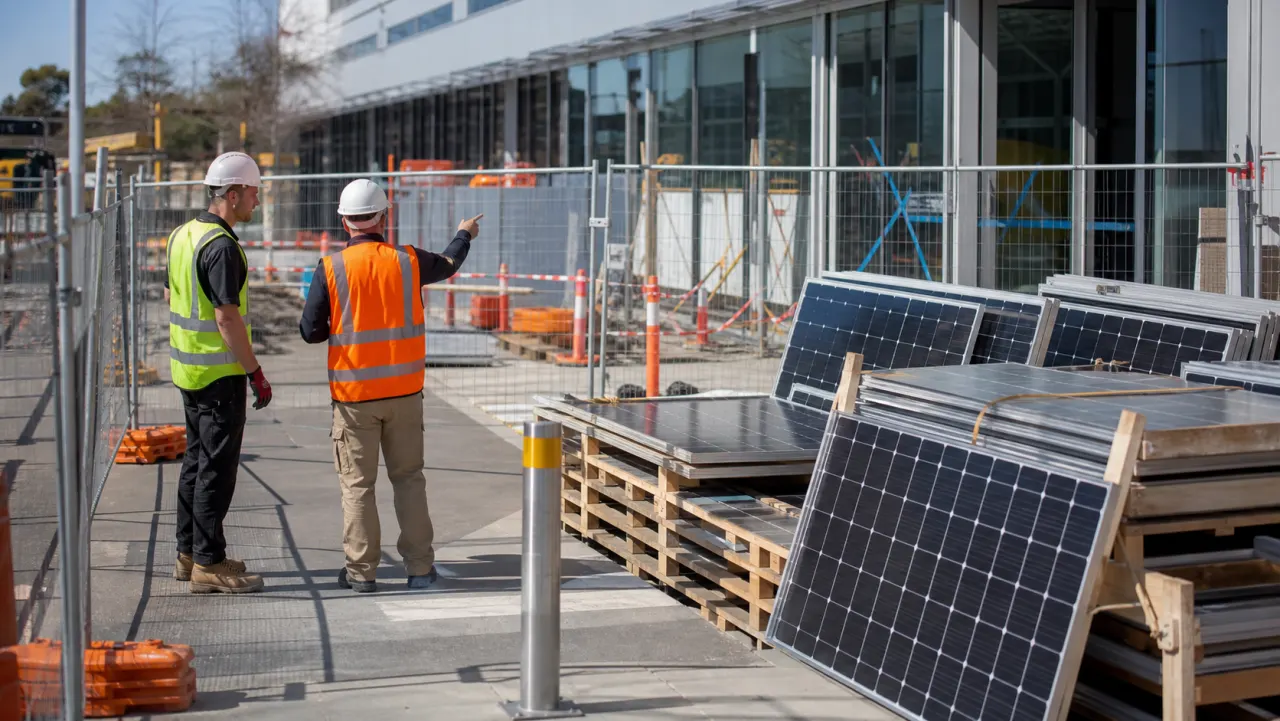
A live construction site needs a handover plan, not an improvised panel pile. After appropriately qualified people have safely removed the equipment, assign a single site contact, agree a protected ground-level staging zone, keep it clear of pedestrian routes, deliveries and active work, record the count and broad condition, then confirm vehicle access before collection. ReSova’s role starts at that ready-to-handover point; it does not remove electrical equipment, manage the construction site or promise a collection time.
Set the handover roles before the panels come down
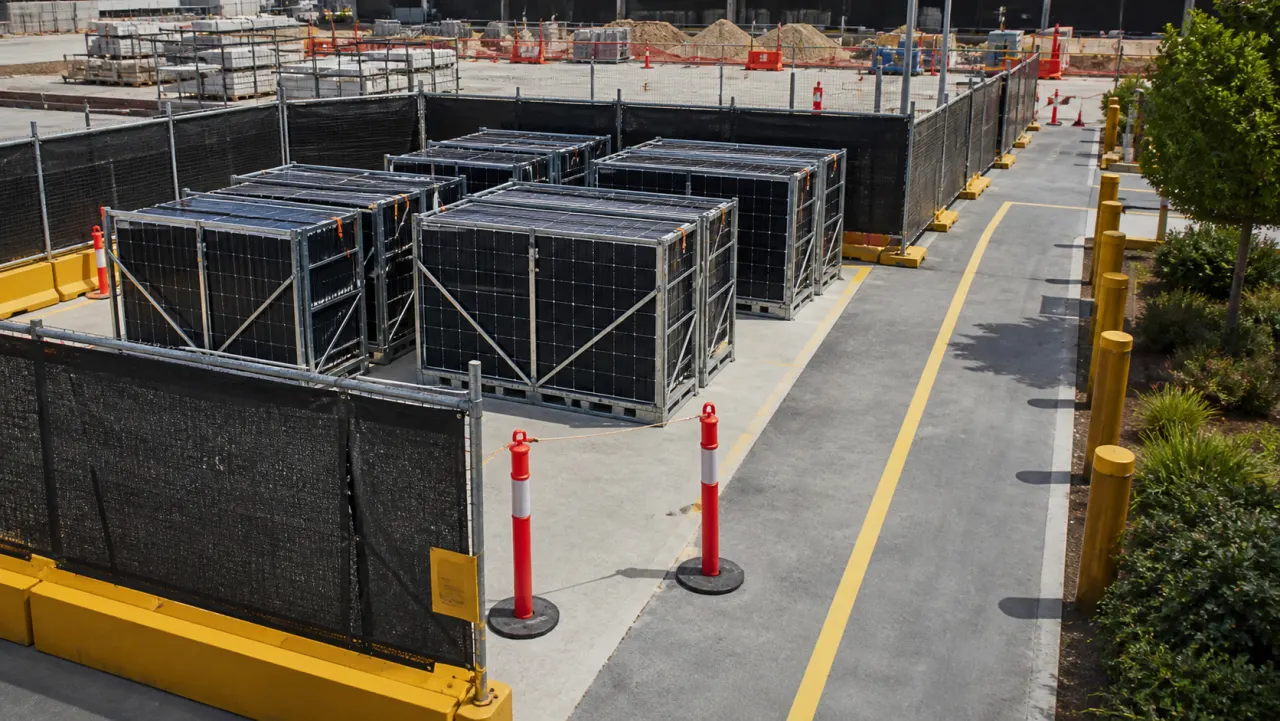
The collection handover sits within a wider site plan. SafeWork NSW’s solar installation guide highlights the need to plan delivery points, panel size and lifting access. For a removal job, translate that same planning discipline into a ground-level handover: the project decides the safe work controls and removal method; the site team controls access and staging; the collection scope is confirmed once the equipment is safely ready.
Live-site handover matrix
| Site question | Lead role | Collection-ready outcome |
|---|---|---|
| Electrical removal | Appropriately qualified electrical / solar contractor | Equipment is safely removed before collection is considered. |
| Staging zone | Builder, principal contractor or site coordinator | Protected ground-level area does not obstruct pedestrians, deliveries, emergency routes or ongoing trades. |
| Count and condition | Trade lead or nominated site contact | The request describes quantity and broad sound, damaged or mixed condition rather than an estimate from the roof. |
| Access and timing | Site coordinator and collection contact | Gate, loading route, induction and vehicle constraints are known before a collection is scoped. |
| Collection record | ReSova and nominated site contact | Eligible equipment is counted at handover and recorded on a job docket for the project file. |
Stage equipment without blocking the work
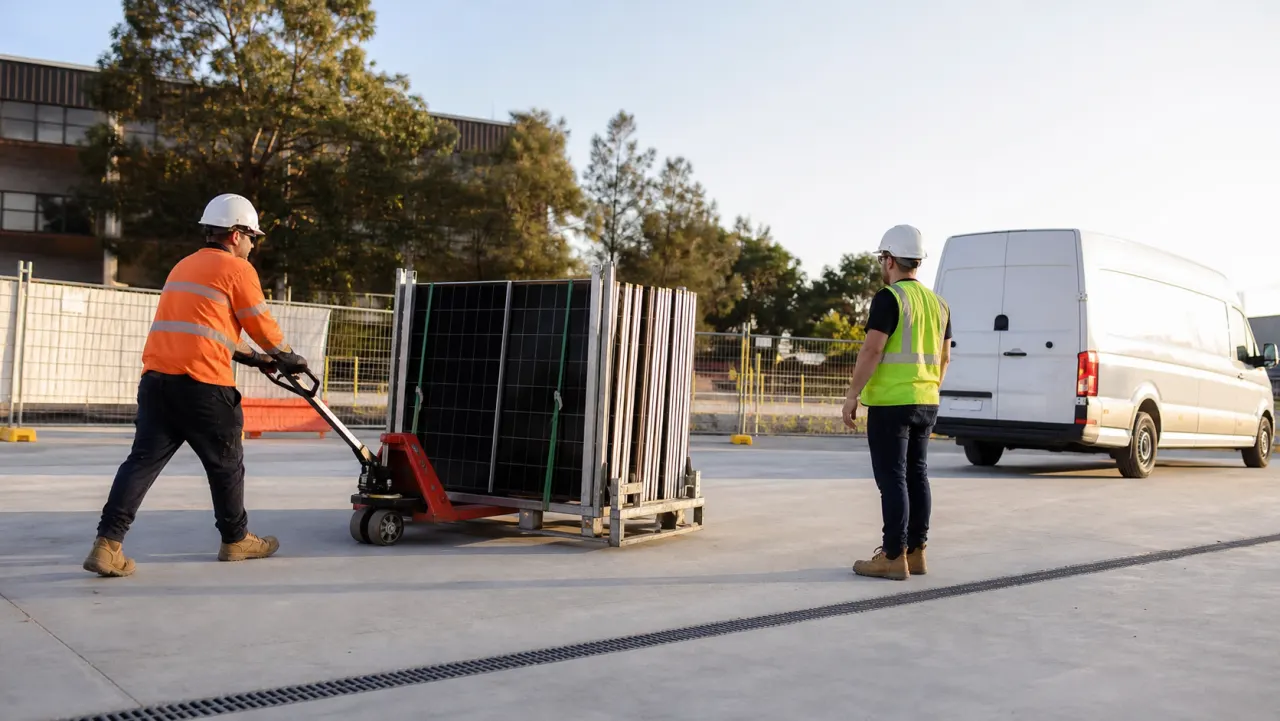
The useful checklist is operational: keep the temporary area away from active work and public access; avoid using it as a shortcut through a delivery route; protect panels from further damage; identify who can release the equipment; and tell the collection contact about gates, height limits, inductions, loading restrictions or changes to the programme. SafeWork NSW’s site security checklist also cautions against leaving materials where they compromise site security. These are site-team controls, not services supplied by ReSova.
A five-step live-site collection flow
From safe removal to a documented site handover
- Separate the work scopesThe qualified trade completes electrical isolation and removal; the site team keeps control of the construction plan and access.
- Nominate the handover ownerChoose one contact who can confirm the actual count, staging point, gate access and site conditions on the day.
- Create a protected staging zoneKeep removed equipment at safe ground level and clear of traffic, emergency routes, deliveries and cross-trade activity.
- Confirm the collection inputsShare quantity, broad condition, access limits and included equipment; 70+ panels or complex access need a tailored scope.
- Collect and recordAt the ready handover point, eligible equipment is counted and documented on a ReSova job docket.
For Sydney contractors and site coordinators
The practical objective is to prevent removed panels becoming an unscheduled extra task while the site is still moving. For Sydney and selected NSW areas, use the collection estimator for 10–69 panels where the job fits the standard pathway. For 70+ panels, unusual access or a project handover, request a tailored scope through commercial services. The ground-level handover-area guide helps describe the precise handover point, while the tailored collection scope guide shows what belongs in a fuller project brief. See the roof-replacement collection guide for a smaller contractor scenario and the collection records guide for what to retain after pickup.
Key takeaways
- On a live site, define the handover owner, protected staging point and access route before collection is booked.
- Electrical removal, site controls and construction management remain with appropriately qualified trades and the site team.
- Count, broad condition, staging and access are the collection inputs; 70+ panels or complex access need a tailored scope.
- ReSova collects eligible already removed equipment and records the collection on a job docket; it does not guarantee a collection time.
Frequently asked questions
Can ReSova remove solar panels while construction work continues?
No. ReSova does not perform electrical removal, roof work or site management. Its role begins when eligible equipment has been safely removed and made available at a ground-level handover point.
Where should removed panels wait on a live site?
Use a protected ground-level staging area agreed with the site team, away from pedestrian routes, delivery movements, live work areas and emergency access. The actual site controls remain the builder or principal contractor’s responsibility.
Can we request collection before panels are removed?
You can plan the scope early, but confirm the final count, safe ground-level staging and vehicle access once removal is complete. Collection timing depends on the confirmed scope and site conditions; it is not a guaranteed arrival window.
Get an Estimate
ReSova considers eligible, already removed equipment in Sydney and selected NSW areas after the ground-level handover and site access can be confirmed. It does not decide removal, technical condition or a final downstream outcome.