
Quick answer: confirm the real handover after removal
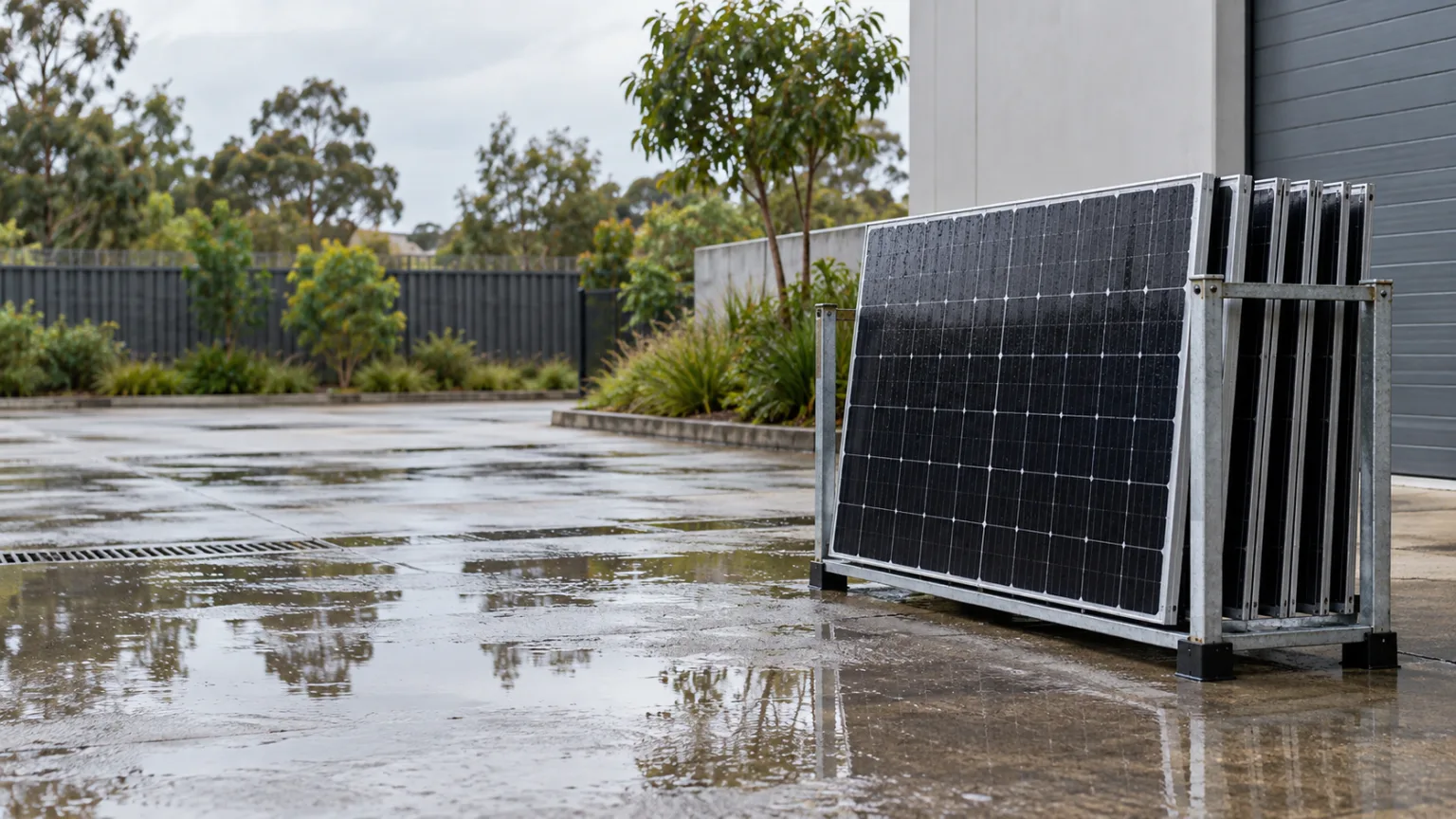
Storm-damaged solar panel collection in Sydney begins with completed facts, not with an emergency collection promise. Wind, hail, rain or another weather event does not by itself show whether a panel is safe, eligible, reusable, recyclable or ready for a particular collection. Once appropriately qualified people have completed any necessary electrical work and safe removal, the useful collection brief records the actual batch, separately listed equipment, broad visible condition, protected ground-level handover point, practical access and a contact who can confirm the site facts.
ReSova can assess eligible post-removal collection requests in Sydney and selected NSW areas from that information. The assessment is deliberately narrower than a storm response: it is not emergency attendance, electrical diagnosis, repair, roof work, site-safety management, acceptance, a fixed price, a vehicle allocation, a booking or a final processing promise.
Keep removal and collection decisions separate
A weather event can compress several decisions into one stressful moment: protect people and the site, understand the system condition, organise qualified work, decide what will be removed, and then arrange a path for the equipment. Those decisions may involve different people. Conflating them is how a collection enquiry becomes an unrealistic request for diagnosis, repair or emergency response.
The Australian Government’s solar-system guidance says repairs to solar and battery systems should be attempted only by an accredited electrician and notes that systems can remain energised even when mains power is switched off. Its replace and recycle guidance similarly says a licensed electrician should remove or replace system components. These are safety boundaries, not instructions from ReSova or an assessment of any individual site.
| Question | Responsible decision | What a collection brief can do |
|---|---|---|
| Is electrical work or removal needed? | Appropriately qualified people, the asset owner and relevant responsible parties. | Confirm only that the actual batch is already removed and available at ground level. |
| What is the equipment’s technical condition? | The appropriate qualified assessment pathway. | Use broad visible-condition wording; do not convert it into a diagnosis or reuse decision. |
| Can the batch be collected? | ReSova assesses the stated eligible request against current scope. | Provide actual equipment, location and access facts without assuming acceptance. |
| What happens after handover? | A separately confirmed downstream pathway where applicable. | Do not treat collection as proof of recycling, reuse, recovery rate or destination. |
For a homeowner, the practical next step may be to obtain the right professional advice before treating a panel as ready to move. For an installer or facilities team, the same discipline prevents a preliminary storm report, an old asset register or a roof estimate from being presented as the final collection inventory. Once removal is complete, the collection task becomes simpler: describe what is physically there.
Confirm the actual weather-affected batch
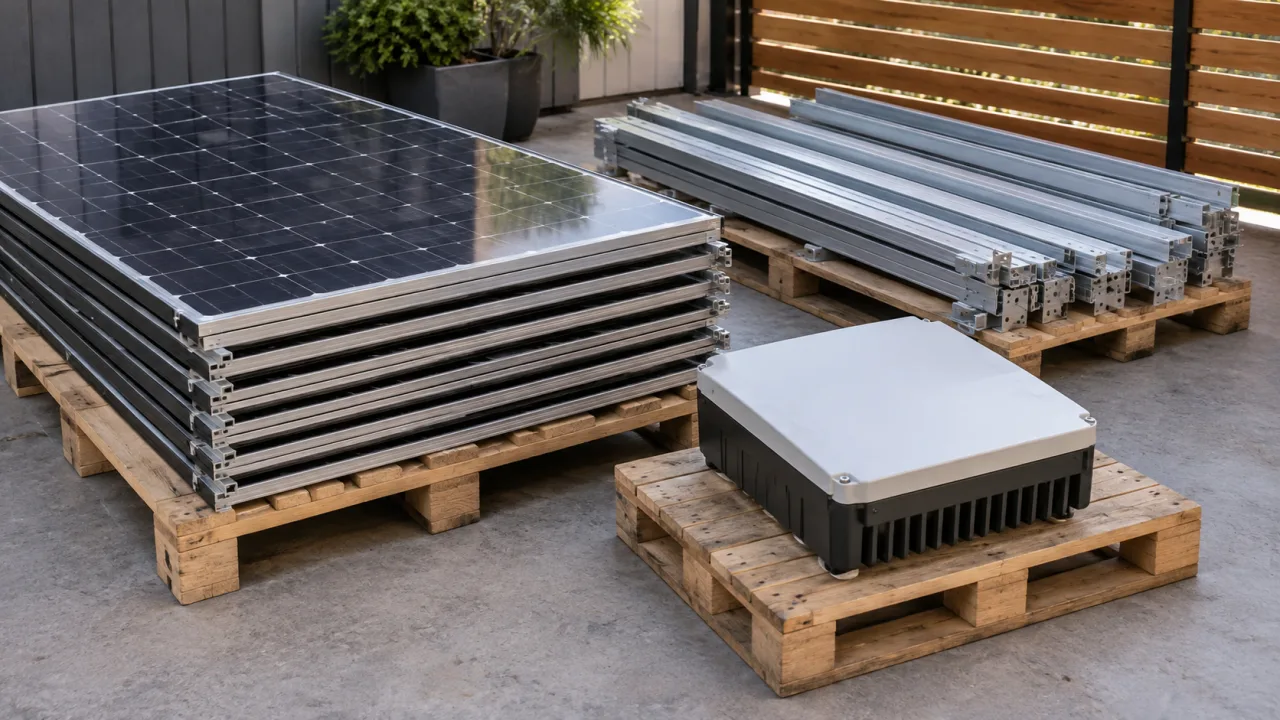
The most useful damaged solar panel collection request is an inventory of the current ground-level batch. Count panels physically where practical, list other equipment separately and describe obvious visual differences in plain language. A cracked surface, wet appearance, mixed condition or a separate inverter can be disclosed without declaring an item hazardous, unusable, recyclable or accepted. Those conclusions need the relevant responsible assessment, not a blog label.
- Use the actual panel count after removal, rather than a system kW figure, roof estimate or historic asset record.
- List panels, inverters, batteries, cables, rails and other components separately; do not assume each item fits the same collection scope.
- Record broad visible facts, such as an intact-looking group, obvious breakage or mixed condition, without offering technical, safety or reuse conclusions.
- State whether the group has already been moved to the nominated ground-level point or whether that part of the project is still incomplete.
- Tell ReSova about a material change from the original request instead of relying on a pre-storm quantity or photo set.
The damaged solar panels page explains the need to disclose certain damage and handling context before scope is confirmed. The broken and cracked panels guide gives broader context on damage. This article is different: it focuses on turning a post-storm, already removed batch into factual collection inputs rather than deciding whether a specific panel should be repaired, reused or processed in a particular way.
Describe ground-level handover and access factually
A weather event can change the site context as well as the equipment. A gate may be restricted, an access route may differ from the original plan, or the collection point may have moved. Do not fill those gaps with an assumed vehicle, loading method or timing. Name the point that is actually available, explain known constraints and nominate someone who can confirm the facts on the day.
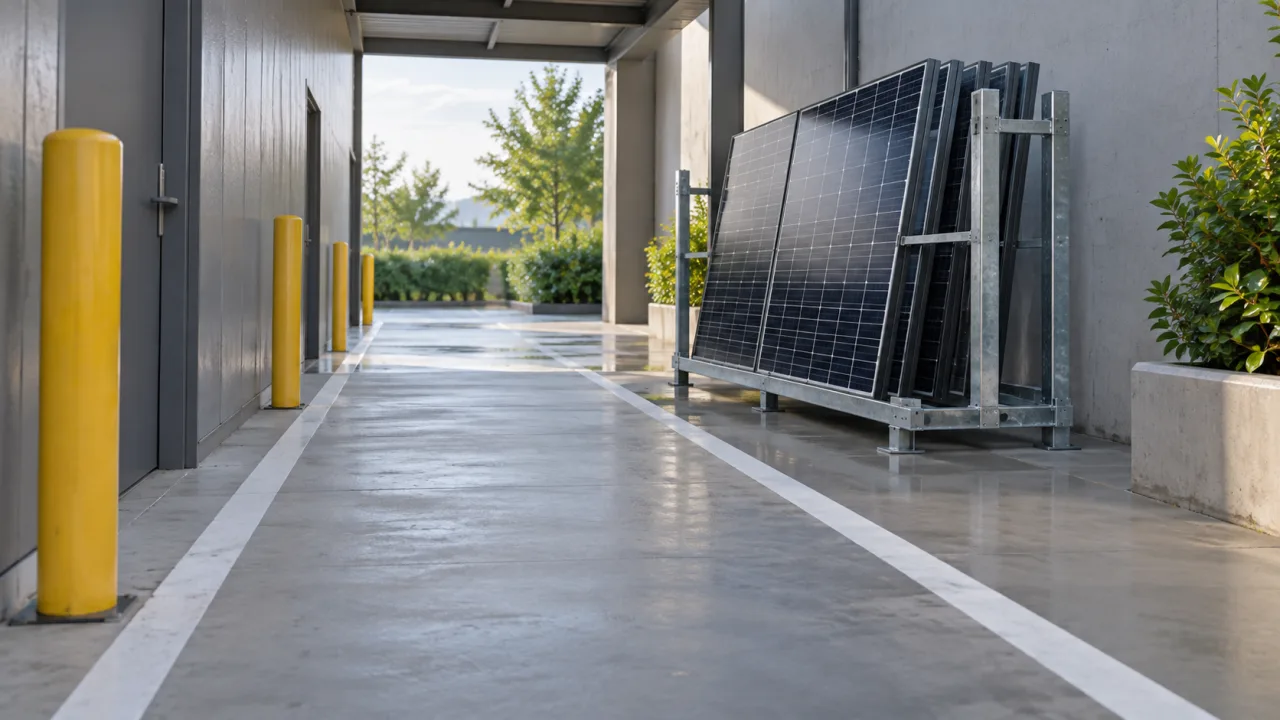
SafeWork NSW’s Safety Around Your Vehicle guide recommends confirming the onsite delivery point, access constraints, site rules, contact details and loading or unloading process. Its guidance is useful context for why an accurate site brief matters. It does not transfer the site’s own safety, induction, traffic or emergency responsibilities to ReSova.
| Provide | Why it helps the request | Do not infer |
|---|---|---|
| Ground-level point | Shows where the actual removed batch can be described. | That ReSova selects, certifies or manages the storage arrangement. |
| Access context | Makes known gates, parking, shared areas, carry distance or changed routes visible. | A guaranteed vehicle, loading method or collection time. |
| Site process | Allows a project to state the relevant reception, induction or contact process already set by the site. | That ReSova manages the site process or traffic plan. |
| Contact | Lets the site reconcile the written brief with real conditions. | Acceptance, a booking or a final downstream result. |
The ground-level handover guide and site-contact checklist offer more detail on describing those facts. In a storm-damage context, the key is to update the brief when conditions have changed rather than using generic before-and-after language as a substitute for the actual handover.
Choose the right enquiry path once the facts are ready
For an eligible standard 10–69-panel request, the collection estimator is the starting point for postcode, quantity and broad condition details. Use Commercial Services where the batch is 70+ panels, equipment is mixed, several sites are involved, access is unusual or the project needs a tailored review. Check What We Collect before relying on either route.

A restrained post-storm collection sequence
- Use the responsible safety pathwayKeep emergency, electrical, repair and removal decisions with the relevant responsible people.
- Confirm the real batchCount the equipment actually removed, list other components and record broad visible facts.
- Describe the handoverName the available ground-level point, current access context and a site contact.
- Submit the suitable enquiryUse the estimator for an eligible standard request or Commercial Services for a tailored review.
This sequence is designed for clarity, not speed claims. A complete request may make an eligible collection scope easier to assess, but it does not create an emergency service, priority position, acceptance, fixed price, arrival time, vehicle allocation or promise about where the equipment will go after collection.
Sources and dates checked
- Australian Government — Look after your solar system, checked 16 September 2026: accredited-electrician boundary for repairs and weather-related system damage context.
- Australian Government — Replace and recycle your solar system, checked 16 September 2026: licensed-electrician boundary for removal or replacement.
- SafeWork NSW — Floods and other natural disasters, checked 16 September 2026: no DIY electrical work after storms or floods.
- SafeWork NSW — Safety Around Your Vehicle guide, checked 16 September 2026: site contact, access and loading-process planning context.
Key takeaways
- Storm damage does not itself decide equipment safety, collection eligibility or a downstream result.
- Keep emergency, electrical and removal decisions separate from a post-removal collection assessment.
- Describe the actual batch, broad visible condition, ground-level point, access and contact without making technical claims.
- Use the estimator for an eligible standard request and Commercial Services for a larger or more complex scope.
Frequently asked questions
Can ReSova provide emergency collection for storm-damaged solar panels?
No. ReSova assesses eligible post-removal collection requests; it does not provide emergency response, electrical work, roof work or site-safety management. Follow the responsible emergency, electrical and site processes first.
Does storm damage mean a solar panel will be accepted for collection?
No. Storm damage alone does not confirm eligibility, technical condition, reuse suitability, price or a downstream outcome. Disclose the actual batch and broad visible condition so the stated request can be assessed.
What should I include in a damaged solar panel collection request?
After qualified removal, confirm the actual panel count, separately listed equipment, broad visible condition, ground-level handover point, known access constraints and a site contact. These facts support assessment, not a collection guarantee.
Can I use the estimator after a storm?
The estimator may suit an eligible standard 10–69-panel request. For 70+ panels, mixed equipment, unusual access or a complex project, use Commercial Services for a tailored scope review.
Damaged Solar Panels
ReSova considers eligible, already removed equipment in Sydney and selected NSW areas after the ground-level handover and site access can be confirmed. It does not decide removal, technical condition or a final downstream outcome.