
Quick answer
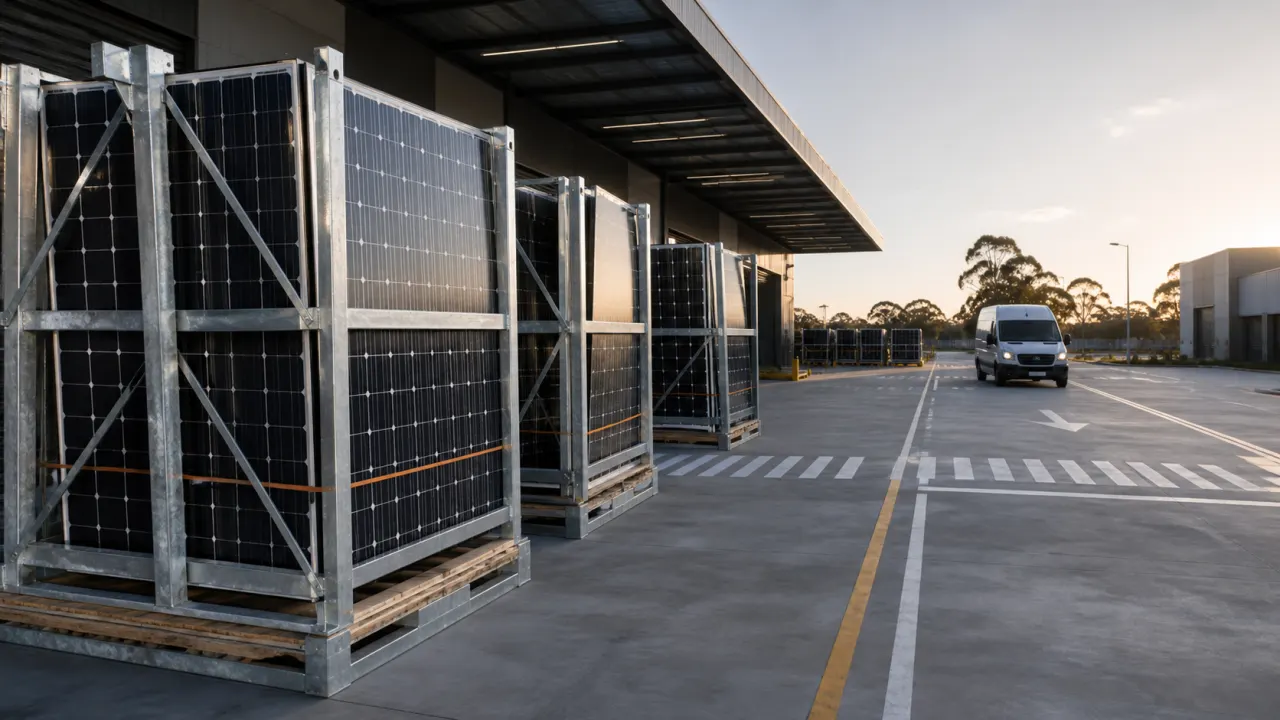
PV recycling in 2026 is a connected system, not a single machine. Global research shows that recycling technology, regional capacity, transport and policy interact; a project’s equipment still has to reach an appropriate pathway in a usable condition. For a Sydney site, do not turn that long-term finding into a promised recovery result. After appropriately qualified people have safely removed the equipment, prepare the actual count, broad visible condition, protected ground-level staging point, site contact and vehicle access before collection is scoped. ReSova collects eligible equipment at that handover point in Sydney and selected NSW areas; it does not remove electrical equipment or operate a recycling plant.
A recycling system is only as connected as its handovers
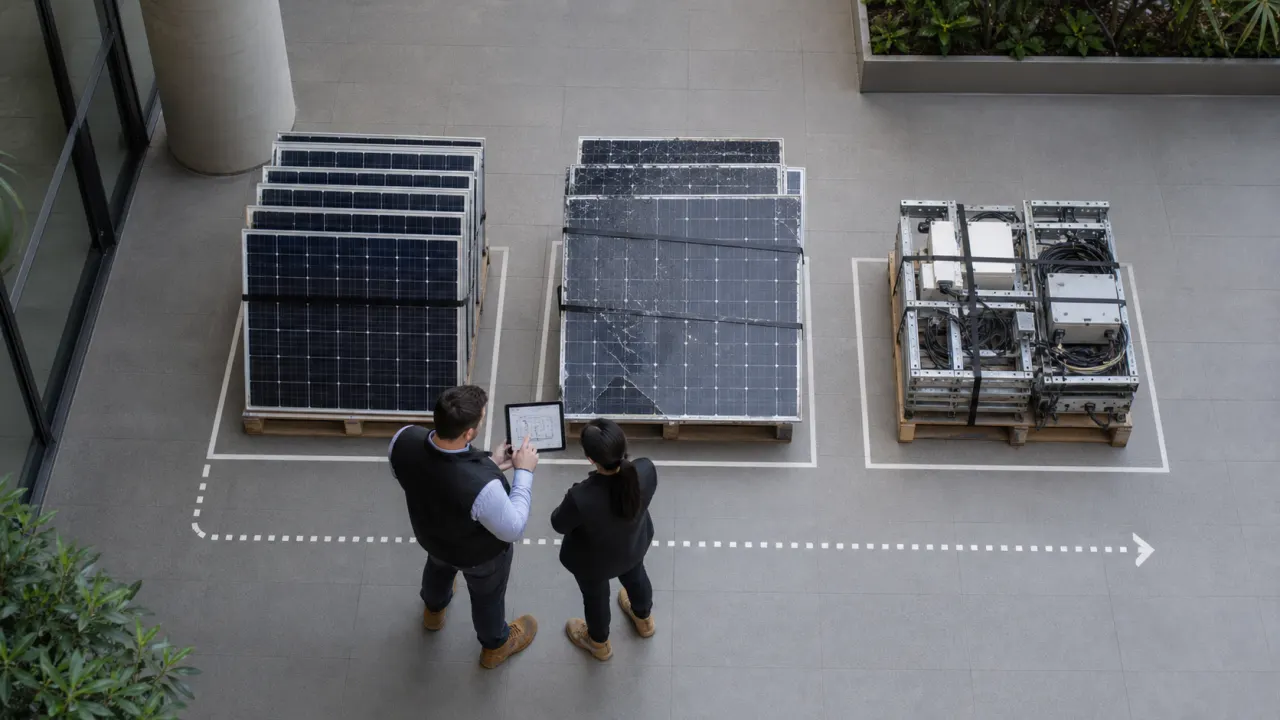
The recent open-access Nature research examined 1,708 future PV-waste recycling scenarios across 32 regions. Its useful long-term lesson is that technology, material flows, policy and regional conditions cannot be evaluated in isolation. The authors model mechanical, thermal and chemical pathways alongside local and cross-region recycling arrangements. That does not select a recycler for a Sydney job, but it explains why an otherwise promising recovery technology cannot solve a site problem if the equipment has no practical collection, transport or receiving pathway.
Australia is working on those system links. The Department of Climate Change, Energy, the Environment and Water says the National Solar Panel Recycling Pilot is designed to test collection, transport and recycling, and to collect data on real-world options. It is not a universal on-demand service, a replacement for project obligations or a guarantee that a particular batch will follow a particular downstream route.
What global research can decide — and what a Sydney project must still decide
| Decision layer | What global research can usefully indicate | What the project team still has to confirm |
|---|---|---|
| Capacity and technology | Mechanical, thermal and chemical processes have different cost, material and scale trade-offs. | Which receiving pathway is actually suitable and available for the confirmed equipment scope. |
| Transport and scale | Distance, volumes and regional infrastructure influence system performance and cost pressures. | Actual count, location, gate/vehicle access, loading conditions and whether the job fits a standard or tailored scope. |
| Condition and material flow | Condition and preparation influence how material can move through a wider circular system. | A broad visible condition record without making a performance, reuse, legal-classification or recovery claim. |
| Evidence and outcome | Better data can improve future planning and policy design. | Which project records, approvals, transporter or receiving-facility requirements apply to the actual site. A collection docket alone is not a legal or final-processing certificate. |
pv magazine’s analysis of the research similarly focuses on the trade-offs between system-wide benefits and where capacity develops. For a facilities manager or EPC, the useful translation is deliberately narrower: assemble a reliable site handover rather than assume a global model supplies the answer for an individual panel stack.
The local handover inputs that make a collection scope usable
A transport-ready collection request should describe the physical reality of the site. The Clean Energy Council’s circular-economy submission identifies decommissioning, collection, transport and recycling as linked parts of end-of-life management. That is not a direction to self-handle electrical equipment. It is a reason to give the project team and collection contact the inputs below once qualified people have completed safe removal.
| Input | What to prepare | Boundary to retain |
|---|---|---|
| Safe-removal status | Confirm that appropriately qualified people completed isolation and removal before collection is considered. | ReSova does not undertake electrical removal, roof work or diagnosis. |
| Quantity and components | Count panels and identify any included related components in broad terms. | Do not use a rough roof estimate as the final collection scope. |
| Broad visible condition | Describe a sound, damaged or mixed batch and protect it from further damage. | Visible condition is not a technical test, legal classification or promise of reuse/recycling. |
| Ground-level staging and access | Nominate a protected handover point, site contact, gate process, loading route and relevant vehicle constraints. | Access information is a scope input, not a guaranteed collection time. |
| Collection record | Keep the collection date and ReSova job docket with the project file. | The docket records the collection handover only; it is not a statutory certificate or final-outcome proof. |
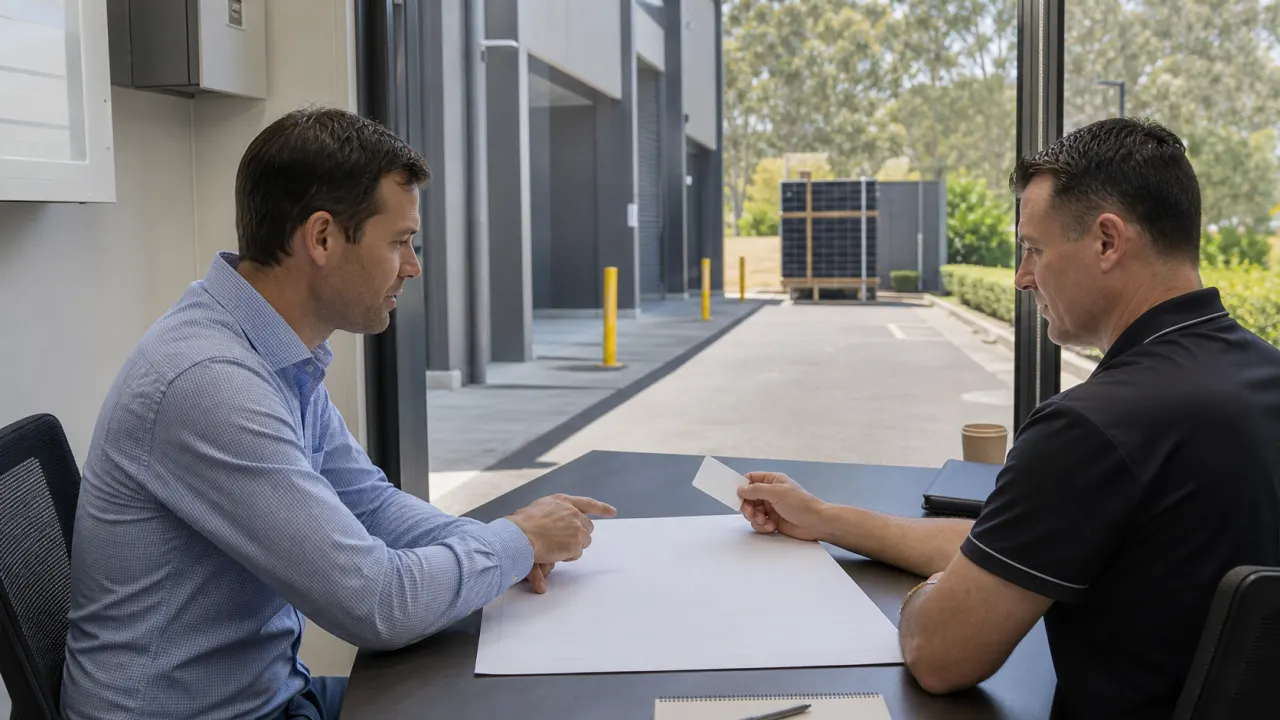
From safe removal to a documented local handover
A capacity-aware collection handover
- Complete qualified safe removalElectrical isolation and removal are handled by appropriately qualified people before a collection request is confirmed.
- Count and describe the batchRecord the actual panel quantity, broad visible condition and mixed components without predicting reuse, recycling or recovery rates.
- Set protected ground-level stagingKeep eligible equipment safe, accessible and clear of pedestrian, delivery and emergency routes.
- Confirm contact and vehicle accessShare the handover owner, gate or induction steps, loading route and constraints that affect the practical collection scope.
- Use the suitable scope pathEligible standard 10–69 panel jobs can use the estimator; 70+, unusual access, multi-site or project work needs a tailored scope.
- Collect and retain the docketAt eligible handover, ReSova counts the collection and records a job docket for the project file, not a legal certificate or final-processing guarantee.
What this means for Sydney installers and commercial project teams
The global direction is clear: capacity and circularity are built through linked decisions, not one headline recovery claim. The local action is equally clear but more modest. For Sydney and selected NSW areas, ReSova can collect eligible equipment once it is already safely removed and ready at a ground-level handover point. Use Commercial Services for project context, What We Collect to confirm the current scope, and solar-panel collection records for what to retain after pickup. Use the collection estimator only for eligible 10–69 panel scopes; 70+, special access, multi-site and complex project work require a tailored scope. Collection does not promise a price, arrival time, recovery rate or particular downstream result.
Key takeaways
- PV recycling is a connected system: technology, capacity, transport and site-ready handovers all matter.
- Global research can explain long-term trade-offs, but it cannot choose a pathway or guarantee an outcome for a specific Sydney batch.
- After qualified safe removal, reliable inputs are count, broad visible condition, ground-level staging, site contact and vehicle access.
- ReSova collects eligible already removed equipment in Sydney and selected NSW areas and records a job docket for the collection handover only.
Frequently asked questions
Why is transport important in solar panel recycling?
A recycling pathway starts with getting safely removed equipment from site to an appropriate downstream operator. Distance, batch size, access, packaging and available capacity can all affect the practical scope. They do not by themselves predict a final recycling result.
Can a global PV-waste study decide the pathway for my Sydney panels?
No. System-level research explains long-term capacity and policy trade-offs. A real project still needs its equipment, condition, safe handling, access and available downstream pathway confirmed for the actual collection scope.
What should a commercial project prepare before asking for collection?
After appropriately qualified people have completed safe removal, prepare the count, broad visible condition, any mixed components, protected ground-level staging point, site contact and vehicle/loading constraints. ReSova records an eligible collection handover on a job docket; the docket is not a legal certificate or final-processing guarantee.
Commercial Services
ReSova considers eligible, already removed equipment in Sydney and selected NSW areas after the ground-level handover and site access can be confirmed. It does not decide removal, technical condition or a final downstream outcome.