
Quick answer
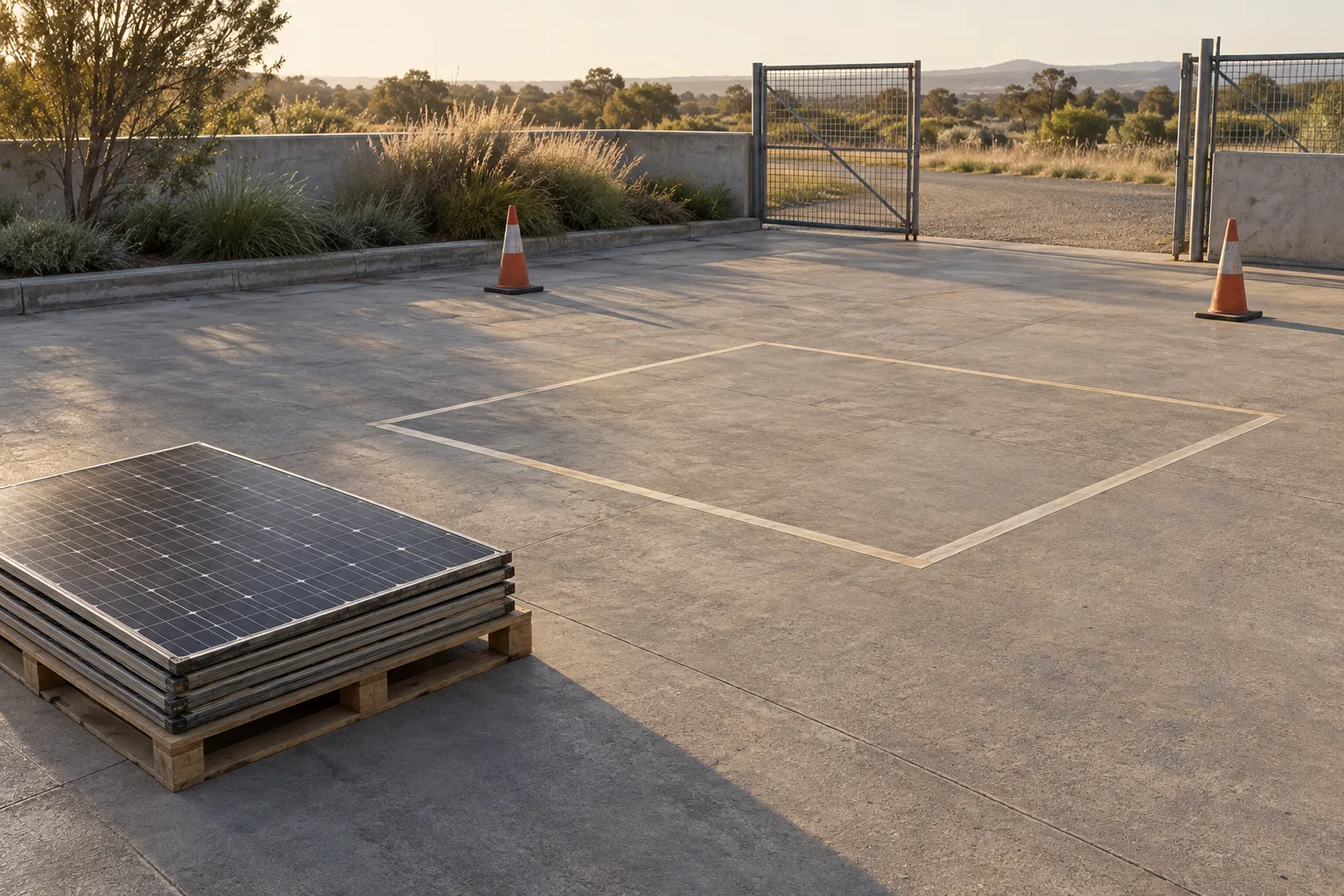
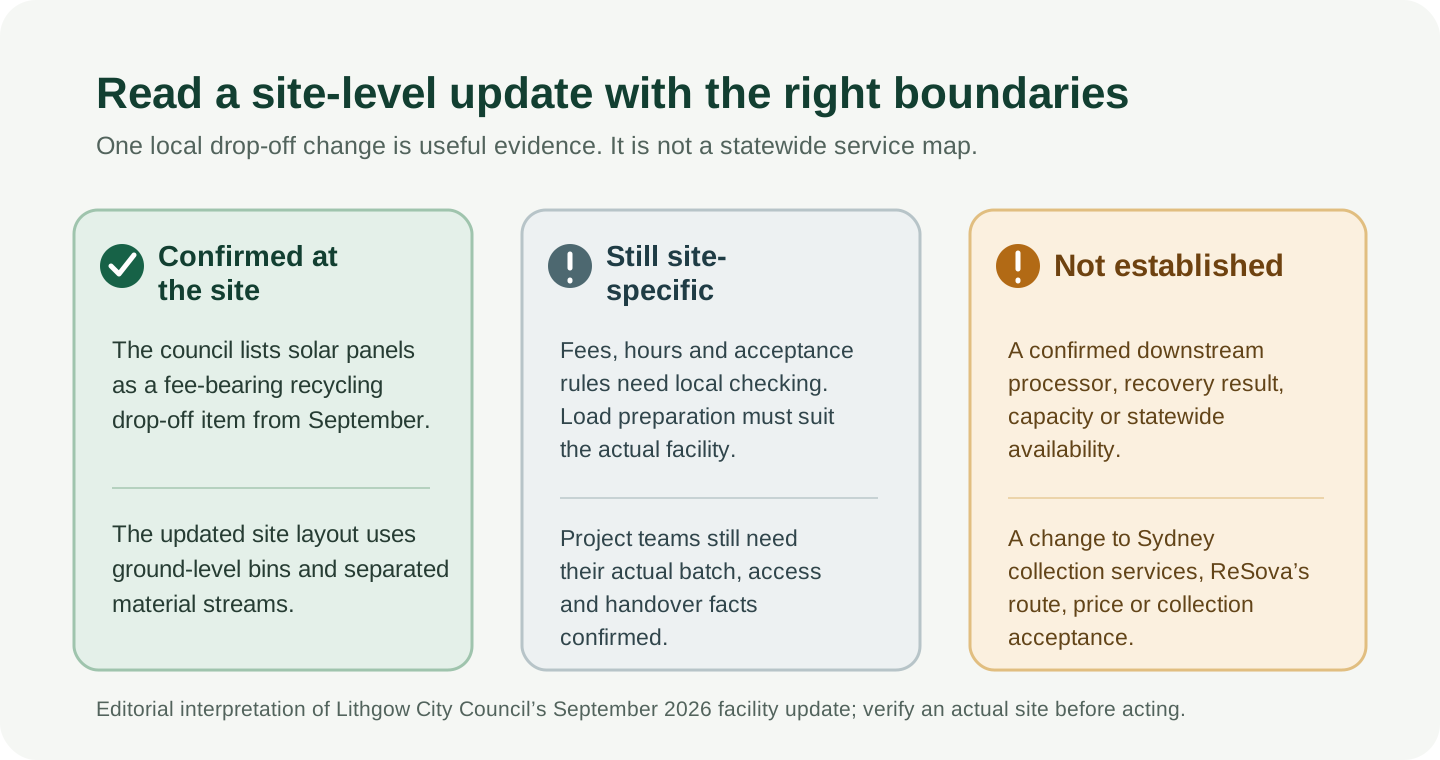
The confirmed September change is narrow: Lithgow City Council lists solar panels as a fee-bearing recycling drop-off item at its Portland Solid Waste Facility, and says its revised layout uses ground-level LBins for separated materials. This is worth noting because it makes one NSW handover pathway more visible. It does not establish a statewide collection network, a Sydney service change, a named processor, processing capacity, a recycling result or a ReSova route change.
What changed this week
The council’s current facility page says that, from September 2026, solar panels can be dropped off for recycling at Portland, with fees applying. It also says that from 2 September visitors no longer access the landfill directly and instead sort material into LBins, which sit flat on the ground and keep separated materials out of the landfill area. The page does not say that this is a new NSW-wide arrangement or that every kind of solar-project load can use the site.
This local development sits alongside, rather than replaces, the federal National Solar Panel Recycling Pilot. The Department of Climate Change, Energy, the Environment and Water says the pilot is proposed to commence in mid-2026, will test collection, transport and recycling at selected locations, and will have an administrator announced when the procurement process is finalised. On the source checked for this update, an administrator and participating locations are not announced.
What is confirmed
| Verified development | What the source supports | What it is useful for |
|---|---|---|
| Portland facility listing | Lithgow City Council lists solar panels as a fee-bearing recycling drop-off item from September 2026. | A concrete example that one council facility has added a local solar-panel handover option. |
| Ground-level sorting change | The same page says visitors sort materials into ground-level LBins from 2 September 2026. | A reminder that physical handover design and separation can be part of local infrastructure. |
| National pilot status | DCCEEW says the pilot will test collection, transport and recycling at selected locations; its administrator is to be announced after procurement finalises. | Context for why collection and transport evidence is being tested, rather than assumed nationwide. |
| Parliamentary timetable | The House inquiry page lists a Sydney public hearing for 24 September 2026. | A near-term policy discussion point to watch; not a new rule or service today. |
What is not confirmed
The council page does not identify a downstream processor, a processing method, capacity, recovery rate, transport arrangement, household-versus-business eligibility, booking requirement or final result for any particular batch. It also does not state that every NSW council offers the same option. A facility listing is not evidence that solar panels can now be recycled everywhere or that a particular project will be accepted.
Why this matters: infrastructure is more than a headline
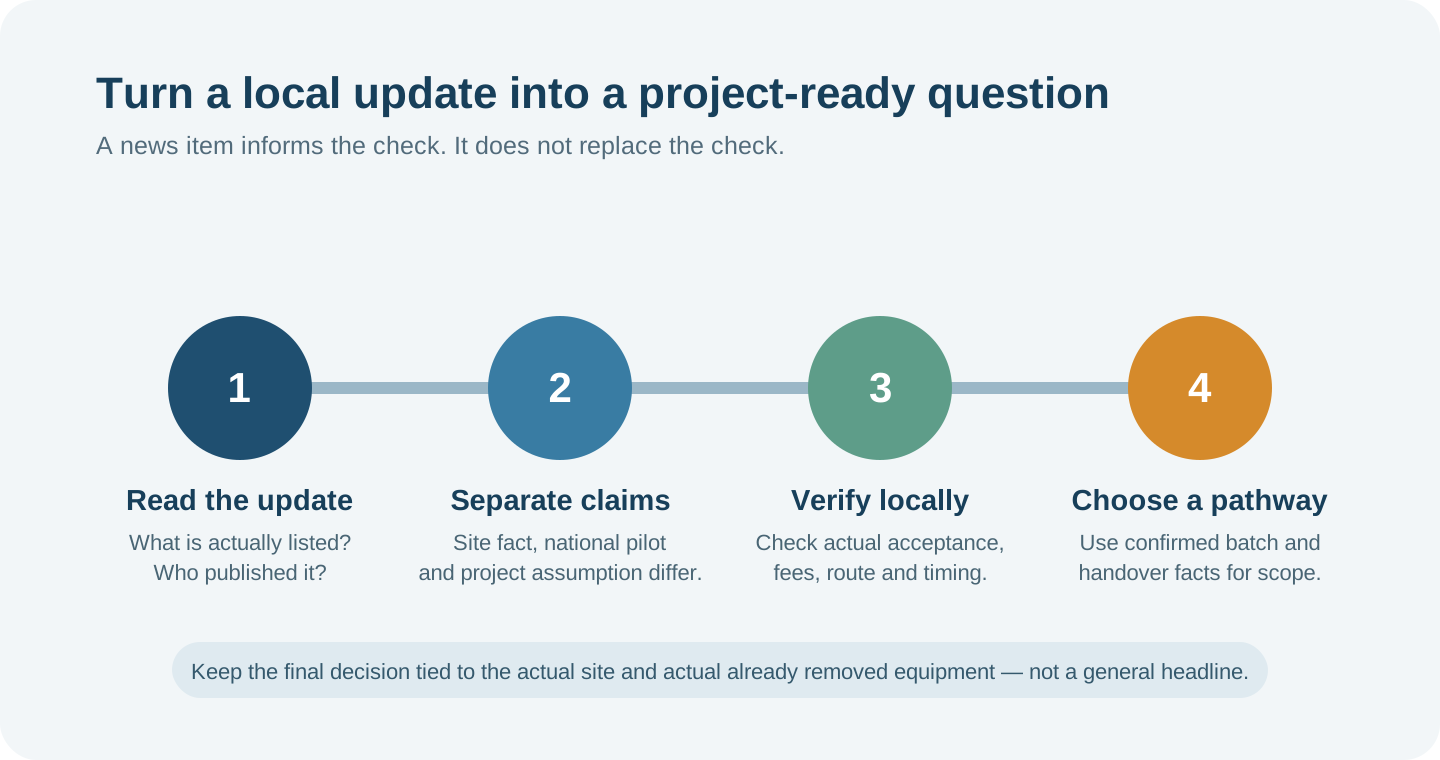
For installers and commercial teams, the useful information gain is modest but practical. A local pathway is only usable when a real batch and a real site line up with the actual receiving rules. That is why Australia’s pilot is designed to test collection and transport as well as recycling: a recovery discussion alone cannot move a removed panel from a site to an appropriate pathway.
What this means for Sydney and NSW project teams
For a Sydney installer, property manager or project coordinator, there is no new citywide instruction to follow. The ongoing decision is still whether the actual already removed batch fits a separately confirmed drop-off option or needs a post-removal collection scope. The evergreen Sydney collection-versus-drop-off guide owns that decision; this weekly update adds a current NSW infrastructure example and its factual limits.
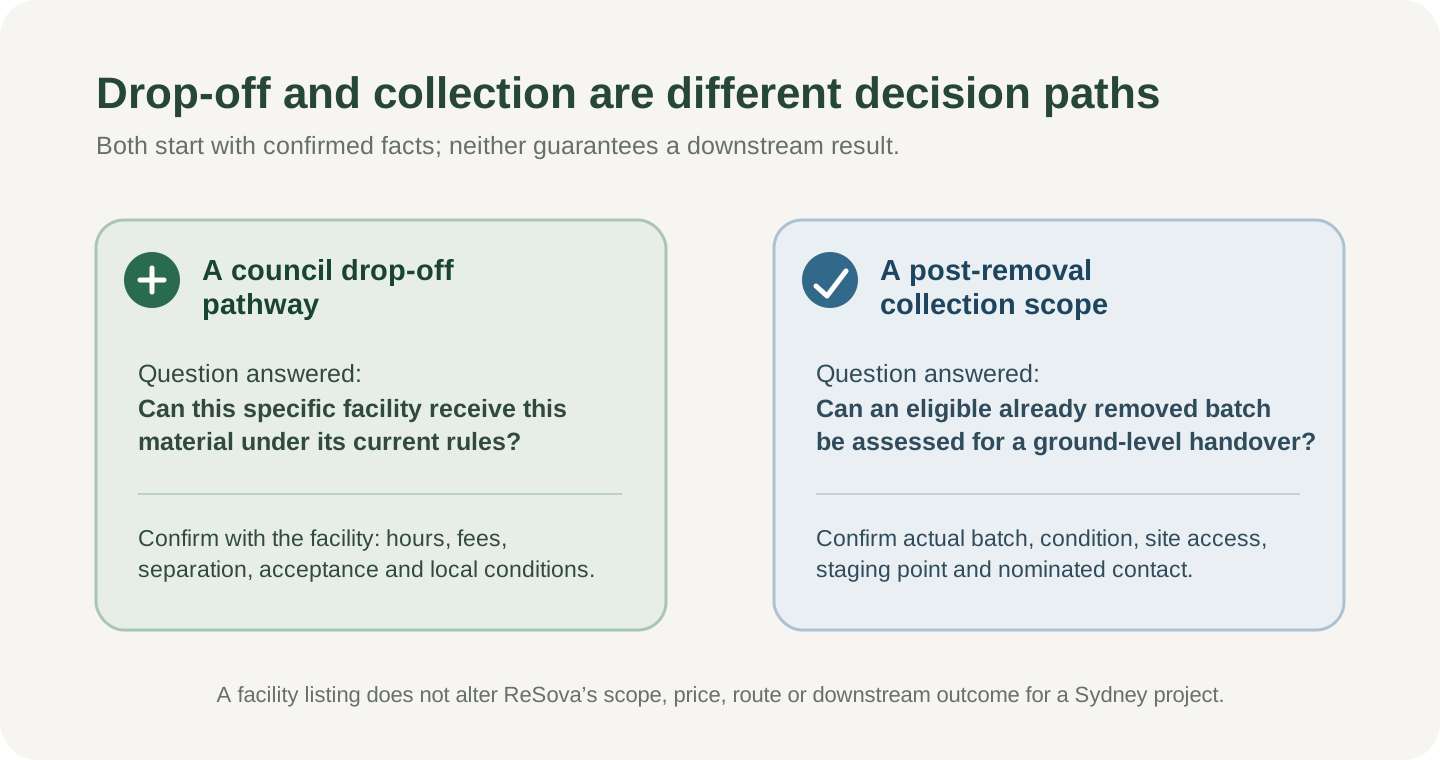
- After qualified people have completed removal, record the actual panel count and separately listed equipment.
- Describe broad visible condition without treating it as a technical diagnosis, classification or recovery prediction.
- Confirm the ground-level handover point, practical access and a site contact.
- For any drop-off, ask the actual facility about current acceptance, fees, separation, hours and any load restrictions before transport.
- For an eligible ReSova collection request in Sydney or selected NSW areas, use the commercial collection page or the collection estimator for the applicable scope; larger, multi-site or complex jobs need a tailored review.
What to watch next
The next useful evidence would be more specific than a general ambition: published pilot administrator and selected-location details, clear facility acceptance criteria, a confirmed processing relationship, or a formal policy decision. The parliamentary inquiry’s Sydney hearing is listed for 24 September 2026; a hearing gathers evidence and does not itself create a collection rule. ReSova will need to re-check primary sources before treating any later development as a service-relevant update.
Sources and dates checked
- Lithgow City Council — Portland Solid Waste Facility, checked 12 September 2026: September solar-panel listing and 2 September LBin layout update.
- DCCEEW — Solar panels, last updated 24 April 2026 and checked 12 September 2026: pilot purpose, selected-location boundary and administrator status.
- Parliament of Australia — Inquiry into solar panel reuse and recycling, checked 12 September 2026: 24 September Sydney hearing listing.
- YourHome — Rooftop solar, checked 12 September 2026: national context on limited availability, logistics and processing constraints.
Key takeaways
- Lithgow City Council has added a fee-bearing solar-panel recycling drop-off listing at one facility from September 2026.
- The change is a local infrastructure fact, not a NSW-wide scheme, Sydney service change or proof of a downstream result.
- For any route, project teams still need to verify the actual batch, local acceptance, ground-level handover and access facts.
- The federal pilot and parliamentary inquiry remain context to watch; neither currently sets a project-specific collection or processing outcome.
Frequently asked questions
Did NSW introduce a statewide solar-panel drop-off scheme in September 2026?
No. The verified change is a Lithgow City Council facility listing for one site. It should not be read as a statewide scheme, a Sydney-wide service or a confirmed network of public solar-panel drop-off sites.
Does the Lithgow update confirm where solar panels go after drop-off?
No. The council page lists solar panels as a recycling drop-off item and describes the local sorting layout, but it does not identify a downstream processor, processing capacity, recovery rate or final result for a particular panel batch.
Does this change ReSova’s collection service in Sydney?
No. ReSova’s role remains assessment of eligible, already removed equipment for a ground-level collection handover in Sydney and selected NSW areas. A council facility update does not change ReSova’s routes, price, acceptance decision or downstream outcome.
What should an installer or project team check before choosing a pathway?
After appropriately qualified people have completed removal, confirm the actual panel count and related equipment, broad visible condition, ground-level staging point, access, contact and the actual facility or collection scope. Check the receiving facility’s current rules directly rather than relying on a general article or headline.
Commercial Services
ReSova considers eligible, already removed equipment in Sydney and selected NSW areas after the ground-level handover and site access can be confirmed. It does not decide removal, technical condition or a final downstream outcome.