
Quick answer
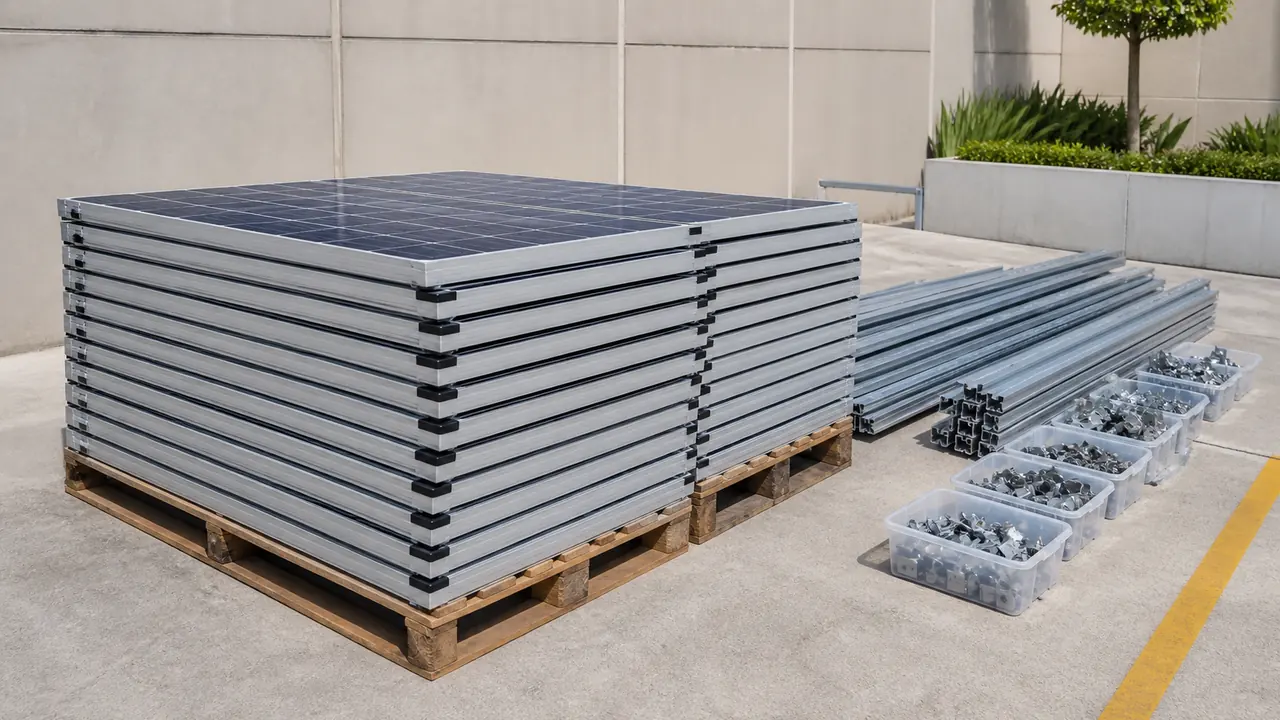
A solar system upgrade can leave more than modules at the site: rails, brackets, clamps and fixings may also need a plan. In Sydney, the practical starting point is to have appropriately qualified people safely remove the equipment, then list panels and mounting hardware separately, note their quantity and broad visible condition, stage everything at ground level and describe the loading route. ReSova can then confirm an eligible collection scope from the actual equipment and access conditions. It does not perform electrical isolation, roof work, structural removal or site management.
Build an inventory before calling it a complete-system handover
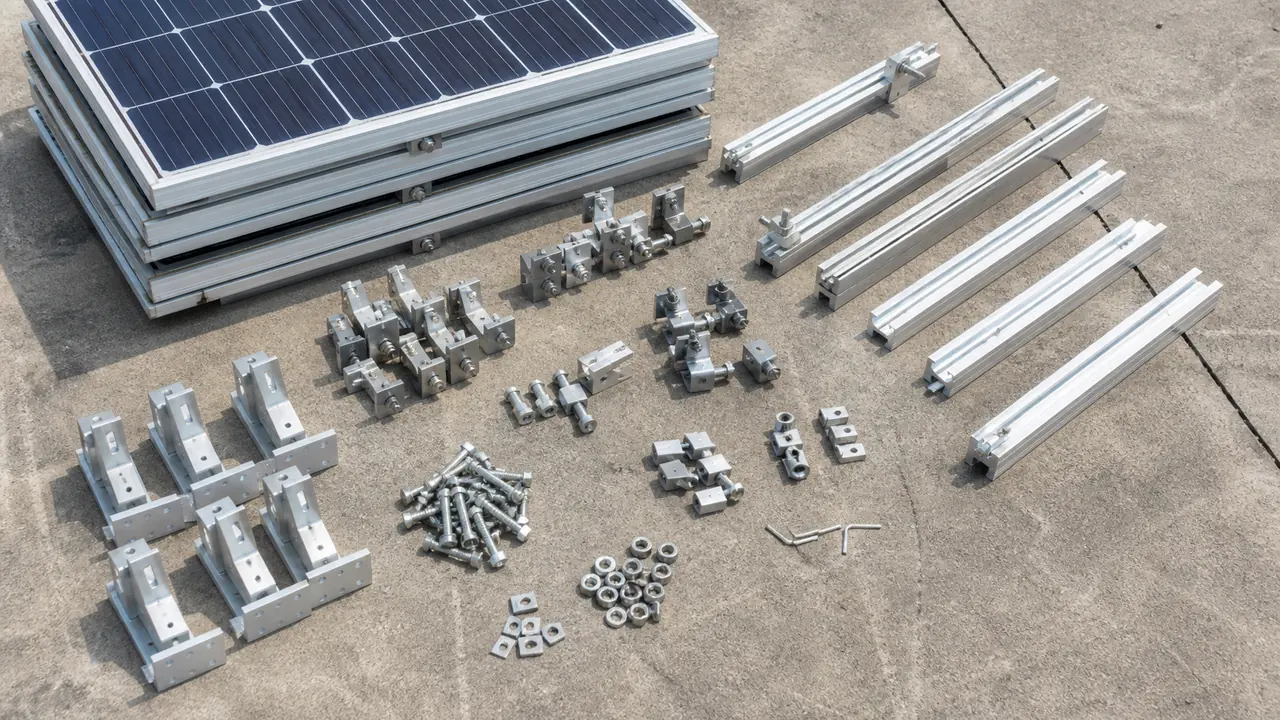
A panel count alone does not show the handling or loading task. The University of Technology Sydney’s installer survey identifies frames, racking, mounting systems and cables as components that can enter scrap-metal pathways. That is useful industry context, not a promise that a particular batch, material or downstream route will be accepted. For a collection request, treat each equipment group as an input to be confirmed rather than an assumed inclusion.
- Panels: approximate count and broad visible condition (for example, sound, visibly damaged or mixed).
- Rails, racking and clamps: separate groups, approximate lengths or volume, loose versus bundled condition and any mixed hardware.
- Other components: identify inverters, cabling, batteries or other items separately; do not assume they share the same collection pathway.
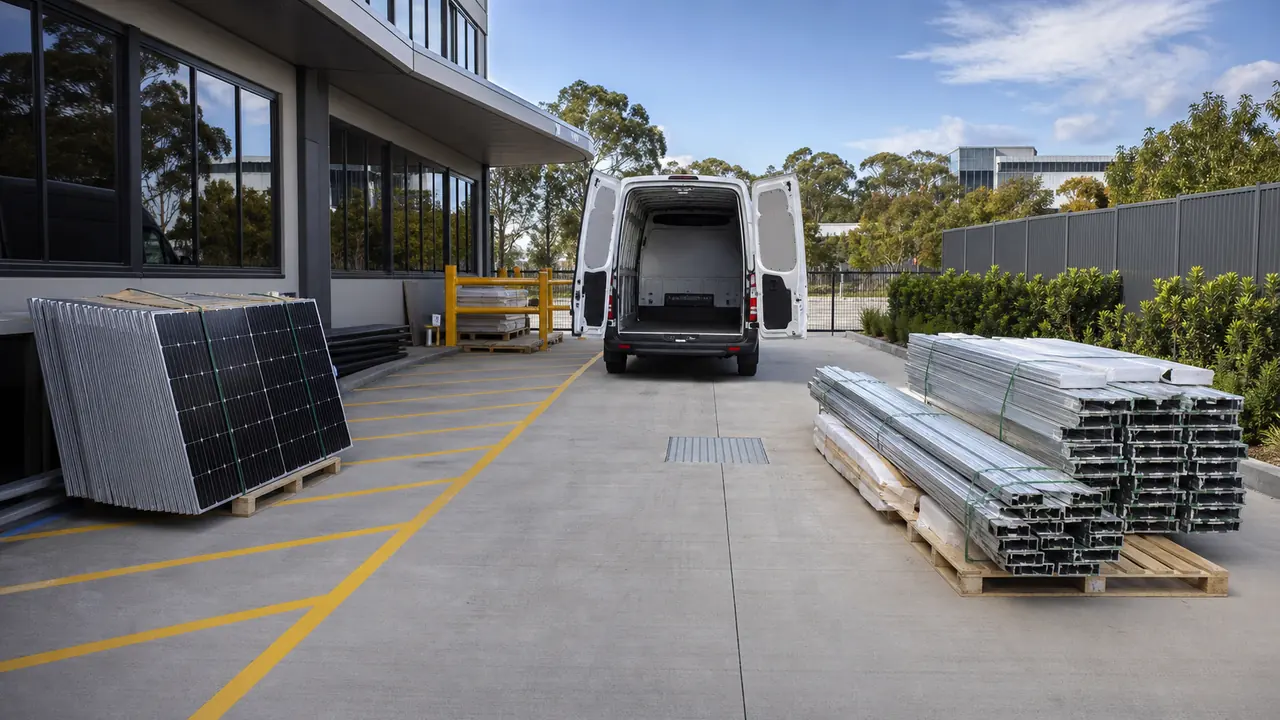
- Staging and access: ground-level location, distance to the vehicle point, gates, height restrictions, stairs, loading restrictions and the nominated contact.
The inputs that change a mounting-hardware collection scope
| Input | What to record | Why it matters for handover planning |
|---|---|---|
| Equipment groups | Panels, rails, racking, clamps and other components listed separately. | A complete-system handover should describe what is actually ready, not collapse mixed equipment into one count. |
| Quantity and volume | Panel count plus approximate bundle count, rail lengths or hardware volume. | Hardware can change staging, handling and vehicle/loading considerations even when the panel count is unchanged. |
| Broad visible condition | Sound, visibly damaged or mixed; note loose sharp or broken components for the site team to manage safely. | Condition is useful context for planning, not a reuse decision, legal classification or guaranteed downstream result. |
| Ground-level staging | Where the equipment will wait after safe removal, clear of shared work and vehicle paths. | ReSova collects from a ready handover point; it does not return equipment to the roof or manage the work zone. |
| Loading access | Vehicle route, gate/height limits, distance, loading restrictions and nominated site contact. | Access has to be confirmed against the actual site; it cannot be inferred from an address alone. |
The Australian Government notes that collection, transport and processing capacity are part of the broader solar-panel recovery challenge in its National Solar Panel Recycling Pilot. For a project team, that is a reason to prepare an accurate handover—not a reason to claim a guaranteed recycling outcome, a receiving facility or a collection time before the scope is confirmed.
A ground-level racking handover flow
From safely removed mounting hardware to a collection-ready request
- Complete safe removalThe qualified removal team completes electrical and roof/structural work before collection is considered.
- Separate the equipmentList panels, rails, clamps and other components individually instead of assuming a single mixed scope.
- Record quantity and conditionGive an approximate count, bundle/volume description and broad visible condition for each group.
- Set ground-level stagingKeep the ready equipment where it can be handed over without re-entering the roof or active work area.
- Confirm access and scopeShare the vehicle route, loading constraints and site contact so eligibility and collection requirements can be confirmed.
- Collect and retain the docketAt collection, retain the job docket as a practical handover record—not a statutory certificate or final-processing proof.
Use a standard estimate only where the panel scope fits
For an eligible standard job with 10–69 panels, the collection estimator may be a useful starting point. State that mounting hardware is also present rather than treating it as invisible. Use a tailored scope for 70+ panels, a large volume of rails or racking, complex loading access, special equipment, multiple sites or a project-style collection. That distinction protects the site plan from being built on an unconfirmed assumption.
For Sydney system upgrades
ReSova provides collection in Sydney and selected NSW areas when equipment is safely removed and ready to hand over at ground level. Review complete solar systems and What We Collect to prepare the request, then use Commercial Services for a larger site context. The related rooftop replacement guide explains why the removal scope and collection scope should be planned as separate steps.
Key takeaways
- Panels, rails, clamps and other equipment should be described separately; they do not automatically form one collection scope.
- Record quantity, broad visible condition, ground-level staging and loading access before asking for collection confirmation.
- ReSova begins after safe removal and does not provide roof, structural, electrical or site-management work.
- The standard estimator can be a starting point for eligible 10–69-panel jobs; 70+, large hardware volumes or complex access need a tailored scope.
Frequently asked questions
Can solar mounting rails and clamps be included with removed panels?
They may be considered as part of the actual collection scope, but they are not automatically included. Describe the equipment separately, including quantity, broad condition, volume, ground-level staging and loading access so the scope can be confirmed for that job.
Can ReSova remove mounting hardware from the roof?
No. ReSova does not perform roof work, electrical isolation, structural removal or site construction management. Its collection role starts after appropriately qualified people have safely removed eligible equipment and it is ready at a ground-level handover point.
Can a 10–69 panel upgrade use the online estimate pathway if it also has rails?
The standard estimate pathway may suit 10–69 panels that meet its normal scope. Declare the rails and other components rather than assuming they fit. A large hardware volume, 70+ panels, unusual access, multiple sites or a project collection needs a tailored scope.
What We Collect
ReSova considers eligible, already removed equipment in Sydney and selected NSW areas after the ground-level handover and site access can be confirmed. It does not decide removal, technical condition or a final downstream outcome.