
Quick answer: a replacement programme is not the current ready batch
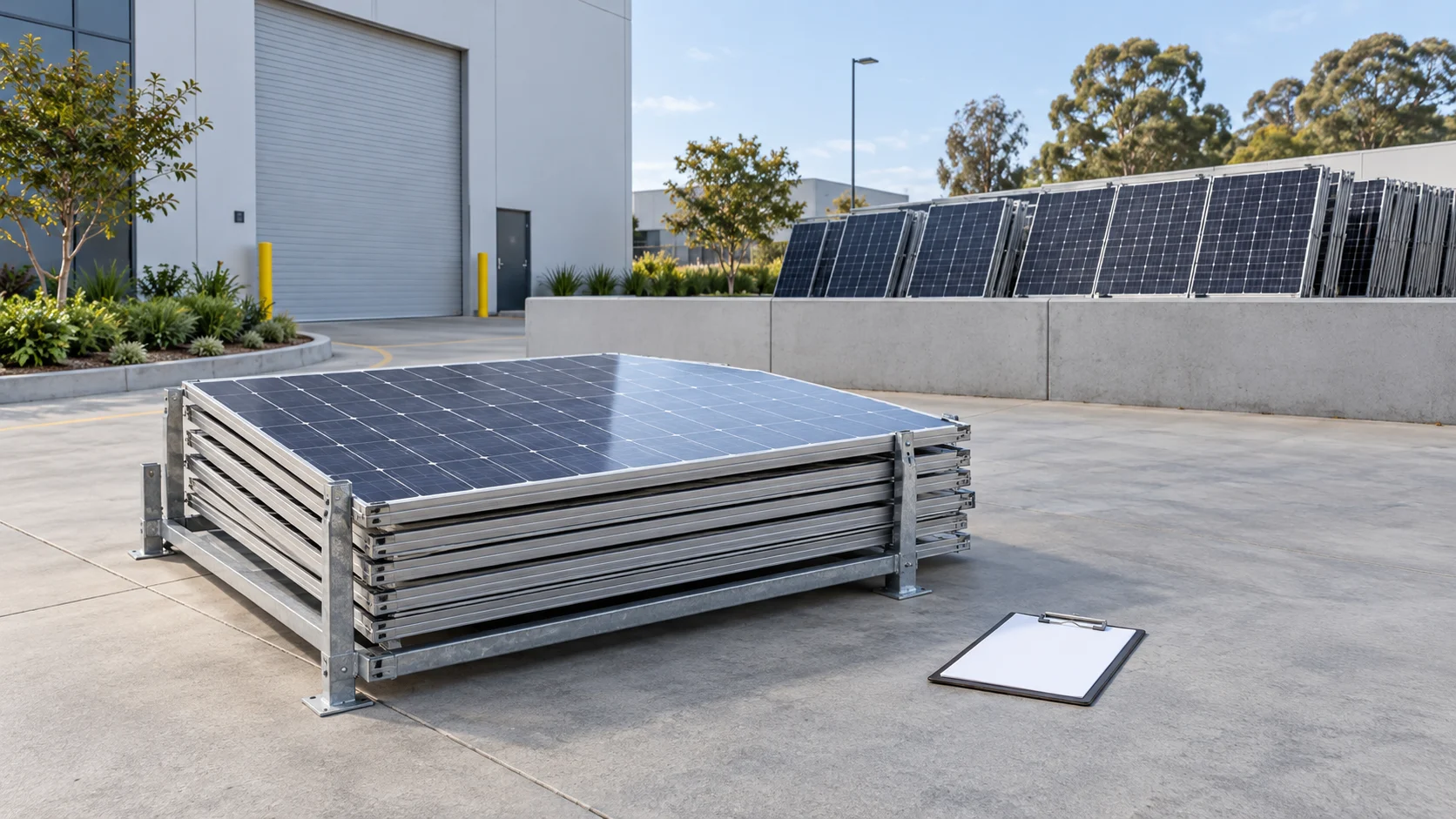
A commercial solar replacement programme can contain several valid numbers at once: what was originally installed, what the project expects to remove later, what is in a future stage and what is physically ready today. A collection assessment needs the last of these. Create a short current-batch brief for equipment qualified people have already safely removed and made available at a ground-level handover point. State actual panel count, other categories separately, broad visible facts, current staging point, access facts and a reachable contact. ReSova can assess the stated eligible batch in Sydney and selected NSW. It does not remove equipment, validate a project forecast, perform testing or take over site responsibilities, and it does not confirm acceptance, price, vehicle, route, timing, booking or downstream outcome.
Define the one current batch that can be reviewed now
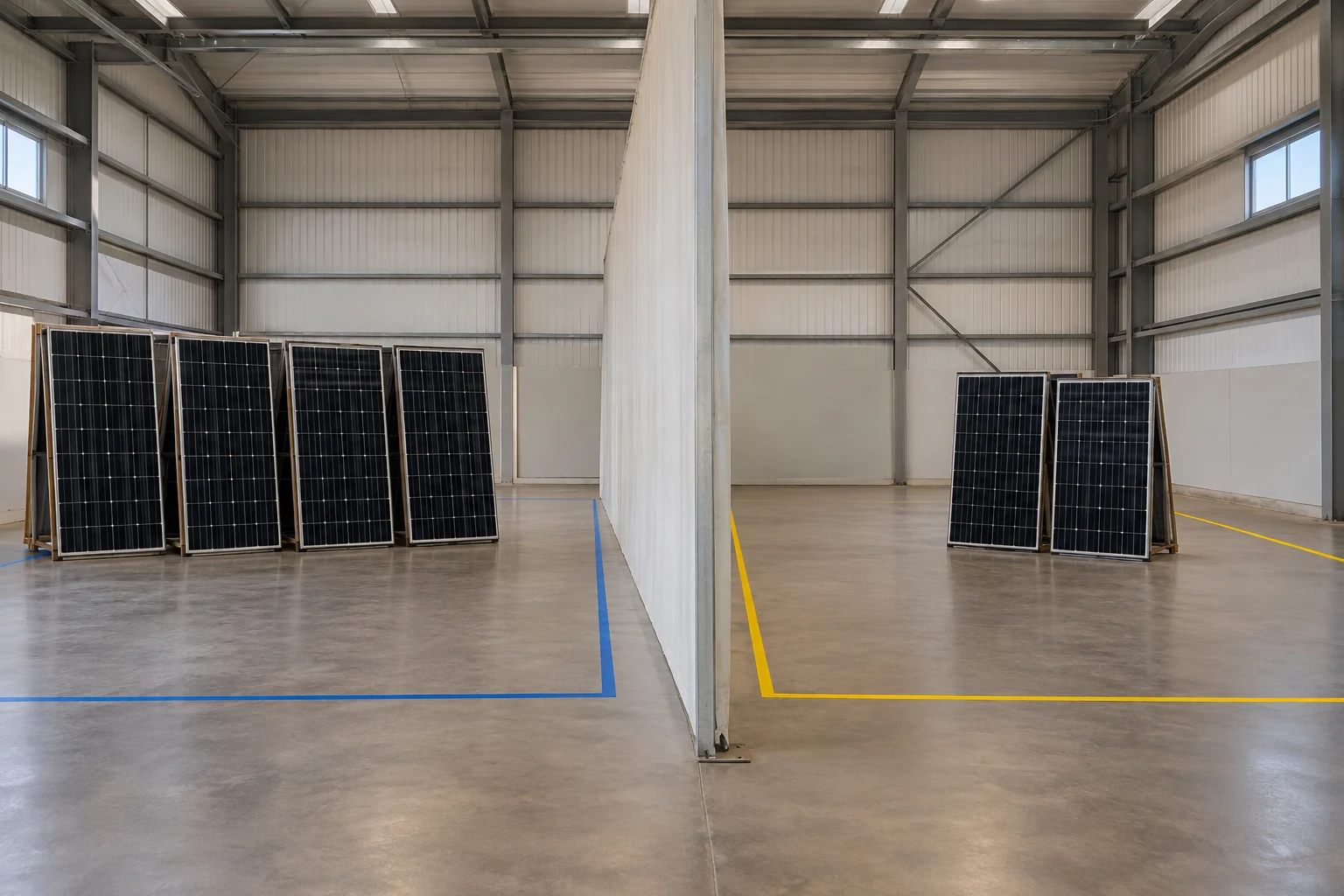
Start by naming one real ground-level point and the equipment physically there. List panels separately from inverters, rails, racking, cable or other disclosed components. Use broad visible wording and honest unknowns instead of testing or diagnosing equipment. The company asset-register guide explains why historic records are not current batches. This article adds the replacement-project decision: do not merge the actual ready group with the programme’s eventual total simply because both belong to the same project.
| Project record | What it can describe | Keep out of the current ready-batch brief |
|---|---|---|
| Current ready batch | Actual already removed categories and counts at one current ground-level point. | Installed, connected, future-phase or forecast equipment. |
| Current staging point | Where that one current batch is held and the site’s known handover facts. | A vehicle, route, loading method, time or booking promise. |
| Later project phase | Planned removal or replacement work still to occur. | A substitute quantity for equipment that is not ready now. |
| Project forecast | Budget, programme or anticipated total for internal planning. | Eligibility, price or a downstream outcome for the current batch. |
Use staging as a location fact, not as proof of an outcome
A staging point helps the team say where the current batch is held. It does not establish acceptance of every item, a collection vehicle, a route, a loading method, a time or a booking. Where a site has two stages, show them as two separate physical groups and keep the later group out of the current brief. The commercial staging-brief guide covers the physical-area description. The commercial scope FAQs explain the broader scope boundary. This page owns the decision to keep a replacement programme’s current stage, later stage and forecast in different fields.

Build a replacement ready-batch brief from current facts
Commercial replacement ready-batch flow
- Mark the project stateIdentify whether equipment is installed, removed and ready now, or expected in a later phase.
- Record the actual current groupCount current panels and list other categories separately at the ground-level point.
- Describe staging and accessState the current area, known entry facts and contact without assigning a vehicle, route, method or time.
- Keep forecasts beside, not insideRetain programme estimates as internal context rather than adding them to the factual ready batch.
- Refresh on changeWhen another phase reaches ground level or the location changes, create or update the current-batch facts before review.
This is a fact-control tool, not a construction, electrical, safety, traffic or legal method. ReSova does not tell the team how to remove, stage, load, transport or test solar equipment. An international decommissioning operator may offer removal, logistics, testing or restoration in its own market; that is useful only as a reminder to distinguish project stages and roles. It must not be read as a ReSova service or a local promise.
Ask for a commercial review with the current brief only
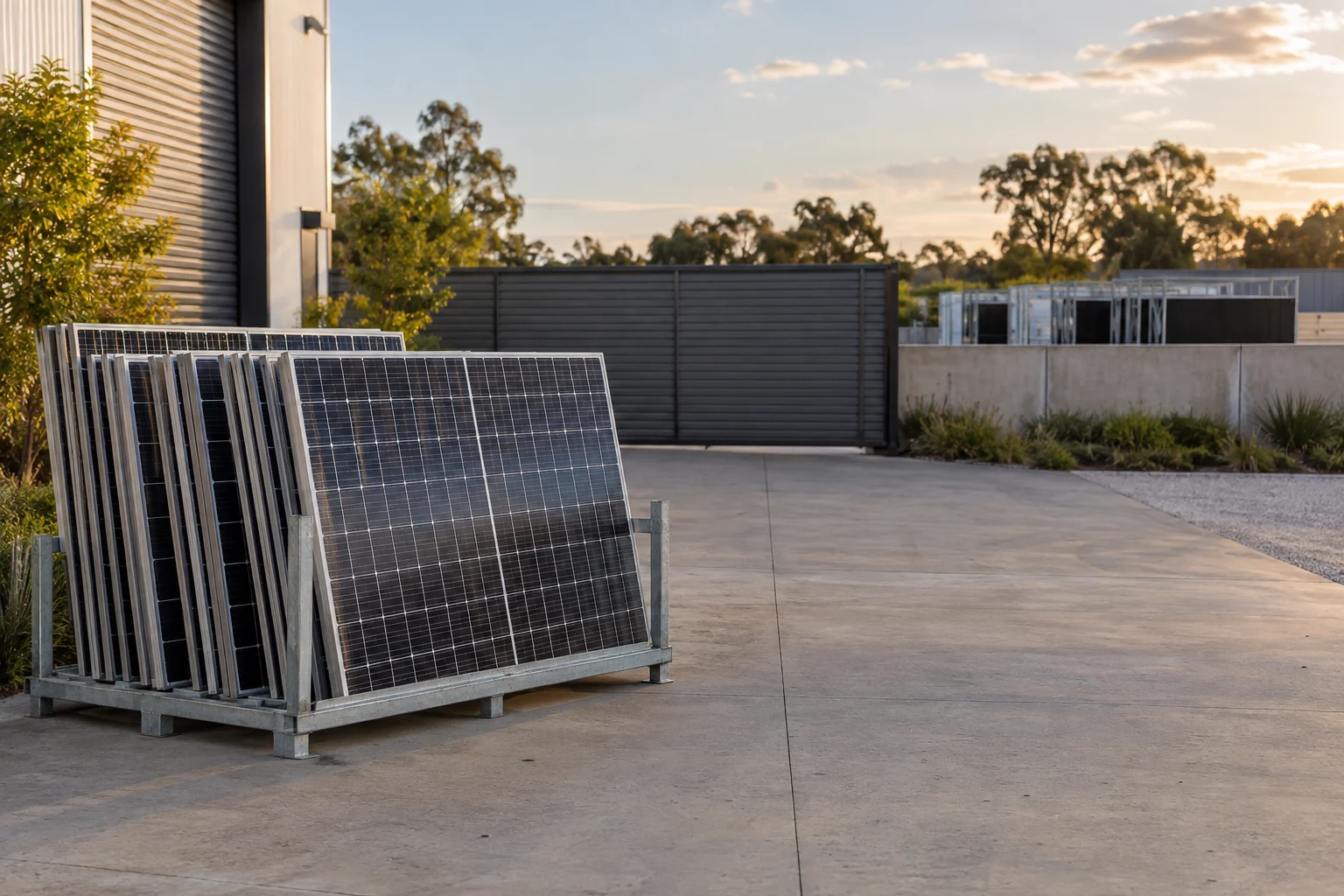
Use Commercial Services for staged replacement, mixed equipment, 70+ panels, multi-site work or complex access. Supply the current ready-batch facts and identify that future stages remain separate. If the present batch changes, update the brief rather than treating a programme forecast as an amendment to a booking. Online time selection is paused. A complete brief supports an assessment and availability discussion only; ReSova must still review the actual stated information.
Sources and dates checked
- Australian Government — Replace and recycle your solar system, checked 10 October 2026: professional removal/replacement boundary; not a collection acceptance rule.
- Commercial Solar Panel Recycling — Decommissioning, checked 10 October 2026: global comparator for separating project planning, components and logistics. Its removal, testing and restoration services are not ReSova services.
- SurgePV — Sold-to-operations handoff checklist, checked 10 October 2026: global comparator for keeping current evidence, owner and unresolved facts visible; not Australian project advice or a ReSova procedure.
Key takeaways
- The current ready batch, its staging point, later phase and project forecast are different records.
- Only equipment already removed and available at a current ground-level point belongs in an assessment brief.
- A staging point is a location fact, not proof of eligibility, a vehicle, route, time, booking or downstream result.
- Update the brief when another phase becomes physically ready or the location changes.
- Use Commercial Services for staged, mixed, 70+ panel, multi-site or complex-access work.
Frequently asked questions
Can the project forecast be used as the current collection quantity?
No. A forecast can remain project context, but the assessment brief must use the actual already removed batch at its current ground-level handover point.
Does a staging point confirm that every item there is eligible?
No. It identifies a current location only. Eligibility, price, timing, collection and downstream outcomes remain subject to review.
Should a later replacement phase be added to the ready batch?
No. Keep later-stage, installed or connected equipment separate until qualified people have safely removed it and it is actually available at ground level.
Discuss a Commercial Collection
ReSova considers eligible, already removed equipment in Sydney and selected NSW areas after the ground-level handover and site access can be confirmed. It does not decide removal, technical condition or a final downstream outcome.