
Quick answer
Solar panel recycling logistics become a bottleneck when the project cannot yet describe what is actually ready to hand over. After appropriately qualified people safely remove equipment, record the real count, broad visible condition, separately listed components, protected ground-level staging, vehicle/loading access, nominated contact and any batch sequence. Those facts allow an eligible collection scope to be considered in Sydney and selected NSW areas. ReSova does not perform electrical removal, manage a project transport programme, guarantee a vehicle, price, arrival time, recovery rate, certification or a particular final downstream pathway.
What “bottleneck” means in a collection handover
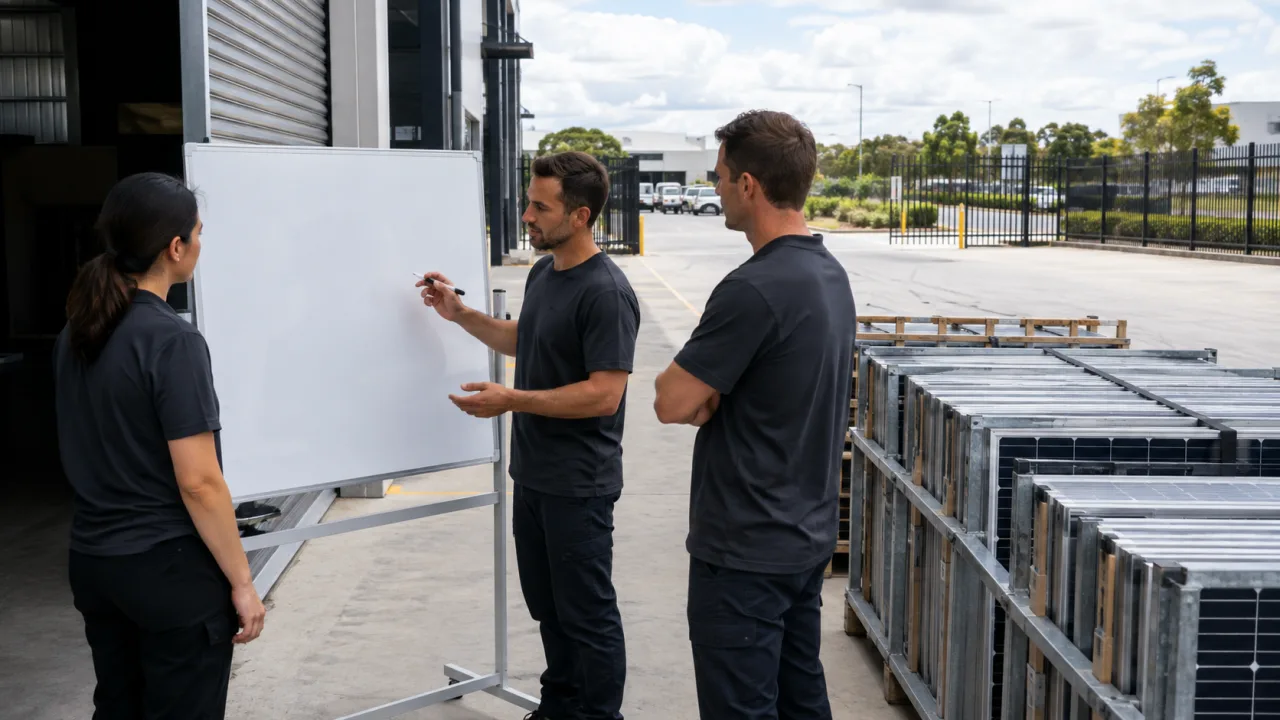
“Bottleneck” here is not a criticism of a collector, recycler or project team. It means a dependency that has not yet been resolved: the equipment may still be on the roof, a total may be estimated rather than counted, a staging area may not be agreed, access may change or no-one may be available to release the equipment. An Australian PV reverse-logistics paper from APVI identifies collection, sorting, storage, material recognition and pickups among linked logistics activities. It does not establish a ReSova service level or outcome for a particular job. The practical use of that context is to resolve the handover inputs before treating a collection as ready.
Collection logistics bottleneck map
| Logistics input | If it is missing | Who confirms it | What ReSova can assess | What is not promised |
|---|---|---|---|---|
| Safe-removal confirmation | The equipment may not yet be eligible or ground-level ready for handover. | Appropriately qualified removal team and responsible project parties. | Whether already removed equipment is ready to be considered for collection. | Electrical isolation, removal, site safety or technical condition. |
| Actual count and component list | A forecast or system total can differ from the removed batch and its handling needs. | Nominated site contact or project team. | The described actual equipment and scope inputs. | A fixed price, acceptance, recovery rate or final pathway from an estimate alone. |
| Broad visible condition and volume | Mixed panels or other components may change how the physical handover needs to be described. | Project team after safe removal. | The broad physical description supplied for scope assessment. | Electrical performance, reuse suitability or a material outcome. |
| Ground-level staging | The batch may not be protected, accessible or ready to release without affecting site activity. | Site, facilities or project team. | Whether the described staging point supports a ready handover discussion. | Long-term storage, site management or a collection-time commitment. |
| Vehicle/loading access and contact | A route, gate, restriction or release arrangement can be unknown or change on the day. | Nominated site contact and site team. | The disclosed access conditions for scope confirmation. | A particular vehicle, route, loading capacity, transport schedule or arrival time. |
| Batch sequence | One total may conceal that only some equipment is ready or that access differs between batches. | Project owner, EPC or coordinator. | A tailored scope based on actual ready batches. | Project management, nationwide coverage or a final downstream result. |
Ground-level staging makes the physical handover easier to describe
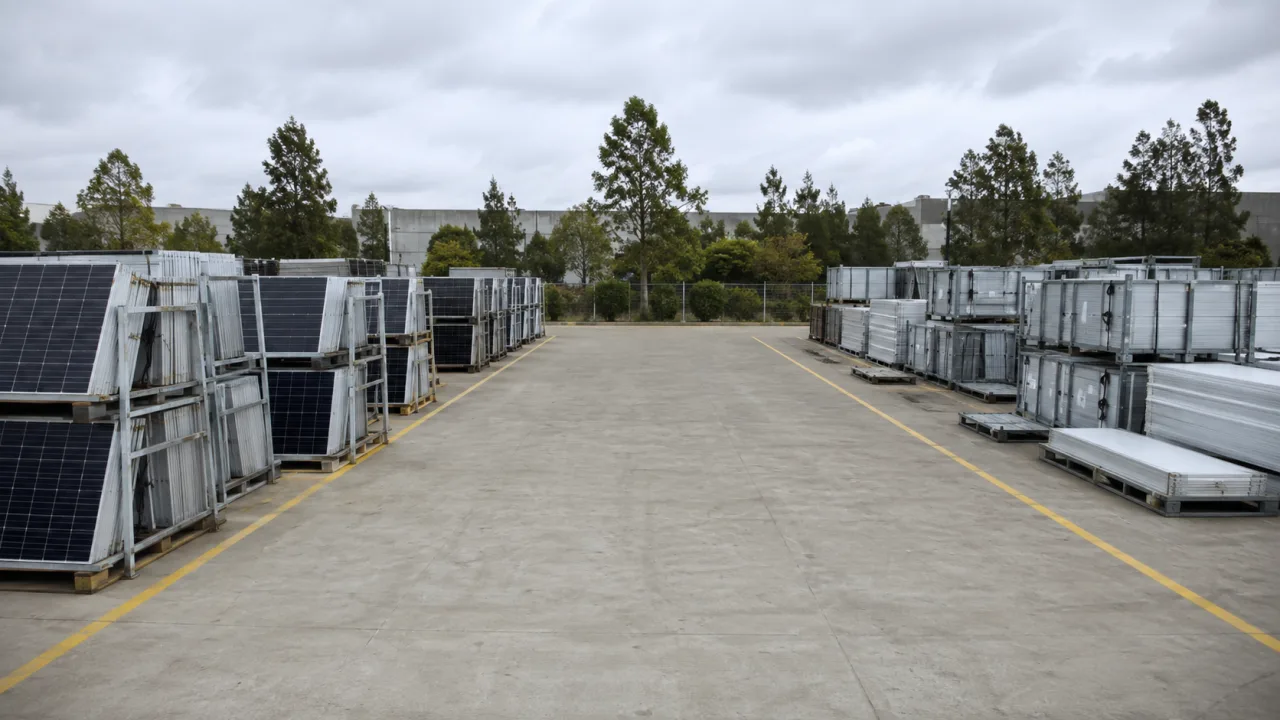
Ground-level staging is not a recycling method and does not decide a downstream outcome. It is a site input: where can safely removed equipment wait without blocking access, becoming confused with other equipment or leaving the nominated contact unable to reconcile the batch? The Commonwealth’s National Solar Panel Recycling Pilot is directed at collection and recycling evidence at a system level. It does not create an automatic collection route, price, timing or destination for a Sydney job. Describe the actual staging and access conditions rather than using that policy context as a guarantee.
A five-step collection logistics handover flow
From safe removal to a defined collection-scope request
- Confirm safe removalThe qualified removal team and responsible project parties complete electrical and site work before collection is considered.
- Count and describe the actual batchRecord actual panels, other components, broad visible condition and volume instead of relying on a forecast.
- Set protected ground-level stagingAgree where ready equipment can wait without blocking access or being confused with unreconciled items.
- Check route and contactsProvide gate, vehicle/loading, access and nominated-contact details for the actual site conditions.
- Confirm the collection scopeUse the complete inputs for scope assessment; record any eligible handover on a job docket without treating it as a final-processing certificate.
More equipment does not remove the logistics questions
A total panel number is helpful but cannot, on its own, settle a collection scope. Use a tailored description for 70+ panels, multi-batch or multi-site work, special equipment, restricted access or a project-style handover. The Utility-Scale Solar page is a suitable starting point for larger project enquiries; What We Collect explains current collection context. Neither page guarantees a transport time, vehicle capability, recovery rate, certification or final downstream destination.
For Sydney and selected NSW installers, facilities teams and project coordinators
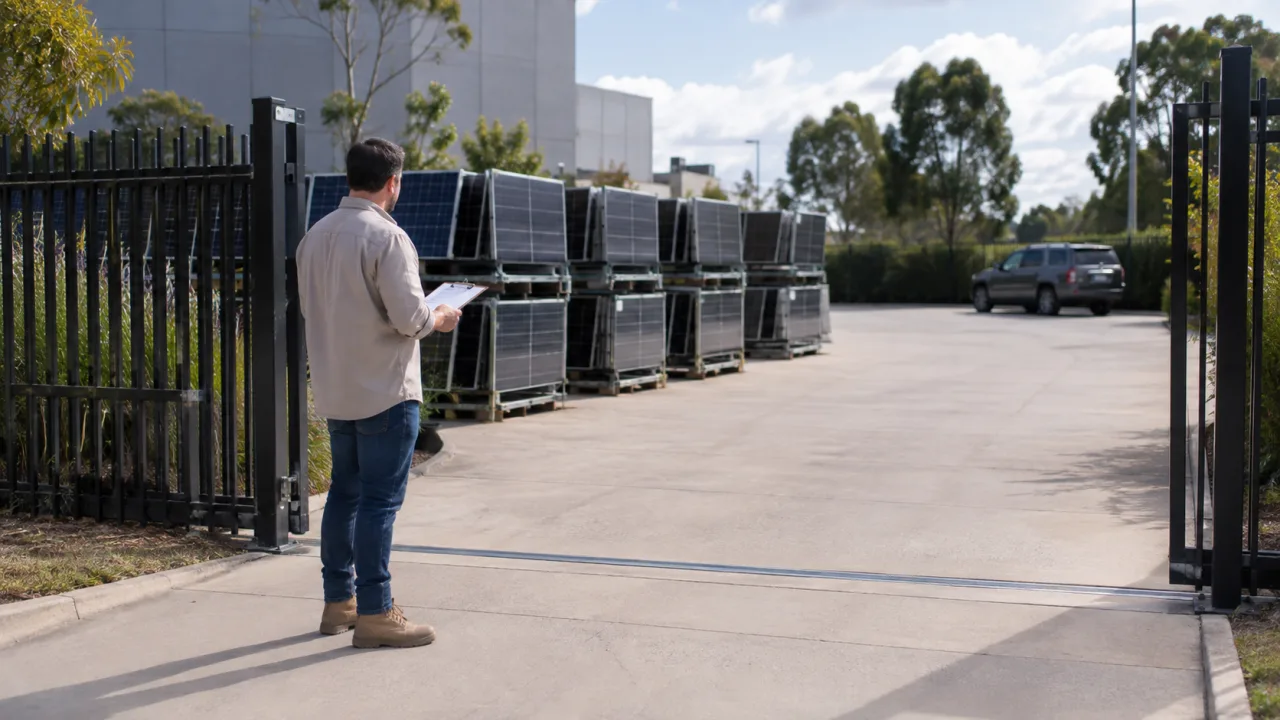
ReSova considers eligible, already removed equipment in Sydney and selected NSW areas when it is ready for a ground-level handover. For a project, start with the real inputs listed above, then review What We Collect. The solar farm repowering logistics guide covers utility-scale batches, while the multi-site procurement checklist covers portfolio-level coordination; this article is narrower, focusing on why an individual ready handover can stall before its physical facts are confirmed.
Key takeaways
- Collection logistics are a set of project dependencies, not a criticism of a recycler, collector or technology pathway.
- A confirmed count still needs component, broad-condition, staging, access, contact and batch-readiness information.
- Appropriately qualified people and responsible project parties retain all removal, electrical, site-control and project-programme responsibilities.
- A tailored scope is required for 70+ panels, multi-batch, complex-access, special-equipment or project-style work; it does not promise time, price or a final downstream result.
Frequently asked questions
Why is a panel count not enough to confirm collection logistics?
A count is one scope input only. Equipment type, broad visible condition, volume, ground-level staging, vehicle/loading access, the available site contact and batch readiness can differ even where the total count is known. These details must be confirmed for the actual handover.
Does ReSova handle electrical removal or manage transport for the whole project?
No. Appropriately qualified people and the project’s responsible parties manage electrical isolation, safe removal, site controls and the wider project plan. ReSova considers eligible equipment only after safe removal and ground-level readiness; it does not provide transport-project management.
What does a logistics-ready solar panel handover include?
It includes safe-removal confirmation, actual equipment count, broad visible condition, separately listed components, protected ground-level staging, access constraints, a nominated site contact and any relevant batch sequence. These inputs support scope assessment, not a promised price, vehicle, timing, recovery rate or final pathway.
When should a project use a tailored collection scope?
Use a tailored scope for 70+ panels, staged or multi-batch work, complex access, special equipment, multiple sites or project-style collection. An online estimate pathway is not a guarantee for those situations.
Does a collection job docket certify recycling outcomes?
No. A job docket records collection quantities and handover information. It is not a statutory certificate, audit assurance, recovery-rate statement or proof of a specific downstream destination.
What We Collect
ReSova considers eligible, already removed equipment in Sydney and selected NSW areas after the ground-level handover and site access can be confirmed. It does not decide removal, technical condition or a final downstream outcome.