
Quick answer
Solar farm repowering logistics start with completed, ground-level-ready batches—not a single forecast count. After appropriately qualified people have safely removed the equipment, the project team should record each area or batch, contact, actual count, broad visible condition, other components, protected staging point, vehicle/loading restrictions and readiness sequence. This is a collection-handover matrix, not a removal method, transport programme or price promise. ReSova considers eligible equipment only after safe removal and a ground-level handover in Sydney and selected NSW areas.
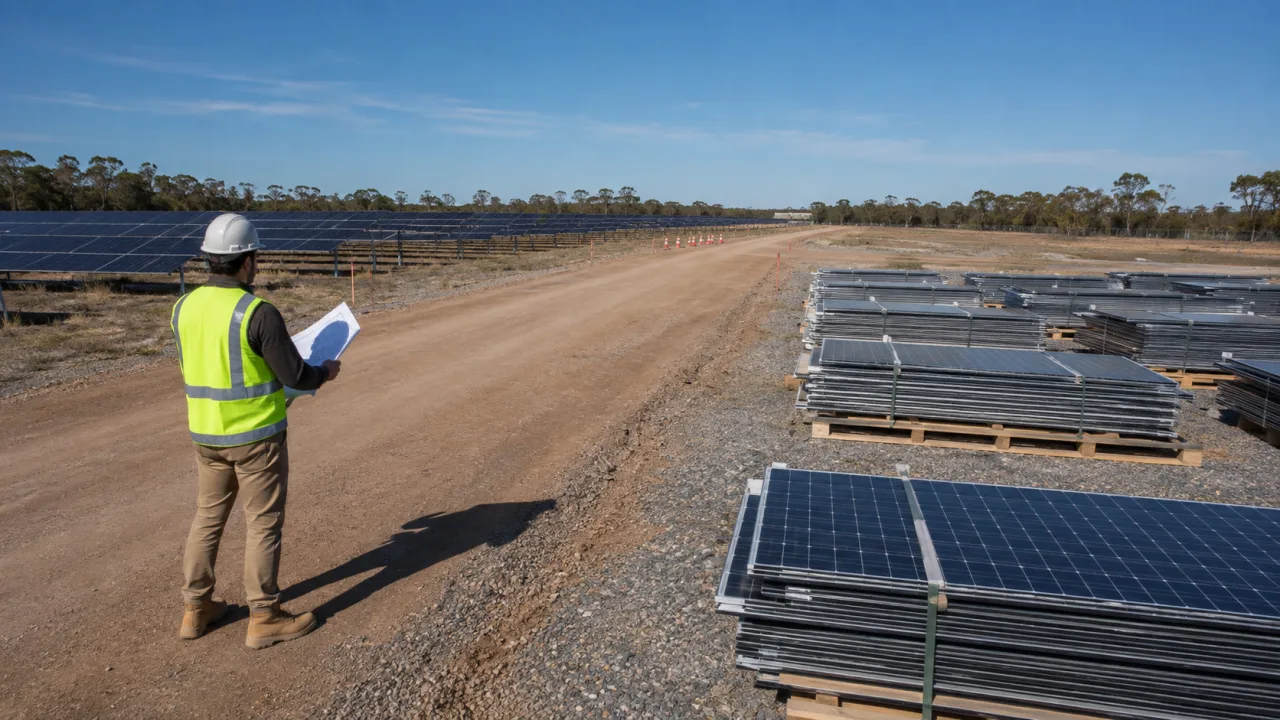
Use a repowering logistics matrix for every ready batch
Large solar projects have several layers of responsibility. A recent Australian report on large-scale solar decommissioning and repowering identifies the future significance of NSW assets; an Australian PV reverse-logistics paper likewise describes collection, sorting, storage, handling and distance as logistics factors. Neither source defines a ReSova service level. For a collection request, translate that general context into the specific, ready equipment and access conditions at each project area.
| Input per area or batch | Record after removal | Do not assume |
|---|---|---|
| Area, batch and contact | A completed or planned batch label, nominated project contact and day-of access contact. | One project contact can resolve all gate, route and access questions. |
| Safe removal confirmation | That qualified people have safely removed the eligible equipment and it is at ground level. | Collection includes isolation, decommissioning, removal or electrical work. |
| Actual equipment | Panel count, broad visible state and separately listed rails, racking, cables or other components. | A forecast, nameplate capacity or project total is the final collection scope. |
| Staging | Protected ground-level laydown area, space limits and which batch is actually ready. | All stockpiles can be combined or held indefinitely without project controls. |
| Vehicle/loading access | Internal road, gate, loading location, local restrictions and any changed conditions. | A particular vehicle, transport window or route is guaranteed. |
| Sequence | Order in which batches will be ready and what is contingent on the wider project plan. | Collection manages the repowering programme or final downstream destination. |
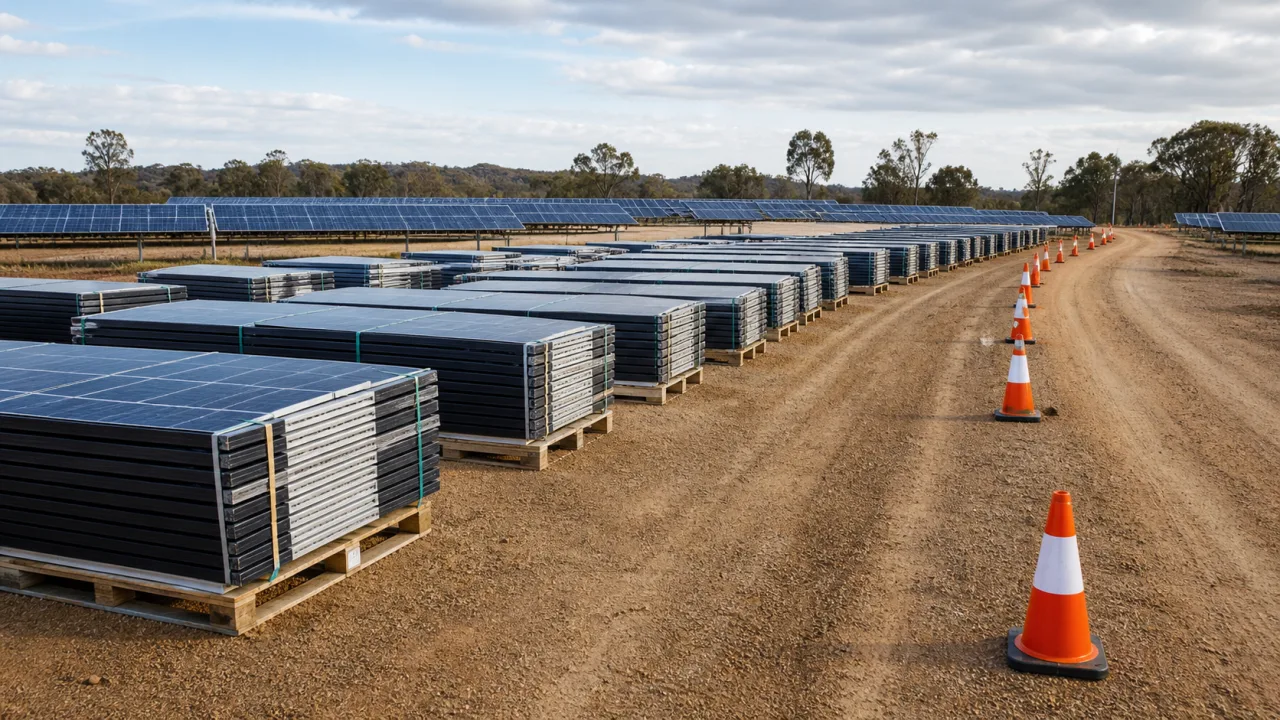
Separate repowering decisions from collection readiness
Whether a site repowers, retains equipment, upgrades or follows another asset strategy is a project decision. This page does not repeat the repower, reuse or recycle decision framework. Its narrower question is what becomes collection-ready after that decision: an actual removed batch at ground level, with an accountable contact and an accessible handover point. Do not use a collection plan to infer electrical condition, reuse suitability, a recovery rate or a final pathway.
A five-step utility-scale collection handover flow
From qualified removal to a documented collection handover
- Set the wider project responsibilitiesThe owner, EPC and qualified trades manage repowering, electrical work, removal methods, programme and site controls.
- Confirm a completed batchOnly count equipment once it has been safely removed and placed at the agreed ground-level staging point.
- Complete the logistics matrixRecord the real batch count, broad visible condition, other components, access constraints, contact and planned readiness sequence.
- Request a tailored scopeUse the actual inputs for 70+, utility-scale, multi-batch, complex-access or project work; no online estimate is a project guarantee.
- Collect and retain the docketWhere equipment is eligible and ready, the handover quantity and information are recorded on a job docket for the project file.
Utility-scale and staged work needs a tailored scope
A utility-scale or solar farm panel collection is project-based by definition. Use Request Bulk Quote with the matrix rather than assuming an estimator route, a fixed collection time, price, vehicle or nationwide coverage. The matrix does not replace the project’s own access, traffic, environmental, safety or transport plan; it simply makes the collection handover facts clearer.
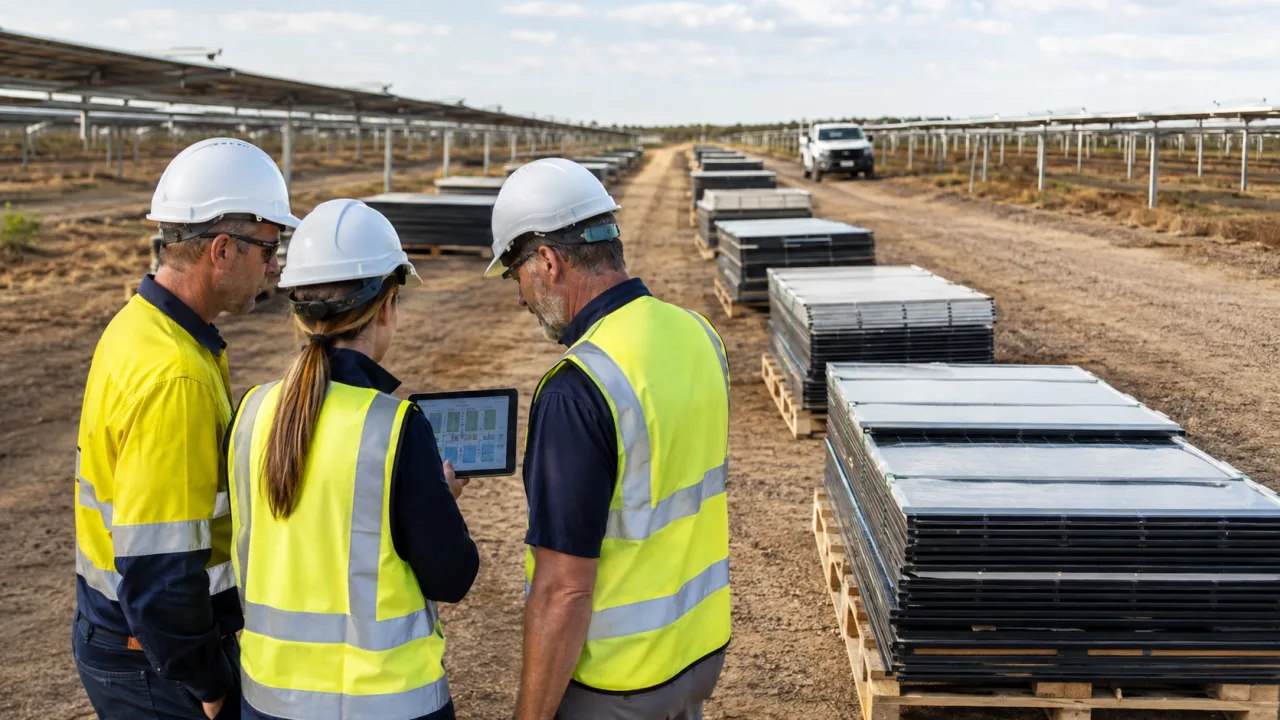
For NSW utility-scale project teams
ReSova considers eligible, already removed solar equipment in Sydney and selected NSW areas once it is ready for ground-level handover. For a bulk enquiry, begin at Utility-Scale Solar. The multi-site procurement checklist helps where several locations need a common input format, while the commercial handover guide covers a different, site-level context.
Key takeaways
- Repowering is a project decision; collection logistics begin only after qualified removal and ground-level readiness.
- Use a matrix for each batch: contact, removal confirmation, actual count, broad visible state, components, staging, access and sequence.
- A solar-farm total does not guarantee one route, vehicle, time, price or downstream result.
- Utility-scale, multi-batch and complex-access work requires a tailored scope, with the job docket recording the collection handover only.
Frequently asked questions
Does ReSova manage solar-farm repowering or panel removal?
No. Asset owners, EPCs, project managers and appropriately qualified trades retain responsibility for repowering decisions, electrical isolation, removal, site controls and project transport planning. ReSova’s role begins only after eligible equipment is safely removed and ready for a ground-level handover.
What needs to be recorded for a staged utility-scale panel collection?
For each ready batch, record the area or batch name, nominated contact, safe-removal confirmation, actual count, broad visible condition, other components, ground-level staging, vehicle/loading restrictions and planned sequence. These inputs help define a tailored scope; they are not a collection-time or price guarantee.
Can one total panel count cover every solar-farm collection batch?
No. A total is only one scope input. Batch readiness, staging, access, mixed equipment and local site conditions can differ across the same project, so the actual collection scope must be confirmed from the completed, ground-level-ready equipment.
Request Bulk Quote
ReSova collects old solar panels on site across Sydney, then sorts them for reuse or recycling. Check coverage and pricing for your postcode, or talk to the team.