

Quick answer: hand over the current batch, not a promise
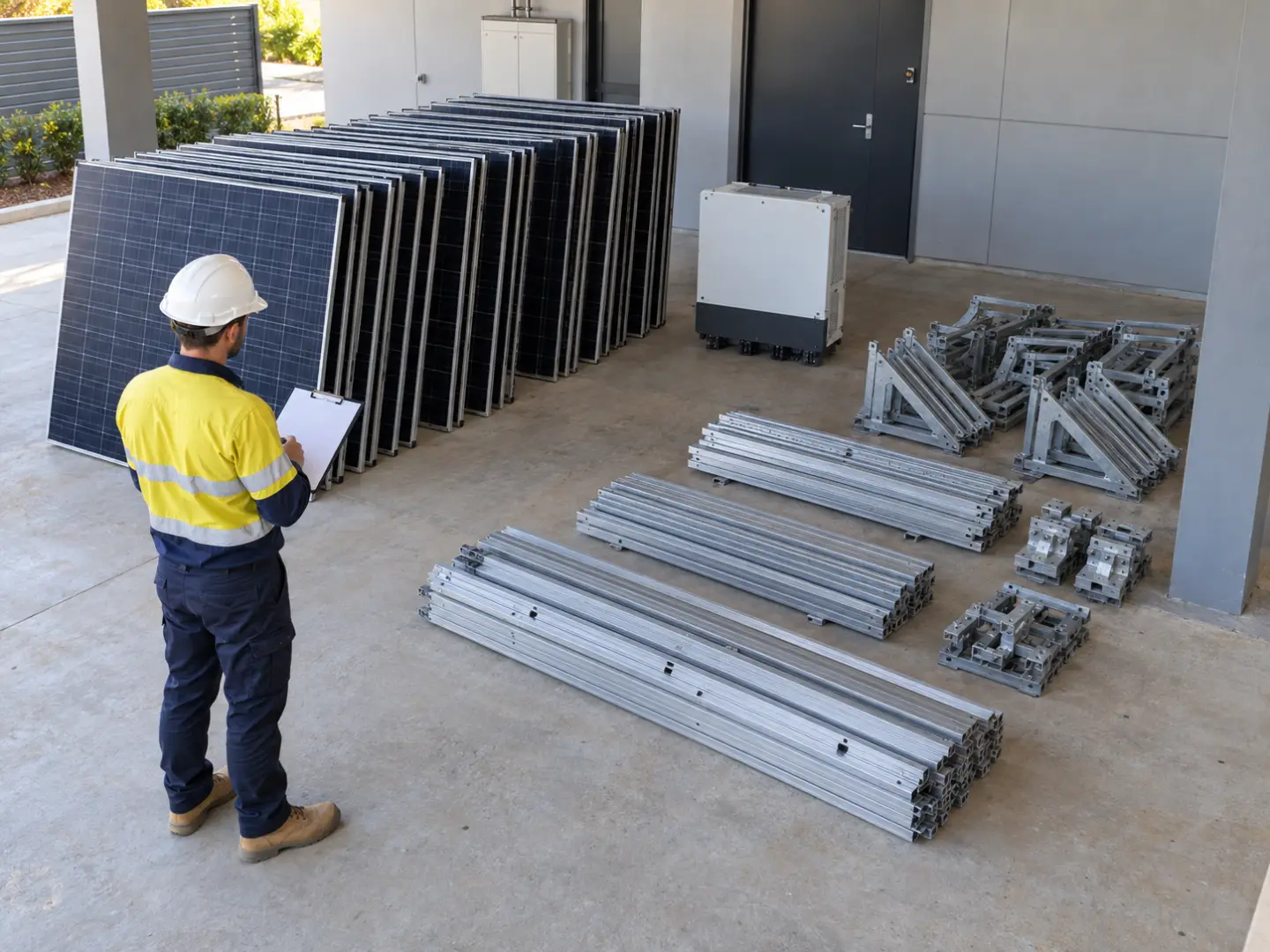
Once appropriately qualified people have safely removed equipment, an installer can make the next project conversation much clearer with a short solar installer handover brief. It should describe the actual ready panel count, separately listed equipment, broad visible condition, current ground-level handover point, known access facts and the person who can confirm them. It should not turn a removal-completion note, a preferred date or a project forecast into an assurance that ReSova will accept equipment, provide a price, send a vehicle, choose a route, arrive at a time, make a booking, recycle equipment or achieve any other downstream result.
Build the brief from facts that exist after removal
This is not a technical condition report, a waste classification, a resale assessment or a packing instruction. It is a concise cross-team handover. Use facts the installer and site already know. Do not unpack, re-stack, test equipment, read every serial number or make a technical judgment solely to complete the brief. The equipment list guide explains why panels, inverters, rails, racking, cables and other items should remain separate categories.
| Brief field | Current fact to pass on | Do not turn it into |
|---|---|---|
| Ready equipment | Actual panel count plus inverters, rails, racking, cables and other items listed separately. | The original system capacity, a later-stage forecast or a statement of eligibility. |
| Visible state | Broad visible condition and any honest unknowns. | A diagnosis, performance test, resale opinion or recovery outcome. |
| Handover place | The real ground-level point where the ready batch is currently staged. | An approved loading method or a provider commitment. |
| Access and contact | Known entry process, practical constraints and a reachable site contact. | A promise about vehicle, route, arrival time or booking. |
Pass each fact to the right role
A clean brief prevents a common commercial-project mix-up: the installer can report the removal-stage facts, while the property or project team manages its own operating arrangements. The U.S. Department of Energy’s PV lifecycle guidance treats clearly delineated roles and contact information as part of a decommissioning plan. That is a useful information-design comparator, not Australian legal advice or a ReSova procedure.
A practical installer handover sequence
- Close the removal stageOnly after qualified people have safely removed equipment should it be described as a possible ground-level handover batch.
- Record the actual ready categoriesCount current panels and list other equipment separately; keep installed, connected and later-stage equipment outside the brief.
- Pass access facts to the site teamState what is known, then let the responsible property or project team confirm its own entry, rules and day-of contact.
- Choose the appropriate review routeA standard eligible panel-only request may suit the estimator; staged, mixed, 70+ panel, multi-site or complex-access work needs a commercial discussion.
- Correct the brief when the batch changesTreat altered quantity, category, condition, place, access or contact as a current fact update, not a presumed booking amendment.

Hand off information without taking over the site’s responsibilities
The installer can identify what has actually been removed and share known practical information. The property or project team remains responsible for its own site process, approvals, safety arrangements, traffic management and contact availability. ReSova does not provide electrical disconnection, removal, roof work, site safety, traffic management, technical testing or legal advice. Australian Government consumer guidance says solar components need professional assistance for replacement and recycling, and removal or replacement should be performed by a licensed electrician.

Choose the right review path after the brief is current
For an eligible standard 10–69-panel pathway, use the Collection Estimator only when its current criteria fit the actual ready batch. Use Commercial Services for a staged, mixed, 70+ panel, multi-site or complex-access discussion. The tailored-scope guide explains why those facts need review rather than a generic answer. A complete brief can make the discussion more efficient, but it does not itself create acceptance or a booking.
Sources and dates checked
- Australian Government — Replace and recycle your solar system, checked 30 September 2026: professional assistance and licensed electrical removal/replacement boundary.
- U.S. Department of Energy FEMP — Install and commission a PV system, checked 30 September 2026: comparator for clear role and contact delineation in PV decommissioning planning; not Australian legal or service guidance.
- PV CYCLE — Solar panel collection form, checked 30 September 2026: comparator for the separation of equipment, contact and access information; not a ReSova or Australian procedure.
- ReSova — Commercial Services, checked 30 September 2026: current commercial scope-review entry point and service boundary.
Key takeaways
- A removal-completion handover brief should report only the current ground-level ready batch, not an original capacity or later-stage forecast.
- Keep panels and other equipment categories separate; record broad visible facts without technical conclusions.
- The installer can pass on known facts, while the property or project team retains responsibility for its own site arrangements and contact availability.
- A complete brief supports scope review only; it does not confirm acceptance, price, vehicle, route, timing, booking or downstream outcome.
- Use Commercial Services for staged, mixed, 70+ panel, multi-site or complex-access work.
Frequently asked questions
Does a removal-completion note confirm a solar panel collection?
No. It can describe the current ready batch for scope review, but it does not confirm eligibility, price, vehicle, route, arrival time, booking, recycling, reuse or a final destination.
Should an installer include panels still on the roof in the handover brief?
No. Keep installed, connected and later-stage equipment separate from the actual equipment already safely removed and available for ground-level handover.
Can the installer decide the property's access arrangements for ReSova?
No. The installer can pass on known facts, while the responsible property or project team confirms its own entry process, site rules and reachable contact. ReSova then reviews the relevant scope facts.
What should be corrected if the batch changes after the handover brief is sent?
Update the actual ready count, separately listed equipment, broad visible condition, ground-level point, access facts and site contact. An update supports review; it is not an automatic amendment to a booking.
Discuss a Commercial Collection
ReSova considers eligible, already removed equipment in Sydney and selected NSW areas after the ground-level handover and site access can be confirmed. It does not decide removal, technical condition or a final downstream outcome.