

Quick answer: a change of location is a current-fact update
When an installer moves an already removed solar-equipment batch between a van, yard, warehouse or project site, the work docket may remain useful context, but it does not automatically describe the current handover point. Treat the move as a change to the record. Confirm only the actual batch at its present ground-level location, list panels and other categories separately, use broad visible facts, and replace the handover point, access context and contact if they changed. This supports a ReSova assessment of eligible requests in Sydney and selected NSW. It does not provide loading, transport, safety or technical advice, and it does not promise acceptance, price, an assigned vehicle, route, time, booking or downstream outcome.
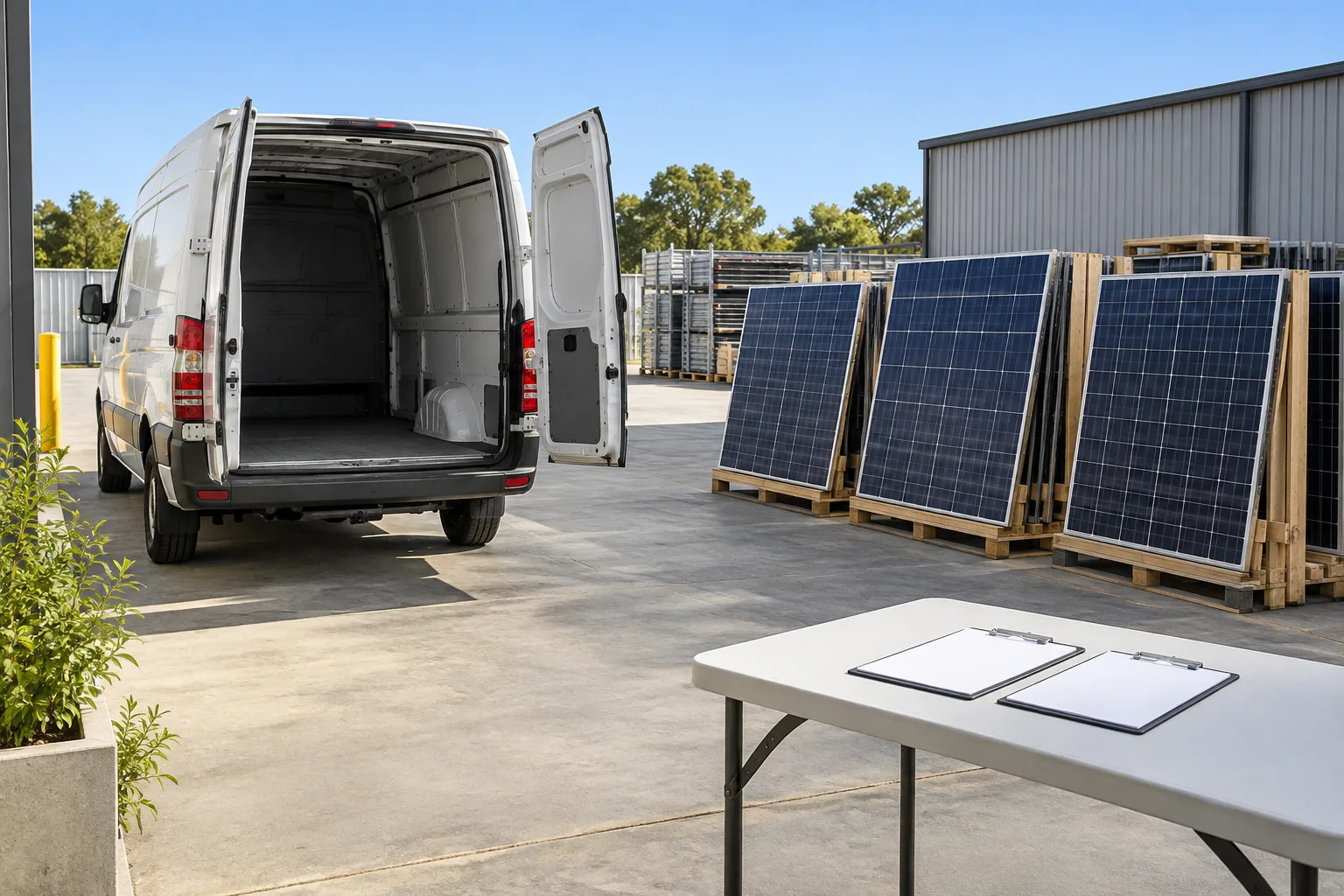
Keep the old location as history and the new location as the handover fact
The practical decision is not how the equipment should be moved. ReSova does not give handling, loading, transport, site-safety or traffic-management advice. The decision is whether the facts supplied for a possible collection assessment still describe the batch today. A van, yard, warehouse and project site can each have a different actual count, accessible ground-level point, entry process and contact. Do not carry forward a previous gate, docking note or project contact merely because the same equipment category appears on the docket. The installer batch-reconciliation checklist owns the physical-record comparison; this article owns the next state change after the batch location changes.
| Record field | Current fact to replace | Do not turn it into |
|---|---|---|
| Batch identity | Actual panels and separately listed related categories at the present ground-level point. | A forecast, original system capacity or an assumption that later-stage equipment moved too. |
| Current location | The van, yard, warehouse or project-site point that holds the batch now. | A promise that a vehicle, route or collection arrangement is available. |
| Access context | Known current entry or reception facts for the present point. | A loading instruction, site-safety plan or traffic plan. |
| Contact | The person who can clarify current facts at that location. | Proof of authority over every project decision or a booking confirmation. |
Make the record useful without turning it into a transport or test document
A current transfer record can be deliberately short: date of the internal update, actual category/count, broad visible state, current handover point, access notes the site already knows and a reachable contact. It should preserve honest unknowns. Do not add a technical diagnosis, electrical test, resale opinion, recycling estimate or destination claim simply because the batch has moved. The warehouse batch-register guide is the owner for an ongoing warehouse record. Its purpose differs from this one: a transfer record stops an old location becoming the assumed current handover point.

Use one current handover point for each current batch
Installer location-change handover flow
- Confirm the current physical groupRecord only equipment already removed and present at the nominated ground-level location.
- Separate categories and unknownsCount current panels and list other categories separately; use broad visible facts without testing.
- Replace the location factsUpdate handover point, access context and contact for the present place rather than copying prior-site details.
- Keep history as contextRetain prior docket or location information in the installer’s own file, not as the current collection handover description.
- Request the fitting reviewUse a commercial discussion for mixed, staged, 70+, multi-site or complex-access work; facts remain subject to review.
A current record supports clear communication between the installer, site team and ReSova. It does not make the installer responsible for the property’s own approvals, access process or safety arrangements. Likewise, it does not make ReSova responsible for the removal work or movement between locations. The U.S. Department of Energy’s PV lifecycle material is a useful global comparator because it distinguishes lifecycle and decommissioning decisions; it is not Australian law, a transport rule or a ReSova operating procedure.

Choose the scope path after the facts match the current place
For a mixed, staged, 70+ panel, multi-site or complex-access batch, use Commercial Services for a tailored scope and availability discussion. Use the Collection Estimator only when its current standard criteria genuinely fit the present batch. Neither route is direct booking. The vehicle-access checklist remains the separate owner for factual vehicle-entry context; it does not promise a vehicle, route or collection time.
Sources and dates checked
- Australian Government — Replace and recycle your solar system, checked 8 October 2026: licensed-electrician removal/replacement boundary.
- PV CYCLE — Solar panel form, checked 8 October 2026: global comparator for separate pickup-location, contact and equipment fields; not a ReSova procedure.
- U.S. Department of Energy FEMP — Prepare for the end of a PV performance period, checked 8 October 2026: lifecycle-information comparator only; not Australian legal or service guidance.
Key takeaways
- A batch’s prior location is history; its present ground-level point is the handover fact.
- Update the actual category/count, handover point, access context and contact whenever the batch moves.
- A transfer record is not loading, transport, safety or technical advice.
- Current facts support a scope discussion only; they do not create an acceptance, price, vehicle, route, time, booking or downstream outcome.
Frequently asked questions
Can an old job docket describe the current handover point after equipment moves?
No. It is useful context, but the current location, actual batch, access facts and contact should be updated for the present handover point.
Does this guide provide instructions for loading or transporting solar equipment?
No. It only explains how to keep current collection-assessment facts distinct. It does not provide handling, loading, transport, safety or technical advice.
Does a current transfer record confirm collection?
No. It supports a scope and availability discussion only; eligibility, price, vehicle, route, timing and downstream outcome remain unconfirmed.
Discuss a Commercial Collection
ReSova considers eligible, already removed equipment in Sydney and selected NSW areas after the ground-level handover and site access can be confirmed. It does not decide removal, technical condition or a final downstream outcome.