
Quick answer
Solar cables, mounting rails, racking and clamps should be inventoried separately from removed panels. Items from one system do not automatically form one collection scope, have the same acceptance conditions or follow the same downstream route. After appropriately qualified people have completed safe removal, list each actual component type, quantity, broad visible condition, volume, protected ground-level staging and loading access. ReSova can then consider an eligible collection scope in Sydney and selected NSW areas; it does not disconnect, test, assess hazards or guarantee material recovery, price, time, certification or final outcome.
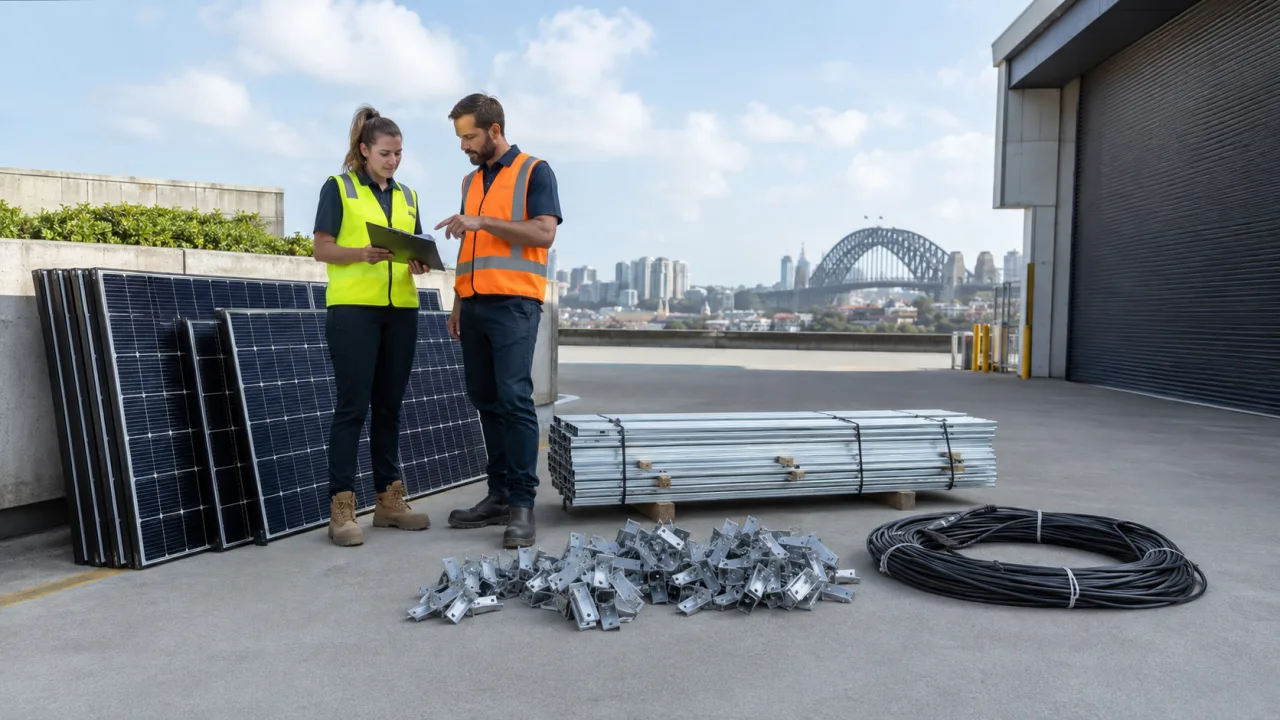
Create a component inventory, not a complete-system assumption
The useful question is not “can this all be recovered?” but “what has actually been removed and how is it ready to hand over?” Australian collection services and council guidance commonly list panels, mounting hardware and other equipment as distinct categories. That is useful context, not proof that a particular batch is accepted or will be processed in a particular way. Use a plain inventory that lets the actual equipment, volume and access be checked.
| Component group | Record for collection scope | Do not conclude |
|---|---|---|
| Solar panels | Actual quantity and broad sound, damaged or mixed visible condition after removal. | Visible condition proves electrical performance, reuse suitability or final pathway. |
| Rails, racking and mounting frames | Separate type, approximate quantity or volume, staging arrangement and access needs. | Hardware is automatically included because panels are also present. |
| Clamps, brackets and fasteners | Grouped quantity or containerised volume, actual material mix if known and staging. | Small components require no scope confirmation or have a guaranteed material outcome. |
| Cables and associated items | Actual removed item type, prepared condition, volume, safe staging and access—after qualified removal. | The collector disconnects, tests, classifies hazards or gives electrical advice. |
| Mixed batch | Who can reconcile the count and identify each component at the ground-level handover point. | One job docket is a certificate of downstream processing for every item. |
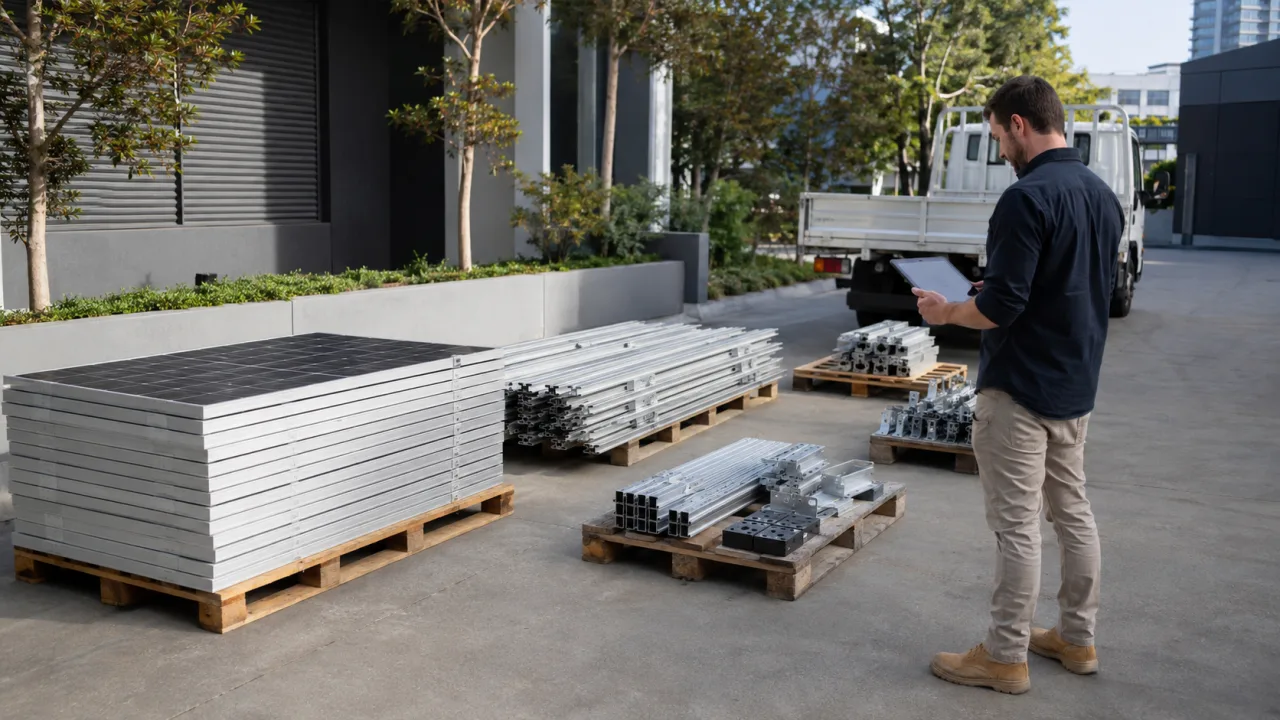
Why components stay separate in the collection scope
Different groups can change handling, volume and loading requirements even when they came from one installation. The US Department of Energy’s DC-string cable-management guidance addresses cable management during system operation; it is not removal or collection advice. Do not infer from a component name that a collector can disconnect it, that it is safe to handle, or that it will be recovered at a stated rate. Electrical isolation, disconnection, testing, removal and safety decisions belong with appropriately qualified people and the responsible project parties.
A five-step component handover flow
From safe removal to a component-aware collection request
- Keep electrical work with qualified peopleThe responsible parties arrange isolation, disconnection, removal, testing and site controls before collection is considered.
- Separate the physical groupsGroup panels, rails/racking, clamps/fasteners, cables and other items so each can be described clearly.
- Record actual scope inputsList quantity or volume, broad visible state, ground-level staging, access restrictions and the nominated handover contact.
- Confirm the tailored scopeUse the real inventory for mixed equipment, larger quantities, special components or complex access instead of assuming one system equals one scope.
- Collect and retain the docketFor eligible ready equipment, ReSova records collection quantity and handover information on a job docket, not a final processing certificate.
Confirm collection scope from the actual removed equipment
For a combined-system request, share the separate inventory, staging photos where appropriate and loading/access facts through What We Collect. Complete systems and non-standard component mixes commonly require tailored scope confirmation. The racking collection guide is useful for mounting-hardware inventory after an upgrade; this guide differs by treating cables, hardware and panels as separate scope groups rather than promising they share a recovery route.
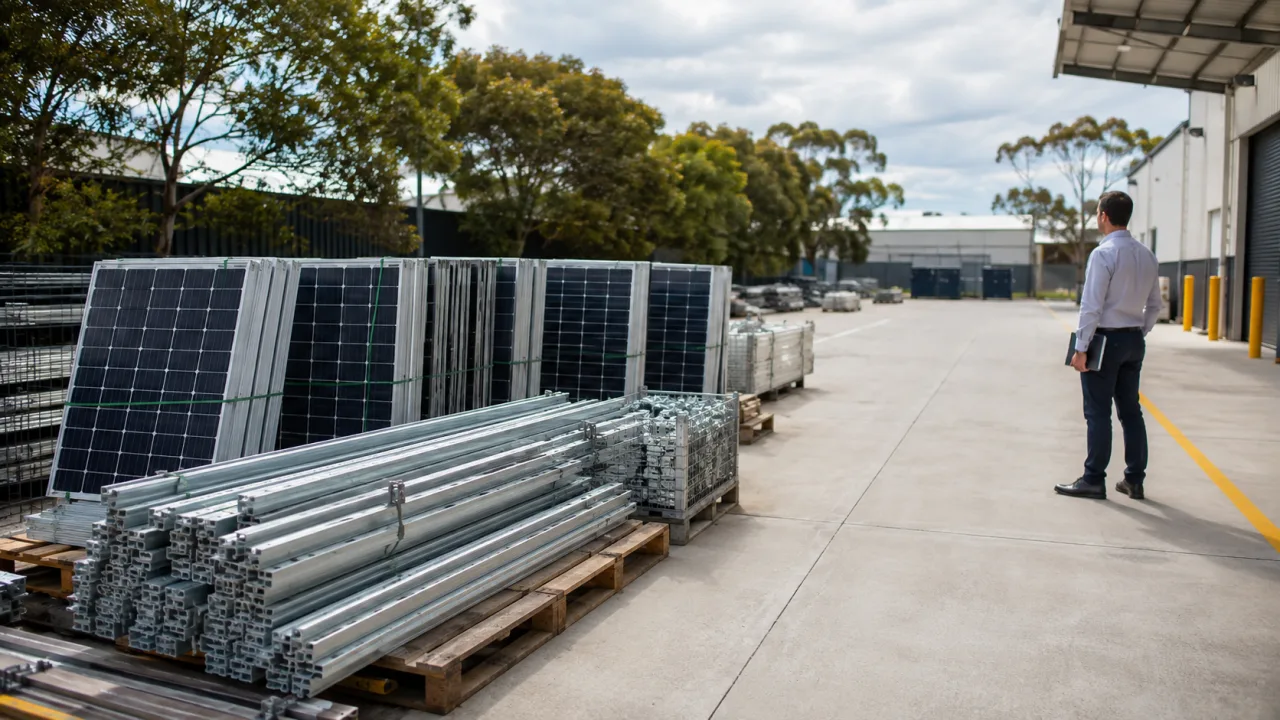
For Sydney installers and commercial projects
ReSova considers eligible equipment in Sydney and selected NSW areas only after it has been safely removed and made available at ground level. Review What We Collect and Complete Solar Systems for current collection context. Keep the resulting collection job docket as a handover record only; any compliance, warranty or downstream evidence has to be confirmed separately with the relevant parties.
Key takeaways
- Panels, rails, racking, clamps and cables should be described as separate physical component groups.
- A shared system origin does not automatically establish collection acceptance, handling, material recovery or final downstream route.
- Qualified people and responsible project parties retain all electrical, removal, testing and safety decisions.
- A job docket records collection handover information only and is not a certificate of recycling, compliance, warranty or final disposal.
Frequently asked questions
Are solar cables, rails and clamps automatically included with removed solar panels?
No. Components from one system should be listed separately. Their actual type, quantity, broad visible condition, volume, ground-level staging and access conditions are required before an eligible collection scope can be considered.
Can ReSova disconnect solar cables or assess whether they are safe?
No. Electrical isolation, disconnection, testing, removal and safety decisions remain with appropriately qualified people and the project’s responsible parties. ReSova does not provide electrical advice or hazard assessment.
Does a collection job docket prove that every component was recycled?
No. A job docket records collection quantities and handover information. It is not a statutory certificate, audit guarantee, warranty document or final processing proof for any component.
What We Collect
ReSova collects old solar panels on site across Sydney, then sorts them for reuse or recycling. Check coverage and pricing for your postcode, or talk to the team.