
Quick answer
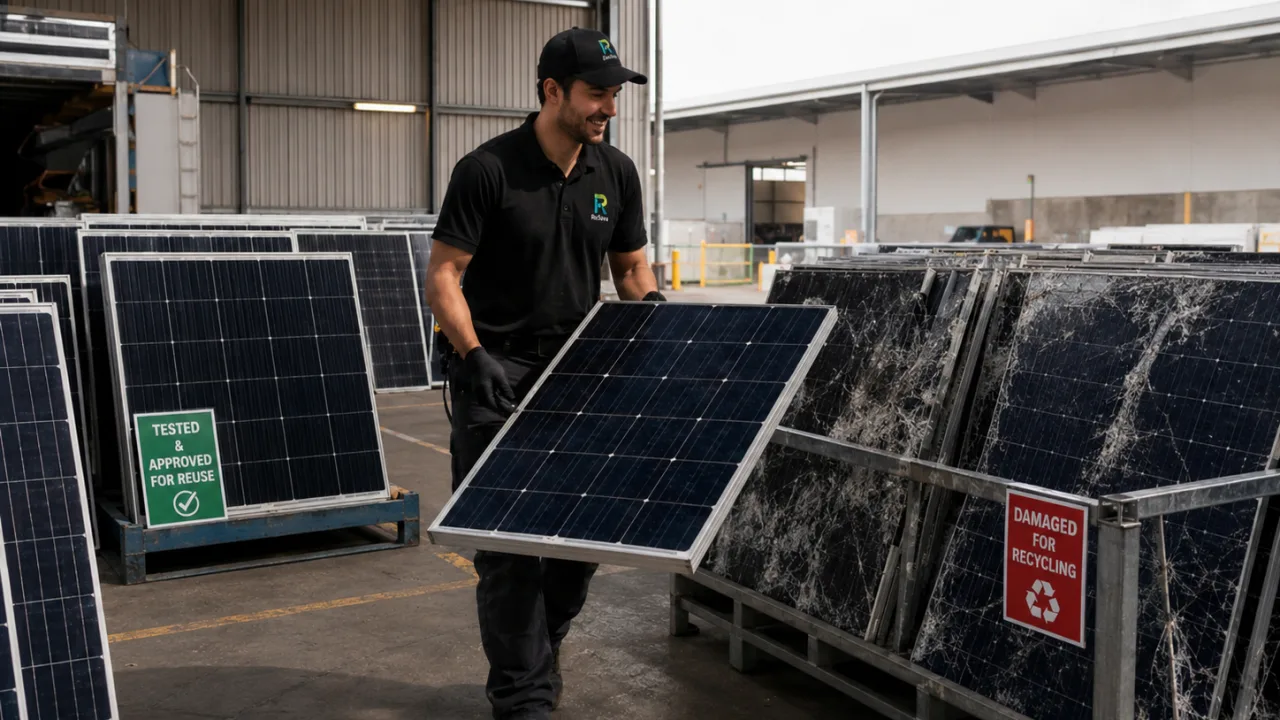
After collection, old solar panels do not automatically go to one place. ReSova counts and documents the handover, and broad visible condition can inform further assessment. Suitable, appropriately tested equipment may have a second-life pathway; other equipment may move toward downstream recycling or recovery where available. Industry recovery potential does not guarantee the outcome or recovery rate of an individual batch.
Collected and documented
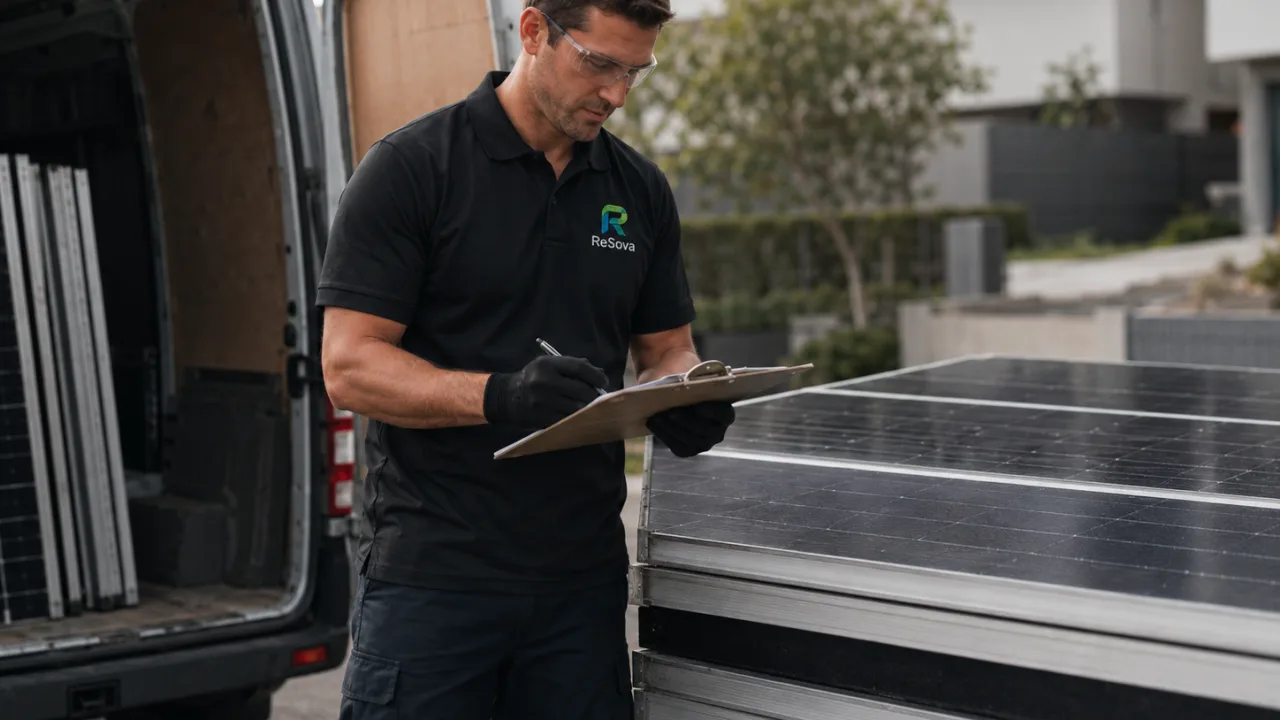
The journey starts on site. Panels must already be safely removed and ready at ground level before collection. ReSova counts the equipment handed over and records the collection details on a job docket. That docket is a pickup record, not a recycling certificate or proof of a final destination. You can see ReSova’s dated operational snapshot on the about page.
Sorted by condition
Not every removed panel is waste, and not every panel can be reused. Broad visible condition may help describe a batch, while any technical testing or reuse determination must be handled through an appropriate assessment outside ReSova’s collection-only scope. The result may support a reuse, recycling or other recovery pathway, but no outcome should be assumed in advance.
The reuse path
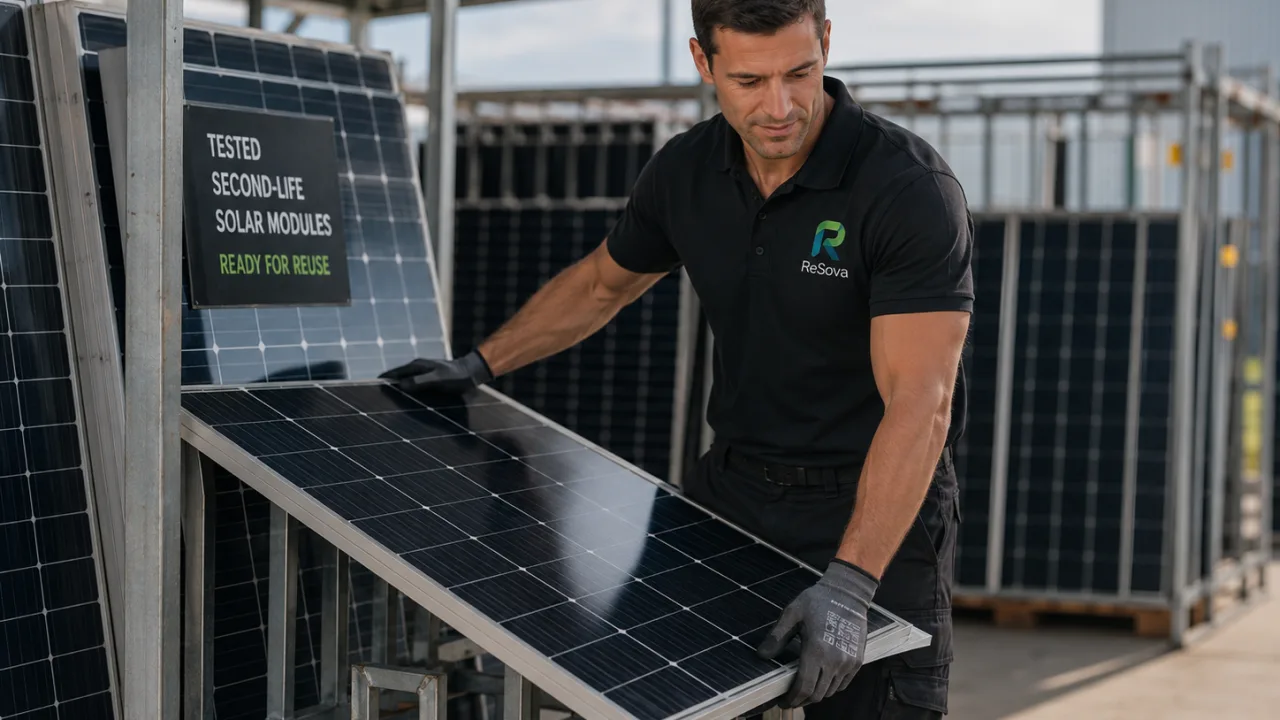
Appropriately tested, sound panels may be considered by a suitable independent reuse pathway rather than being broken down. Reuse keeps the whole panel working and retains more value, so it sits highest on the waste hierarchy — we cover that general pathway in second-life solar. ReSova does not promise a reuse channel, named partner or destination for a collected batch.
The recycling path
Panels that are unsuitable for reuse may be considered for an appropriate downstream recycling or recovery pathway where available. The Clean Energy Council describes high material-recovery potential for solar panels, but that system-level potential is not a guaranteed recovery rate for a specific ReSova batch. The processing context is explained in how solar panels are recycled.
| Material | Share (approx.) | Recovered for |
|---|---|---|
| Glass | ~70% | New glass, aggregate |
| Aluminium frame | ~10–15% | Remelted aluminium |
| Silicon cells | ~3–5% | Silicon, silver, copper |
| Metals (Cu, Ag) | <1% | High-value metal recovery |
Why not landfill
Landfill recovers nothing, and it’s increasingly restricted — in several states panels are classed as e-waste and banned from landfill. Yet only a minority of the panels decommissioned in Australia each year are currently recycled, according to government and industry reporting, largely because collection and processing infrastructure is still catching up. That gap is exactly what the federal government’s national solar panel recycling pilot is designed to close. We cover the rules in can you recycle solar panels.
How ReSova does it in Sydney
For Sydney homes, electricians and businesses, ReSova considers on-site collection after panels are safely removed. It counts and documents the handover, records broad visible condition and coordinates a suitable available downstream pathway without guaranteeing reuse, recycling, recovery rate or destination. Check what ReSova collects or use the online estimator.
Key takeaways
- A ReSova job docket records the collection handover; it is not proof of a later outcome.
- Broad visible condition can inform a separate assessment, but it does not establish reuse suitability.
- Collected equipment may be considered for an available reuse, recycling or recovery pathway.
- No recovery rate, processor, facility or final destination is guaranteed for a ReSova batch.
- Only a minority of decommissioned panels are recycled today, which is driving new capacity and policy.
Frequently asked questions
What happens to solar panels after they are collected?
They are counted and documented on a job docket, and broad visible condition can inform further assessment. Suitable equipment may be considered for reuse; other equipment may move toward an appropriate downstream recycling or recovery pathway where available. No particular outcome is guaranteed.
Are old solar panels actually recycled in Australia?
Increasingly, but capacity is still catching up. A panel is roughly 95% recyclable by material, yet only a minority of decommissioned panels are recycled today, according to government and industry reporting — which is why a national recycling pilot and product-stewardship scheme are being developed.
What materials are recovered from a solar panel?
Mostly glass and the aluminium frame, plus the silicon cells and small amounts of copper and silver. These are separated and returned to material streams. The polymer layers are processed or used for energy recovery.
Do you keep a record of where my panels went?
ReSova records the quantity handed over and collection details on a job docket. It is a pickup record, not a recycling certificate, audit record or guarantee of a final downstream destination.
See what we collect
ReSova considers eligible, already removed equipment in Sydney and selected NSW areas after the ground-level handover and site access can be confirmed. It does not decide removal, technical condition or a final downstream outcome.